Global Climate Report Highlights Rising Temperatures and Ocean Heat
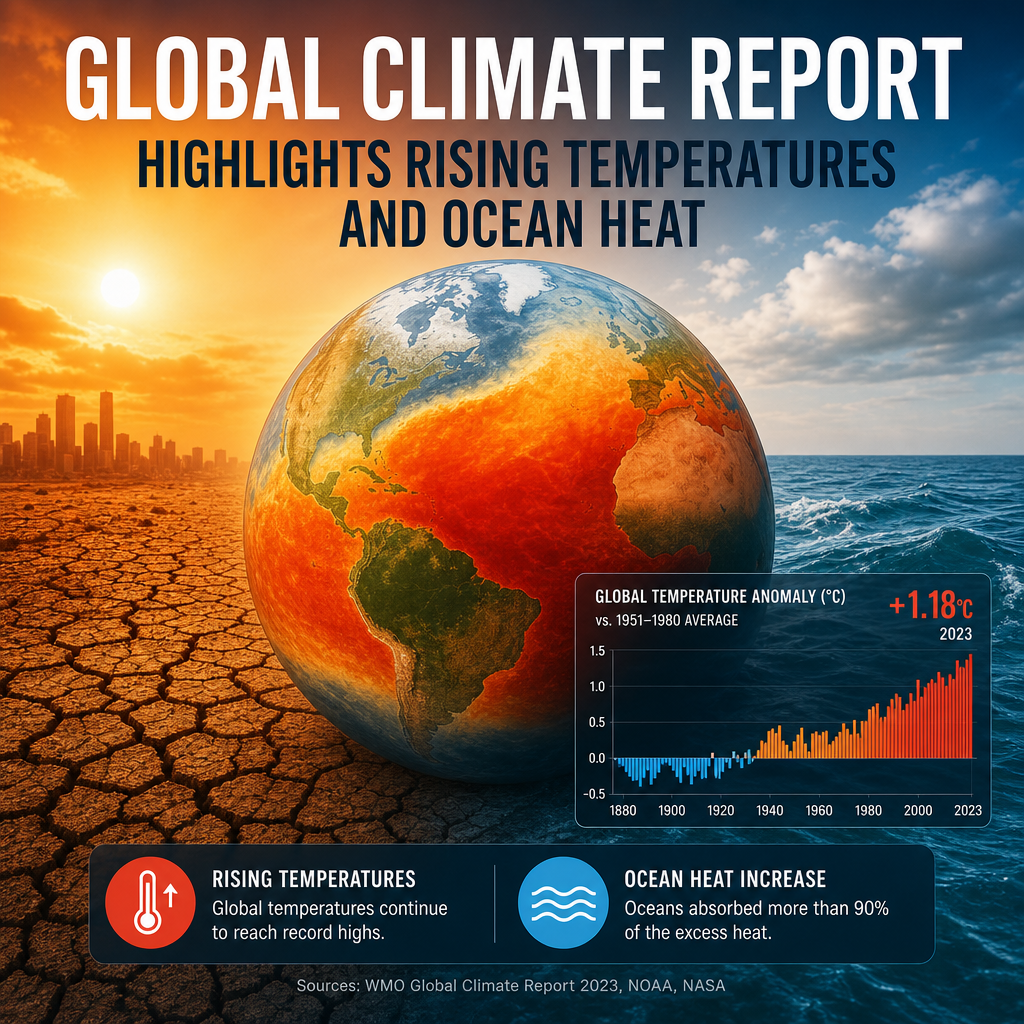
The latest global climate report shows that rising temperatures are only part of the story, with oceans absorbing much of the planet’s excess heat. That hidden warming is driving sea-level rise, stressing marine ecosystems, and increasing the risks communities face from stronger storms and coastal flooding.
By: Peter B on July 24, 2026
Última atualização em: agosto 3, 2026
A new global climate report makes one thing unmistakably clear: the planet is warming, and the oceans are absorbing much of that excess heat. While rising air temperatures often get the most attention, the hidden story beneath the surface is just as important. Ocean heat is climbing, sea levels are responding, and ecosystems are under growing pressure.
This matters because the oceans do more than shape coastlines and weather patterns. They store energy, regulate climate, support fisheries, and influence storms. When ocean heat increases, the effects ripple outward into daily life, from stronger marine heatwaves to disrupted food chains and more damaging coastal flooding.
In this article, we’ll break down what a global climate report is saying about rising temperatures and ocean heat, why it matters, and what it means for communities, businesses, and policymakers.
What the Global Climate Report Is Showing
The latest global climate report underscores a broader trend that scientists have documented for years: Earth’s average temperature continues to rise, and the oceans are taking in most of the extra heat trapped by greenhouse gases.
Rising temperatures are not evenly distributed
Global warming does not affect every region the same way. Some areas warm faster than others, and seasonal patterns can shift in ways that make local impacts feel even more intense. For example:
Arctic regions are warming faster than the global average
Land areas generally warm more quickly than oceans
Some regions are experiencing more frequent heat extremes
Nighttime temperatures in many places are rising, reducing recovery time from heat exposure
This uneven pattern makes it harder for communities to adapt, especially when infrastructure, agriculture, and water systems were designed for older climate conditions.
Ocean heat is a major signal of climate change
One of the most important takeaways from a global climate report is the role of the ocean. The ocean acts like a giant heat sink, absorbing a large share of the extra warmth from greenhouse gas emissions. That can slow the rate of air warming temporarily, but it also creates long-term consequences.
As ocean heat increases, it can:
Raise sea surface temperatures
Intensify marine heatwaves
Disrupt coral reefs and kelp forests
Affect fish migration and breeding patterns
Contribute to sea level rise through thermal expansion
In other words, ocean heat is not just a statistic. It is a climate driver with real-world consequences.
Why Ocean Heat Matters More Than Many People Realize
When people hear about global warming, they often picture hotter summers or melting glaciers. Those are important, but ocean heat is equally critical because it influences weather, ecosystems, and coastal risks in ways that may not be immediately visible.
Ocean heat fuels extreme weather
Warmer ocean surfaces can add energy and moisture to storms. That does not mean every storm becomes stronger, but it does create conditions that can support more intense rainfall and, in some cases, more powerful tropical systems.
Warmer waters can also affect:
Hurricane development and rainfall
Coastal storm surge impacts
Atmospheric circulation patterns
Regional drought and precipitation shifts
This is one reason climate reports pay close attention to sea surface temperatures and deeper ocean heat content, not just air temperatures.
Marine ecosystems are highly vulnerable
Many marine species depend on stable water temperatures. When ocean heat rises, species may move to cooler waters, struggle to reproduce, or face increased stress and disease. Some ecosystems can adapt over time, but others cannot keep pace with rapid change.
A few examples of impacts include:
Coral bleaching: Warm water causes corals to expel the algae they depend on, weakening or killing reefs
Fish migration changes: Commercially important species may shift farther north or deeper into the ocean
Kelp decline: Heat stress can reduce kelp forests that shelter marine life
Oxygen loss: Warmer water holds less oxygen, which can stress aquatic species
These changes affect biodiversity, fishing communities, tourism, and food security.
How Rising Temperatures and Ocean Heat Are Connected
The link between rising temperatures and ocean heat is direct: greenhouse gases trap heat in the atmosphere, and much of that heat is eventually absorbed by the ocean. But the connection goes beyond simple absorption.
The oceans are delaying some warming, not solving it
Because oceans store so much heat, they act as a buffer against even faster atmospheric warming. That buffering effect is helpful in the short term, but it comes with a tradeoff. The heat does not disappear. It accumulates.
Over time, that stored energy can lead to:
Longer-lasting marine heatwaves
Thermal expansion of seawater
More persistent climate disruptions
Greater stress on coastal and marine systems
This is why climate experts often focus on long-term heat content in the ocean. It reflects the deeper state of the climate system.
Sea level rise is part of the picture
A warming ocean expands. That process, called thermal expansion, contributes to sea level rise. Along with melting land ice, it increases the risk of coastal flooding, erosion, and saltwater intrusion.
For coastal communities, this can mean:
More frequent nuisance flooding
Damage to roads and utilities
Increased pressure on drainage systems
Contamination of freshwater supplies
Even small changes in average sea level can magnify the effects of storm surge and high tides.
What the Global Climate Report Means for Communities
A global climate report is not just for scientists and policymakers. It has practical implications for anyone who lives near a coast, depends on stable weather, or relies on natural resources.
Coastal cities need to plan for deeper risk
Many coastal communities are already dealing with higher tides, stronger storm impacts, and drainage challenges. As ocean heat and rising temperatures continue, city planners may need to rethink where and how they build.
Key adaptation strategies include:
Updating flood maps and building codes
Improving stormwater systems
Protecting wetlands and natural barriers
Elevating critical infrastructure
Planning for managed retreat in high-risk areas
No single solution works everywhere. Effective planning depends on local geography, budget, and risk exposure.
Farmers and food systems may feel indirect impacts
Although ocean heat may seem far removed from agriculture, climate systems are interconnected. Warmer oceans can influence rainfall, drought, and storm tracks, which in turn affect crop production.
Farmers may face:
Shifts in planting seasons
More heat stress on livestock
Greater risk of flood or drought
Higher uncertainty in water availability
This is one reason climate resilience efforts increasingly focus on both land and ocean conditions.
Public health can also be affected
Rising temperatures can increase heat-related illness, especially in urban areas with limited shade and cooling access. Ocean heat can also shape humidity, storm impacts, and coastal hazards that affect public safety.
Public health concerns may include:
Heat exhaustion and heat stroke
Poorer air quality during heat events
Water contamination after flooding
Harmful algal blooms in some regions
Taken together, these impacts show why climate reporting matters beyond the environmental sphere.
What Scientists Watch in Climate Reporting
A strong global climate report typically relies on multiple measurements, not just one headline figure. Scientists look at both surface and deep-ocean indicators to understand how much heat the Earth system is storing.
Important indicators include:
Global average surface temperature
Sea surface temperature
Ocean heat content at different depths
Glacier and ice sheet mass loss
Sea level trends
Frequency of extreme heat events
Marine heatwave duration and intensity
These indicators help researchers see the bigger picture and compare current conditions with previous decades.
Why long-term data matters
Climate is measured over long time periods, not just one season or one year. A hot summer alone does not define climate change, but a consistent upward trend across many years does. That is why trustworthy climate analysis depends on long-term observations, satellite data, and ocean monitoring systems.
What Can Be Done About Rising Temperatures and Ocean Heat?
The scale of the challenge is large, but the response can happen at multiple levels. Reducing greenhouse gas emissions remains essential, and adaptation is necessary for the changes already underway.
Emission reduction is the foundation
To slow future warming and ocean heat accumulation, societies must reduce the emissions driving the problem. That includes:
Transitioning to cleaner energy sources
Improving energy efficiency
Cutting methane leaks
Electrifying transportation where possible
Protecting forests and other carbon-storing ecosystems
These actions do not eliminate current warming overnight, but they help avoid even greater risks later.
Adaptation reduces immediate harm
Communities also need to prepare for the climate changes already in motion. Adaptation can include:
Heat action plans
Coastal resilience projects
Updated emergency response systems
Water conservation measures
Ecosystem restoration such as reef, mangrove, and wetland protection
The best strategies often combine engineering solutions with nature-based approaches.
Individuals can contribute too
While system-level changes matter most, individuals still play a role. Practical steps include:
Supporting energy-efficient upgrades at home
Reducing waste and unnecessary emissions
Staying informed about local climate planning
Backing policies that strengthen resilience
Preparing households for extreme heat and flood risks
Small actions add up when they reinforce broader policy and community efforts.
A Practical Example: Why a Warmer Ocean Changes Daily Life
Imagine a coastal town that historically saw occasional nuisance flooding a few times a year. As sea levels rise and ocean heat drives thermal expansion, that flooding begins happening more often. At the same time, warmer waters contribute to heavier rainfall during storms, which strains drainage systems.
The result is not one dramatic disaster, but a slow buildup of costs:
More road closures
Higher insurance pressure
Damage to basements and utilities
Business interruptions
Greater stress on emergency services
This is how climate change often works in practice. It accumulates risk over time, making today’s planning decisions more important than they may seem.
Frequently Asked Questions
1. What is a global climate report?
A global climate report is a scientific assessment that summarizes current climate trends, such as temperature changes, ocean heat, sea level rise, and extreme weather patterns. It helps researchers, governments, and the public understand how the climate system is changing over time.
2. Why is ocean heat important in climate change?
Ocean heat is important because the oceans absorb much of the excess energy caused by greenhouse gas emissions. That stored heat influences sea level rise, storms, marine ecosystems, and long-term climate stability.
3. How do rising temperatures affect the ocean?
Rising temperatures warm the ocean’s surface and, over time, deeper layers as well. This can cause coral bleaching, shift fish populations, reduce oxygen levels in water, and contribute to stronger coastal impacts through thermal expansion.
4. Can warmer oceans make storms worse?
Warmer oceans can provide more energy and moisture to some storms, which may increase rainfall and, in certain conditions, intensify storm systems. However, storm behavior depends on many factors, so not every storm becomes stronger because of warmer water.
5. What can coastal communities do to prepare?
Coastal communities can update flood maps, improve drainage, restore wetlands, strengthen infrastructure, and plan for sea level rise. Good preparation also includes emergency planning, building code updates, and long-term resilience investments.
The message from this global climate report is clear: rising temperatures and ocean heat are reshaping the climate system in ways that affect weather, ecosystems, coastlines, and everyday life. The oceans are absorbing much of the planet’s excess heat, which helps slow atmospheric warming in the short term but creates serious long-term consequences, including sea level rise, marine heatwaves, and stress on ocean life.
Understanding these trends is the first step toward responding effectively. Communities can strengthen resilience, policymakers can support cleaner energy and smarter planning, and individuals can stay informed and prepared. The challenge is large, but the path forward is practical: reduce emissions, adapt to changing conditions, and pay attention to the signals the planet is already sending.
Climate change is not a distant issue. It is unfolding now, and the oceans are one of the clearest places to see it. Learning from the latest science can help us make better decisions today and protect future generations from even greater risk.
Peter B holds a degree in Journalism and has 5 years
of experience covering U.S. economic policy, labor markets, and
financial news. He writes data-driven news content on topics
like inflation, interest rates, and employment trends.