SNAP Income Limits e Allotments Maximums Explained
Understanding SNAP income limits for 2026 can make it much easier to see whether your household qualifies and what benefits you might receive. Here’s a simple breakdown of how maximum allotments work, what income counts, and why the yearly updates matter.
By: Emilly on July 23, 2026
Última atualização em: agosto 3, 2026
If you’re trying to understand 2026 SNAP income limits and maximum allotments, you’re not alone. The Supplemental Nutrition Assistance Program (SNAP) changes every year, and the rules can feel confusing if you’re checking whether your household qualifies or how much help you might receive. The good news is that once you break it down into income limits, household size, and benefit calculations, SNAP becomes much easier to navigate.
This guide explains how SNAP eligibility works in 2026, what “maximum allotment” means, how income is evaluated, and what factors can affect your monthly benefit. It’s written to help households, caregivers, seniors, workers, and anyone else trying to make sense of the program.
What SNAP Is and Why 2026 Limits Matter
SNAP is a federal nutrition assistance program that helps eligible low-income households buy food. Benefits are loaded onto an EBT card and can be used at approved grocery stores, supermarkets, farmers markets, and other retailers.
Each year, the USDA updates SNAP rules and benefit levels to reflect changes in the cost of food and household living expenses. That means 2026 SNAP income limits and maximum allotments may differ from prior years. If you’re applying for benefits, renewing your case, or helping someone else understand eligibility, it’s important to check the current year’s numbers rather than relying on old charts.
Why the annual update matters
Even a small adjustment can change:
Whether your household qualifies
The amount of your monthly SNAP benefit
Whether certain deductions affect your eligibility
How much income your household can earn and still receive assistance
How SNAP Eligibility Works
SNAP eligibility is based on several factors, not just wages. Income is important, but the program also looks at household size, expenses, and in some cases assets and special circumstances.
Key factors in SNAP eligibility
Most households are evaluated using:
Gross income – total income before taxes and deductions
Net income – income after approved deductions
Household size – the number of people who buy and prepare food together
Expenses – such as shelter costs, dependent care, and medical expenses for certain households
Citizenship or qualified immigration status – based on federal rules
Work requirements – for some adults, depending on age, employment status, and location
Some households are considered “categorically eligible” if they receive other qualifying assistance, which can simplify the SNAP process in some states.
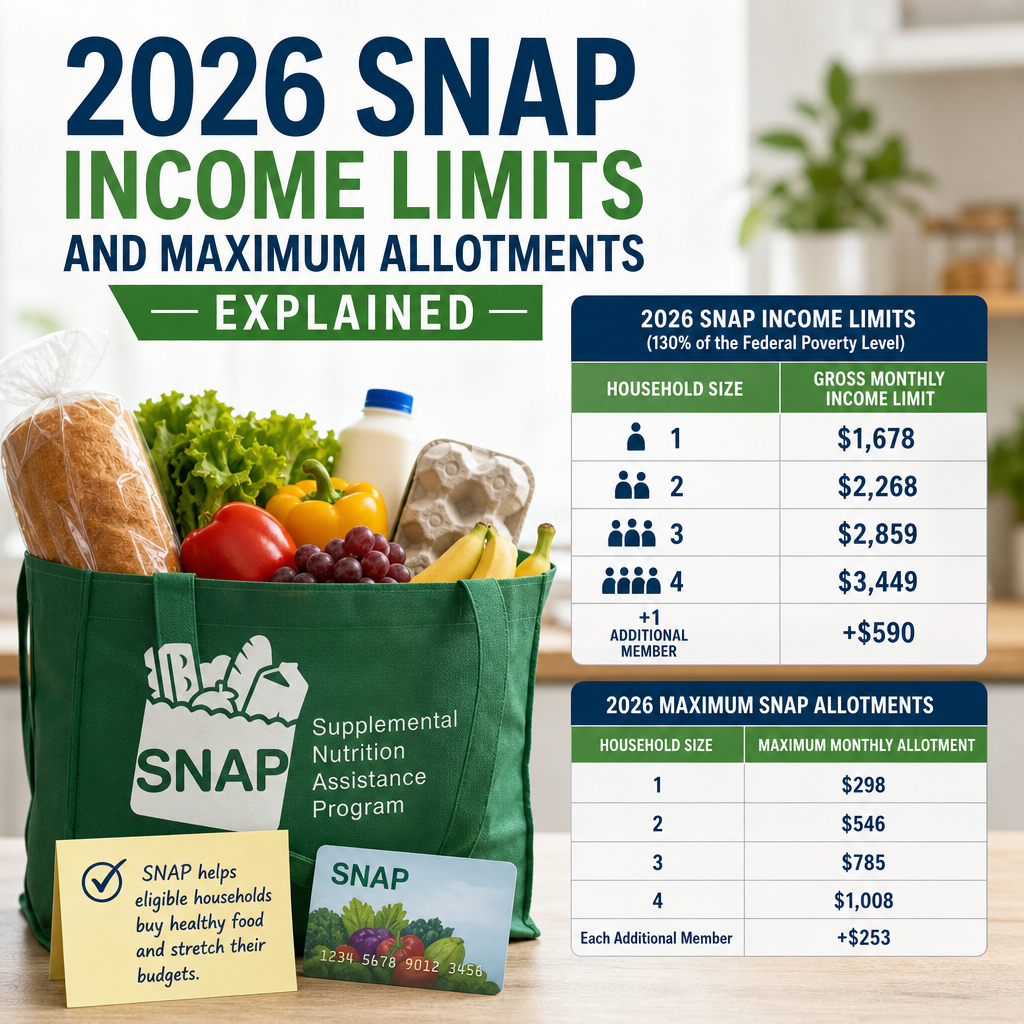
2026 SNAP Income Limits and Maximum Allotments
The phrase 2026 SNAP income limits and maximum allotments refers to two different pieces of the program:
Income limits determine whether your household can qualify
Maximum allotments determine the largest monthly benefit a household can receive
These figures are usually tied to household size and federal cost-of-living adjustments. Because SNAP is a federal program administered by states, the core rules are national, but local implementation can vary in details like application processing and verification.
Gross income limits
Gross income is the amount your household earns before taxes and deductions. In many cases, SNAP uses a gross income test to screen eligibility.
Common income sources may include:
Wages and salaries
Self-employment income
Unemployment benefits
Social Security benefits
Child support received
Pensions and retirement income
Rental or side income
Net income limits
After allowable deductions are applied, the remaining income is called net income. SNAP benefits are often based more heavily on net income than gross income. Deductions may include:
Standard deduction
Earned income deduction
Dependent care costs
Medical expenses for elderly or disabled household members
Excess shelter costs
Child support paid to someone outside the household
Because deductions can reduce countable income, two households with the same gross income may receive very different SNAP amounts.
What Maximum Allotment Means
The maximum allotment is the highest monthly SNAP benefit a household can receive for its size. If your household has very little income and qualifies for the full amount, your benefit is generally based on that maximum allotment level.
How maximum allotments are used
SNAP benefits are not a flat amount for everyone. Instead, the program starts with the maximum allotment for your household size and subtracts part of your countable net income. In simple terms:
Lower countable income = higher benefit
Higher countable income = lower benefit
This is why people sometimes qualify for SNAP but receive a smaller monthly benefit than expected.
Example of how the calculation works
Imagine a household of three that qualifies under SNAP rules. If its countable net income is low, it may receive a benefit close to the maximum allotment for a three-person household. If the household’s countable income is higher after deductions, the monthly benefit will be reduced accordingly.
The exact formula is based on federal SNAP rules and the USDA benefit calculation method used by state agencies.
Common Deductions That Can Increase Your SNAP Benefit
Understanding deductions is one of the best ways to make sense of 2026 SNAP income limits and maximum allotments. Many applicants assume their gross income is the final number, but SNAP may allow several adjustments.
Standard deduction
Most households receive a standard deduction automatically. This deduction helps account for basic household expenses.
Earned income deduction
Households with wages or self-employment income may qualify for an earned income deduction, which reduces countable income.
Shelter and utility costs
Housing costs can matter a lot, especially for renters with high rent or utility bills. In some cases, excess shelter costs can reduce countable income.
Examples include:
Rent or mortgage payments
Property taxes
Homeowners insurance
Heating and cooling costs
Electricity, water, and trash services
Medical expenses
Households with elderly or disabled members may be able to deduct certain out-of-pocket medical expenses beyond a set threshold under SNAP rules.
Dependent care costs
If you pay for child care or care for a dependent so you can work, look for work, or attend school, those costs may be deductible.
How Household Size Affects SNAP Benefits
Household size is one of the biggest drivers of SNAP eligibility and monthly benefit amounts. A larger household generally has a higher income limit and a larger maximum allotment.
Who counts in a SNAP household?
SNAP typically considers people who live together and buy and prepare food together. In many cases, spouses and children under 22 count together even if they sometimes eat separately.
However, the rules can be more complicated for:
Roommates
Adult children
Elderly parents
Shared custody situations
Multi-family households
If your home includes people with different food budgets, it’s worth reviewing how SNAP defines a household before applying.
Income Types That Usually Count
When evaluating 2026 SNAP income limits and maximum allotments, agencies look at all countable income sources. Some common examples include:
Hourly wages
Salaries
Tips
Freelance or gig work
Unemployment compensation
Social Security benefits
Disability income
Pension payments
Child support received
Contributions from relatives, if used for living expenses
Income that may not count
Some payments are excluded or treated differently, depending on the source and purpose. Examples can include certain reimbursements, some education assistance, and a few benefit types that federal SNAP rules exclude.
Because the rules can be nuanced, it’s smart to check your state agency’s guidance or a trusted eligibility screener before assuming income will or won’t count.
Special Considerations for Seniors, Disabled Adults, and Working Families
SNAP is designed to help many different types of households, but certain groups often face unique budgeting challenges.
Seniors and disabled adults
Older adults and disabled household members may qualify for:
Medical expense deductions
Simplified reporting options in some cases
Different household composition rules
Higher net benefit if out-of-pocket healthcare costs are significant
Working families
Families with wages may still qualify if housing and child care costs are high. A modest paycheck does not automatically disqualify a household from SNAP.
For working families, the most common benefit drivers are:
Hours worked
Number of dependents
Rent and utility costs
Child care expenses
Other required deductions
Students
Students can be eligible for SNAP in certain circumstances, but student rules are stricter. Enrollment status, work hours, and exemptions may matter.
How to Estimate Your SNAP Benefit in 2026
If you want a rough idea of where your household stands, use the following steps:
Add up all gross monthly income
Determine household size
Subtract allowable deductions
Estimate net income
Compare your income to the current SNAP chart for your state or federal guidance
Estimate your benefit by comparing your countable income to the maximum allotment
Practical example
Suppose a household of four has one full-time worker and one part-time worker. The household also pays high rent and has child care expenses. Even if the gross income seems too high at first glance, those deductions may significantly lower countable income and improve the chance of eligibility.
That’s why it’s important not to rule yourself out based only on wages.
Common Mistakes When Checking SNAP Eligibility
Many applicants misjudge their eligibility because they overlook deductions or misunderstand household rules.
Frequent errors include
Using annual income instead of monthly income
Forgetting to include all household members
Leaving out self-employment expenses
Ignoring child care costs
Assuming gross income is the only number that matters
Not reporting a change in income or household size
Confusing SNAP rules with other benefit programs
If you’re unsure, a state SNAP office or trusted benefits navigator can help you avoid application mistakes.
How to Apply or Renew SNAP Benefits
If you think your household may qualify under the 2026 SNAP income limits and maximum allotments, the next step is to apply through your state SNAP agency.
Typical application steps
Submit an application online, by mail, in person, or by phone, depending on your state
Provide identity, residency, and income documents
Complete an interview if required
Respond to any verification requests
Receive a decision from the state agency
If you already receive SNAP, you’ll also need to renew or recertify your benefits on schedule. Always report changes promptly to avoid overpayments or interruptions.
Tips for Getting the Most Accurate Benefit Estimate
To get the best estimate of your eligibility:
Gather recent pay stubs
Collect rent and utility bills
Track child care and medical expenses
Include self-employment records if applicable
Verify household members carefully
Use official state or federal resources whenever possible
A careful review of your finances often reveals that you may qualify for more help than expected.
Frequently Asked Questions
1. What are the 2026 SNAP income limits and maximum allotments based on?
They are based mainly on household size, gross and net income, and federal SNAP rules updated for the current year. Maximum allotments reflect the highest monthly benefit a household of a given size can receive, while income limits help determine who qualifies.
2. Do I have to meet both gross and net income tests?
In many cases, yes. SNAP commonly uses a gross income test and a net income test, though some households may be treated differently depending on state rules and categorical eligibility. Deductions can make a major difference in whether you qualify.
3. Can I qualify for SNAP if I work full-time?
Yes. Many working households qualify, especially if wages are modest and the household has high rent, child care costs, or other deductions. Working full-time does not automatically disqualify you from SNAP.
4. Does owning a car or having savings affect SNAP eligibility?
It depends on your household and your state’s rules. Some households are subject to asset limits, while others may not be due to categorical eligibility or other exemptions. Vehicles are also treated differently under SNAP than under some other assistance programs.
5. How often do SNAP income limits change?
SNAP standards are updated periodically, usually on an annual basis, to reflect federal adjustments. That’s why it’s important to review the current year’s guidelines instead of relying on older income charts.
Understanding 2026 SNAP income limits and maximum allotments can make a real difference when you’re trying to stretch your food budget. While the rules may seem complicated at first, the core idea is straightforward: SNAP looks at your household size, income, and allowable deductions to decide whether you qualify and how much help you can receive. That means a household with the same paycheck as another family may end up with a very different benefit depending on rent, child care, medical costs, and who lives in the home.
If you think your income is too high, it’s still worth checking the numbers carefully. Many households qualify after deductions are applied, especially working families, seniors, and people with high shelter costs. The most reliable next step is to compare your current situation with official SNAP guidance and apply through your state agency if you appear eligible. Staying informed and reviewing the current year’s rules can help you make better decisions for your household’s food security.
Emily A, holds a Master's degree in Public Administration (MPA) and has over 7 years of experience researching federal and state assistance programs. She writes educational content focused on government benefits, public policy, and community resources, using information from official agencies to help readers understand available programs and eligibility requirements.