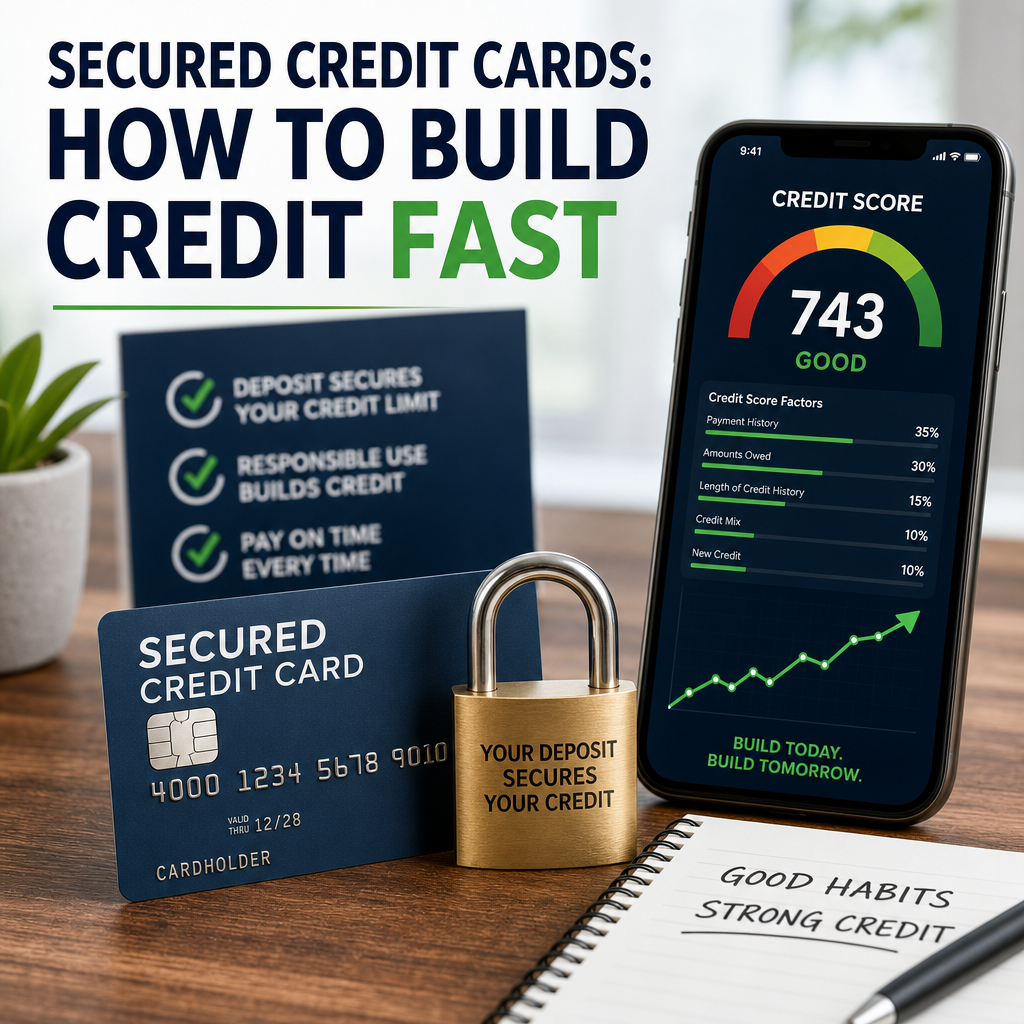
Secured credit cards can be a simple, effective way to start building or rebuilding credit, especially if you’re new to borrowing or recovering from past mistakes. With responsible use and on-time payments, they can help you develop strong credit habits while showing lenders you can manage credit well.
By: Mary on July 23, 2026
Última atualização em: agosto 3, 2026
If you’re new to credit or trying to recover from a rough financial patch, secured credit cards can be one of the most practical tools for building a stronger credit history. They’re designed to help people establish credit with less risk for the lender, which makes them especially useful for beginners, students, and anyone working to rebuild after setbacks.
Unlike a traditional unsecured card, a secured credit card requires a refundable cash deposit that usually becomes your credit limit. That deposit lowers the issuer’s risk, but the card often works like a regular credit card when it comes to purchases, payments, and reporting to the credit bureaus. Used well, it can help you build positive credit habits that may eventually qualify you for better financial products.
What Is a Secured Credit Card?
A secured credit card is a type of credit card backed by a security deposit. The deposit is typically held by the card issuer and may equal the credit limit on the account.
For example, if you place a $300 deposit, your credit limit may be $300. You can then use the card for everyday purchases and pay it off like any other credit card.
How It Differs from an Unsecured Card
An unsecured credit card does not require a deposit. The issuer approves you based on your credit profile, income, and other factors. Secured cards are often easier to obtain because the deposit reduces the issuer’s risk.
That makes secured cards useful when:
You have no credit history
You have limited credit history
You’re rebuilding after missed payments or other credit problems
You want a controlled way to learn responsible credit use
How Secured Credit Cards Help Build Credit
A secured credit card can help build credit by creating a record of responsible borrowing. The key is that the card must report your activity to the major credit bureaus: Experian, Equifax, and TransUnion.
When the issuer reports your account, your payment history, credit utilization, and account age can become part of your credit profile.
1. Payment History Matters Most
Your payment history is one of the most important factors in your credit scores. Paying on time each month shows lenders that you can manage debt responsibly.
To use a secured card effectively:
Pay the statement balance on or before the due date
Set up automatic payments if possible
Avoid late payments, even by a few days
Keep track of billing cycles and due dates
Even one missed payment can slow your progress, so consistency matters.
2. It Can Help You Establish Credit History
If you’ve never had a credit card or loan, a secured card can help you create an account history. Over time, that account may show lenders that you can handle credit responsibly.
This is especially helpful for:
Young adults building first-time credit
Immigrants new to the U.S. credit system
People returning to credit after a long gap
Consumers trying to re-enter the credit market
The longer you keep the account in good standing, the more useful it can become.
3. It Encourages Healthy Credit Utilization
Credit utilization is the percentage of available credit you’re using. For example, if your limit is $300 and you carry a $90 balance, your utilization is 30%.
Lower utilization is generally better for credit scores. With a secured card, the limit is often small, so it’s important to keep balances low.
A few practical tips:
Use the card for a small recurring bill, such as a streaming subscription
Pay off purchases quickly
Keep your balance below 30% of the limit when possible
Aim even lower if you can manage it comfortably
4. It Builds Credit Without Taking on Large Risk
Because the card is secured by a deposit, it can be less stressful than a traditional card. You’re not starting with a large line of credit, and that smaller limit can help prevent overspending.
For many people, this controlled environment makes it easier to practice:
Budgeting
Paying on time
Tracking card activity
Using credit as a tool instead of a crutch
Who Should Consider a Secured Credit Card?
Secured cards are a smart option for several types of consumers. They’re not the only path to credit, but they can be one of the simplest and most accessible.
People with No Credit History
If you’re just starting out, lenders don’t have much information to evaluate. A secured card gives you a chance to begin building a file with the credit bureaus.
People Rebuilding Credit
If you’ve had late payments, collections, or even a bankruptcy in the past, a secured card may help you demonstrate better habits going forward. It won’t erase old negative marks, but it can add newer, positive information to your profile.
People Who Want More Control
Some consumers prefer a lower limit while they learn to manage credit. A secured card can serve as a training ground for disciplined use.
Students and Young Adults
Students often have limited credit history. A secured card can help them build a foundation before applying for more advanced products.
How to Choose the Right Secured Credit Card
Not all secured cards are equal. Some are better suited for credit building than others, especially if you compare fees, reporting practices, and upgrade options.
Look for Credit Bureau Reporting
This is essential. If the issuer does not report to the major bureaus, the card may not help your credit much at all.
Compare Fees
Some secured cards charge annual fees, processing fees, or monthly maintenance fees. Others keep costs lower. Since your goal is credit building, try to avoid unnecessary fees.
Watch for:
Annual fees
Application fees
Monthly service fees
High foreign transaction fees
Extra charges for paper statements or replacement cards
Check the Deposit Requirement
Most secured cards require a deposit, but the amount can vary. Some start at $200; others may allow higher deposits for larger limits.
Choose an amount that fits your budget without putting pressure on your emergency savings.
Ask About Upgrade Paths
A strong secured card may let you move to an unsecured card later, often after months of on-time payments and responsible use. This “graduation” can be a sign that you’ve built enough trust with the issuer to move forward.
Review Interest Rates and Terms
Even if you plan to pay in full each month, it’s still wise to know the APR and account terms. Unexpected balances can become expensive if you carry them.
Best Practices for Using a Secured Credit Card
Getting a secured card is only the first step. The way you use it will determine how much it helps your credit.
Use the Card Sparingly
You don’t need to max out the card to build credit. In fact, doing so can hurt your utilization and make repayment harder.
A better approach:
Make one or two small purchases each month
Wait for the statement to close
Pay the statement balance in full
Repeat consistently
Pay More Than the Minimum
Minimum payments keep the account current, but they won’t help you as much as paying in full. If you can pay off your balance each month, you can avoid interest charges and keep utilization low.
Set Up Alerts and AutoPay
A missed payment can damage your progress. Alerts can remind you when:
A payment is due
Your balance gets too high
A purchase posts to the account
Your statement is ready
AutoPay for at least the minimum payment can be a helpful safety net.
Monitor Your Credit Reports
Check your credit reports to make sure the account is reporting correctly. You can review your reports for free through AnnualCreditReport.com, the official site authorized for free annual credit reports.
Look for:
Correct account information
On-time payment reporting
Accurate credit limits
No errors or duplicate accounts
Keep the Account Open
Age of credit is another factor lenders may consider. If your secured card has low fees and works well for you, keeping it open for a while can help your credit history mature.
Common Mistakes to Avoid
Secured cards are straightforward, but a few missteps can limit their value.
Carrying a High Balance
A high balance can increase utilization and may make it harder to pay on time. Try to keep the card easy to manage.
Missing Payments
Even a secured card can report late payments. If you’re struggling to remember due dates, use reminders or automated payments.
Applying for Too Much Credit Too Soon
If you’re building credit, resist the urge to open multiple accounts quickly. A gradual approach usually works better.
Ignoring Fees
A card with heavy fees may eat into your deposit value or make the account less useful. Read the terms carefully before applying.
Assuming the Deposit Eliminates Responsibility
The deposit protects the lender, but it doesn’t protect your credit score. Your payment behavior still matters.
When Can You Move Beyond a Secured Credit Card?
Many cardholders eventually move from a secured card to an unsecured credit card. The timeline depends on the issuer and your financial habits.
You may be ready for an upgrade if:
You’ve made several months of on-time payments
Your balance stays low
Your credit score has improved
You have stable income and manageable debt
The issuer offers a graduation path
When you transition, the issuer may return your deposit if you close the secured account or convert it to an unsecured product, depending on the terms.
Example: How a Secured Card Can Work in Real Life
Imagine you open a secured credit card with a $300 deposit. You use it to pay for a monthly phone bill of $45.
Here’s a simple routine:
The card charges your phone bill automatically
You check the balance during the month
Before the due date, you pay the statement balance in full
The issuer reports your on-time payment to the credit bureaus
After several months of consistent use, you’ve built a track record of payment history and responsible utilization. That record may help when you apply for an unsecured card, auto loan, or apartment lease.
Secured Credit Cards vs. Other Credit-Building Tools
A secured card is just one option. Depending on your situation, other tools may also help.
Credit-Builder Loans
With a credit-builder loan, you make payments over time, and the loan proceeds are usually released after the loan is repaid. These can help build installment loan history.
Becoming an Authorized User
If a family member or trusted person adds you as an authorized user on a well-managed credit card, you may benefit from their positive payment history. However, this depends on the issuer and how the account is managed.
Unsecured Starter Cards
Some people may qualify for a basic unsecured card with no deposit required. These cards are helpful, but they may be harder to get if you have limited or damaged credit.
For many consumers, a secured credit card remains the most accessible place to start.
Frequently Asked Questions
What is the main purpose of a secured credit card?
The main purpose of a secured credit card is to help people build or rebuild credit with a lower-risk account. Because it requires a refundable deposit, it is often easier to qualify for than an unsecured card. When used responsibly, it can help create a positive payment history and improve credit habits.
How long does it take for a secured credit card to build credit?
There is no exact timeline, but many people begin to see credit activity reported after one to two billing cycles, depending on the issuer. Meaningful improvement usually takes several months of on-time payments and low balances. Building credit is a gradual process, not an overnight fix.
Will I get my deposit back?
In many cases, yes. If you close the account in good standing or graduate to an unsecured card, the issuer may return your deposit according to the card’s terms. However, if you have unpaid balances or fees, the deposit may be used to cover those amounts.
Can a secured credit card hurt my credit?
Yes, if it’s misused. Late payments, high balances, and account defaults can negatively affect your credit. A secured card helps only when you make timely payments, keep your utilization low, and manage the account responsibly.
How much should I use my secured credit card?
A good rule is to keep the balance low and manageable. Many people use the card for a small recurring expense and pay it off in full each month. This approach helps you build credit without taking on unnecessary interest or high utilization.
Secured credit cards can be a simple, effective way to build credit when used with discipline. By reporting to the major credit bureaus, they give you a chance to establish payment history, manage utilization, and practice healthy financial habits in a controlled setting. They’re especially valuable if you have no credit history, are recovering from past mistakes, or want a safer way to learn how credit works.
The most important thing to remember is that a secured card is a tool, not a shortcut. Its real value comes from consistent on-time payments, low balances, and careful account management. If you choose a card with reasonable fees, responsible reporting, and a clear path to graduation, you can use it as a stepping stone toward stronger credit opportunities in the future. Start small, stay consistent, and treat every on-time payment as progress.
Mary S, CFP®, is a Certified Financial Planner with over 12 years of experience in personal finance, retirement planning, and wealth management. She writes educational content that helps readers understand financial concepts and make informed decisions based on reliable information.