Housing Choice Voucher Program Eligibility and Waiting List Guide
Finding affordable housing can feel overwhelming, especially when rents rise faster than wages. The Housing Choice Voucher Program is one of the most important federal housing assistance programs in the United States, helping eligible low-income families, seniors, and people with disabilities afford safe, decent housing in the private market. But understanding Housing Choice Voucher Program eligibility and waiting lists is often the first challenge for applicants.
If you’re trying to figure out whether you qualify, how to apply, or why waiting lists can be so long, this guide breaks it down in plain language. You’ll learn how the program works, what factors affect eligibility, and what to expect while waiting for assistance.
What Is the Housing Choice Voucher Program?
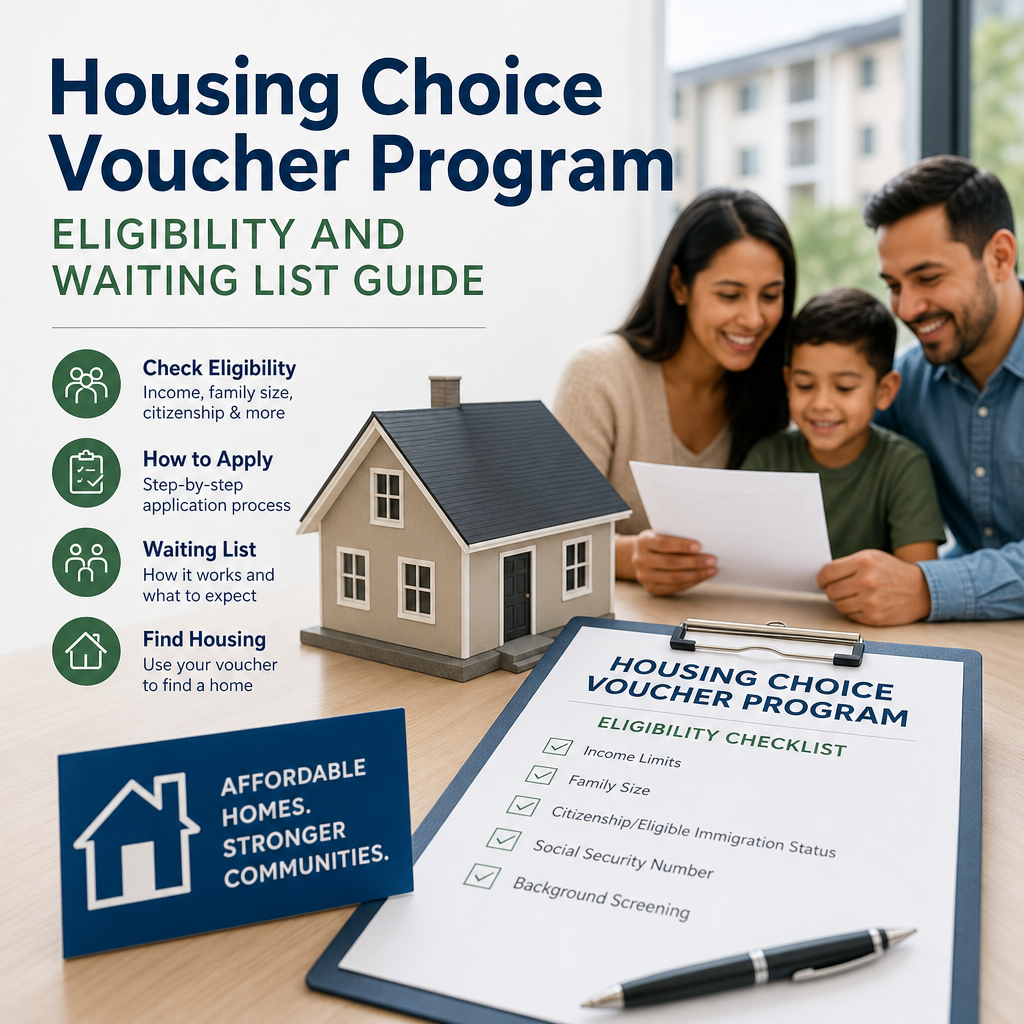
The Housing Choice Voucher Program, often called Section 8, is administered by the U.S. Department of Housing and Urban Development (HUD) and run locally by public housing agencies (PHAs). Instead of placing participants in a specific government-owned property, the program gives eligible households a voucher that helps subsidize rent in a private home, apartment, or townhouse.
In many cases, participants pay about 30% of their adjusted monthly income toward rent and utilities, while the voucher covers the rest up to a locally approved limit. That flexibility makes the program especially valuable for families who want more housing choices and neighborhoods that may otherwise be out of reach.
Why the Program Matters
The Housing Choice Voucher Program can help households:
- Reduce rent burden
- Move into safer or more stable neighborhoods
- Stay housed during financial hardship
- Choose housing that fits family size and needs
- Maintain more control over where they live
Because the voucher is portable, eligible tenants can often use it in different rental units, as long as the landlord accepts the voucher and the unit meets program standards.
Housing Choice Voucher Program Eligibility
Eligibility for the Housing Choice Voucher Program is based on several factors, not just income. Local housing agencies follow federal rules, but they may also have their own preferences and screening procedures.
1. Income Limits
The most important factor is household income. In general, your household must qualify as low-income, very low-income, or in some cases extremely low-income, depending on the local area.
HUD income limits vary by location and family size because the cost of living differs from place to place. A family of four in one county may qualify, while a similar household in a higher-cost metro area may face different thresholds.
To determine eligibility, housing agencies usually look at:
- Gross annual income
- Household size
- Sources of income, such as wages, Social Security, child support, pensions, or unemployment benefits
- Assets in some situations
2. Household Composition
The voucher is issued to the household, not to one person alone. The agency considers:
- Everyone who will live in the unit
- Dependents and family members
- Live-in aides, if approved
- Expected changes in household size
Accurate household information matters because it affects both income calculations and the size of unit the family may qualify for.
3. Citizenship or Eligible Immigration Status
At least one household member must be a U.S. citizen or have eligible immigration status to receive assistance. Some mixed-status families may qualify for prorated assistance, depending on the household composition and local rules.
4. Background Screening
Even if a household meets income requirements, a housing agency may deny assistance based on certain background issues. Common factors include:
- Recent violent or drug-related criminal activity
- Previous eviction from a federally assisted housing program for serious violations
- Fraud or misrepresentation in a housing application
- Outstanding debts to a housing authority in some cases
Policies vary by local agency, but applicants should always answer questions honestly and provide requested documents.
5. Local Preferences
Because demand is so high, many housing agencies use preferences to prioritize some applicants. These can include:
- Homelessness
- Displacement from natural disasters or government action
- Domestic violence
- Disability-related needs
- Veterans status
- Local residency
Preferences do not guarantee assistance, but they can affect where you are placed on the waiting list.
How Waiting Lists Work
For many applicants, the biggest hurdle is not proving eligibility—it’s waiting for a voucher to become available. Demand for housing assistance far exceeds supply in most areas, so many agencies keep waiting lists that can be closed for long periods.
Why Waiting Lists Exist
The number of available vouchers is limited by federal funding and the local housing authority’s resources. When more people apply than there are vouchers, PHAs use waiting lists to manage demand fairly.
Some agencies may have:
- Open waiting lists for a short application window
- Closed waiting lists with no new applications accepted
- Preferences that move certain households ahead in line
- Separate lists for special populations, such as seniors or people with disabilities
Long Wait Times Are Common
It’s not unusual for waiting lists to last months or even years. The wait depends on:
- Local demand
- Number of vouchers available
- Turnover in the program
- Preferences used by the agency
- Whether the list is open or closed
This is why applying to more than one housing authority, when allowed, can improve your chances.
Lottery or First-Come, First-Served?
Different agencies use different methods to place applicants on a waiting list. Common systems include:
- First-come, first-served
Applicants are placed in order based on when they apply. - Random lottery
Applications submitted during a window are randomly selected or ranked. - Preference-based ordering
Applicants with approved preferences may move ahead of others.
Read each housing authority’s instructions carefully. Missing a deadline or submitting incomplete information can affect your place on the list.

How to Apply for the Housing Choice Voucher Program
The application process usually starts with your local public housing agency. Since every agency operates differently, the first step is to find out whether the waiting list is open.
Steps to Apply
- Find your local PHA
Search for the housing authority serving your city or county. - Check whether the waiting list is open
Many agencies post waiting list notices on their websites or at their office. - Gather documents
You may need:- Photo ID
- Social Security numbers for household members
- Proof of income
- Birth certificates
- Immigration documents, if applicable
- Contact information
- Submit the application
Applications may be online, by mail, or in person. - Keep your contact information updated
Agencies often remove applicants who cannot be reached. - Respond promptly to requests
If the agency asks for additional documents, send them as soon as possible.
Practical Tip
Create a simple folder—paper or digital—for your application records. Keep copies of every form, letter, email, and notice. If you move or change phone numbers, update the housing authority immediately.
What Happens After You’re Placed on a Waiting List?
Being on the waiting list does not mean you’ve been approved yet. It simply means your application is in line for review when a voucher becomes available.
Typical Next Steps
When your name reaches the top of the list, the housing authority may contact you for:
- A full eligibility interview
- Updated income verification
- Identity and household documentation
- Criminal background screening
- Landlord and rental history review
If you don’t respond by the deadline, the agency may move on to the next applicant.
Voucher Issuance and Search Time
If approved, you receive a voucher and usually a set period to find a qualifying rental unit. The unit must meet program standards, and the landlord must agree to participate.
Once you find a unit, the housing agency typically inspects it to make sure it is safe and meets housing quality requirements. If the unit passes and the rent is reasonable, assistance can begin.
Common Reasons Applicants Are Delayed or Denied
Even if you qualify on paper, issues can slow down the process or result in denial. Understanding these challenges helps you avoid mistakes.
Incomplete Applications
A missing signature, outdated income information, or an unreturned notice can delay your place on the list.
Unreported Income or Household Changes
If your household size changes or you start a new job, you may need to update the housing authority. Failing to report changes can create problems later.
Missing Deadlines
Some agencies require periodic confirmation that you still want to remain on the list. If you miss the deadline, your application may be removed.
Disqualifying Background Issues
Certain criminal or housing-related histories may affect eligibility. However, applicants should not assume they are automatically disqualified. Many agencies review cases individually.
Tips to Improve Your Chances
You cannot control voucher supply, but you can improve your odds of staying eligible and ready when your name comes up.
Stay Organized
- Keep copies of all application materials
- Store notices in one place
- Track deadlines on a calendar
- Save proof of mailing or email submissions
Apply Broadly
If possible, apply to multiple housing authorities where you may be eligible. Some areas allow applicants from outside the immediate jurisdiction, while others prioritize local residents.
Watch for Openings
Because waiting lists open and close quickly, check housing authority websites regularly. You can also sign up for alerts from local housing resource organizations.
Keep Your Information Current
Update the housing authority if you:
- Move
- Change your phone number or email
- Have a change in household members
- Experience a change in income
Be Ready With Documents
When your name comes up, you may need to act quickly. Keeping documents ready can prevent delays.
Housing Choice Voucher Program and Renters in Real Life
Here’s a simple example.
A single parent with two children applies for the Housing Choice Voucher Program through the local housing authority. The family meets the income guidelines and is placed on the waiting list. A year later, the agency contacts the parent for updated income documents. After review, the family receives a voucher and begins searching for an apartment that meets the rent limit and inspection standards.
Without the voucher, the family might have had to spend most of its income on rent. With the program, the household gains more stability and flexibility.
That real-world impact is why understanding Housing Choice Voucher Program eligibility and waiting lists matters so much. A little preparation can help applicants avoid mistakes and stay ready for the opportunity when it arrives.
Frequently Asked Questions
1. Is the Housing Choice Voucher Program the same as Section 8?
Yes, people often use “Section 8” to refer to the Housing Choice Voucher Program. Technically, Section 8 is part of the federal housing assistance framework, and the Housing Choice Voucher Program is the most common voucher-based version of it.
2. How do I know if I’m eligible?
Eligibility depends on household income, family size, citizenship or immigration status, background screening, and local housing authority rules. The best way to confirm is to review your local PHA’s application guidelines and income limits.
3. Why is the waiting list so long?
Demand for affordable housing assistance is much higher than the number of available vouchers. Since funding is limited, many housing authorities use waiting lists to manage applications fairly.
4. Can I apply to more than one housing authority?
In many cases, yes, but rules vary by location. Some agencies accept applicants from outside their service area, while others give preference to local residents. Always check each agency’s policies before applying.
5. What should I do after I apply?
Keep your contact information updated, save copies of all paperwork, and watch for notices from the housing authority. If you receive a request for more information, respond quickly to avoid being removed from the list.
Official Resources
- HUD Housing Choice Voucher Program
- HUD Income Limits
- HUD Rental Assistance
- USA.gov Housing Help
- National Housing Law Project
Conclusion
The Housing Choice Voucher Program can be a lifeline for households struggling to keep up with rising housing costs, but success starts with understanding the rules. Knowing the basics of Housing Choice Voucher Program eligibility and waiting lists helps you prepare a stronger application, avoid common delays, and stay informed while you wait.
The most important takeaways are simple: confirm that you meet the income and household requirements, check your local housing authority’s waiting list status, keep your documents organized, and respond quickly to any request for information. Because wait times can be long, persistence matters. Staying proactive can make the difference between losing your spot and being ready when assistance becomes available.
If you’re considering applying, start with your local PHA and monitor updates regularly. Affordable housing resources can be hard to find, but understanding the process puts you in a much better position to take the next step.