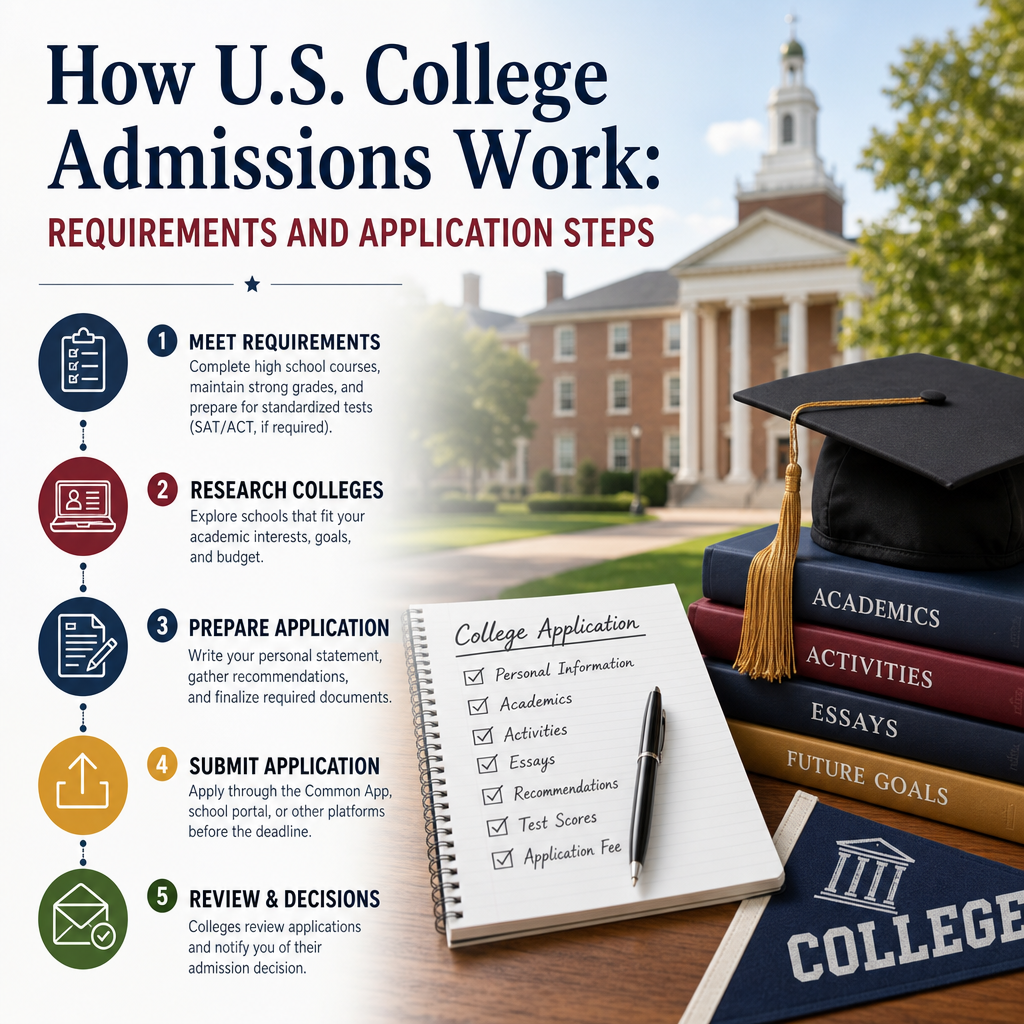
How U.S. College Admissions Work: Requirements and Application Steps
College admissions in the U.S. can seem complicated at first, but breaking the process into clear steps makes it much easier to manage. In this guide, you’ll learn what colleges look for and how to navigate the application process with confidence.
By: Jennifer on July 24, 2026
Understanding how U.S. college admissions work can make the process feel far less overwhelming. For many students and families, the American college application process seems full of deadlines, essays, test scores, and unfamiliar terms. But once you break it into clear steps, it becomes much more manageable.
Whether you’re applying to a community college, state university, private college, or highly selective school, the core idea is the same: colleges want to understand your academic background, extracurricular interests, personal qualities, and readiness for college-level work. In this guide, we’ll walk through the main requirements and application steps so you can approach the process with confidence.
What U.S. Colleges Look For
When colleges review applications, they usually evaluate a mix of academic and personal factors. The exact formula varies by school, but most admissions offices want to know whether you can succeed academically and contribute positively to campus life.
Common admissions factors
High school coursework
Grades and GPA
Standardized test scores, if required
Personal essay or college essays
Letters of recommendation
Extracurricular activities and leadership
Special talents, achievements, or work experience
Demonstrated interest, at some schools
Some colleges are test-optional, meaning they do not require SAT or ACT scores for admission. Others still use test scores as one piece of the overall review. Always check each school’s current policy.
Holistic review vs. formula-based review
Some institutions use a holistic review, which means they evaluate the whole application, not just numbers. This is common at private colleges and selective universities. Other schools may rely more heavily on GPA, class rank, and course rigor.
Even when academics matter most, admissions teams often want to see:
Consistent effort over time
Challenging classes when available
Clear interest in learning
Maturity and self-awareness in essays
U.S. College Admissions Requirements
The requirements for college admission in the U.S. are usually straightforward, but they can differ from one institution to another. It helps to understand the most common materials before you begin.
1. High school transcript
Your transcript is one of the most important documents in the application. It shows:
Courses taken
Grades earned
GPA
Graduation progress
Sometimes class rank
Colleges use transcripts to evaluate your academic preparation. Strong performance in challenging classes often matters more than taking easier courses just to raise your GPA.
2. High school coursework
Many colleges expect students to complete a standard college-prep curriculum in high school. This often includes:
English
Math
Science
Social studies
Foreign language
Electives
Competitive schools may want to see honors, AP, IB, or dual-enrollment coursework if your school offers it. The key is to challenge yourself appropriately.
3. Standardized test scores
SAT and ACT scores are still used by some colleges, though many schools have test-optional policies. If a school requires or recommends tests, be sure to verify:
Which exam is accepted
The deadline for score submission
Whether self-reported scores are allowed
Whether writing sections are needed
Test-optional does not always mean test-blind. Some colleges may still consider scores if you send them, while others will not review them at all.
4. Personal statement or college essays
The essay gives you a chance to speak directly to the admissions committee. It helps them understand your personality, values, and goals beyond grades and scores. Good essays are usually:
Honest
Specific
Reflective
Well-organized
Free of clichés
A strong essay often focuses on a meaningful experience, a challenge you overcame, or a perspective that shaped who you are.
5. Letters of recommendation
Some colleges ask for recommendations from teachers, counselors, or other adults who know you well. These letters help admissions officers understand your:
Classroom engagement
Character
Work ethic
Intellectual curiosity
Growth over time
Choose recommenders who can speak about your strengths with detail and credibility.
6. Activities and achievements
Colleges value more than just classroom performance. They also look at how you spend your time outside school. This may include:
Clubs and student government
Sports
Music, art, or theater
Volunteer work
Part-time jobs
Family responsibilities
Independent projects or competitions
You do not need to do everything. Depth matters more than quantity. Long-term commitment to a few activities often stands out more than a long list of short-term involvements.
How U.S. College Admissions Work Step by Step
Now that you know the basic requirements, let’s walk through the actual application process. While each college has its own deadlines and forms, most students follow a similar path.
Step 1: Build a college list
Start by identifying schools that match your academic profile, interests, location preferences, and budget. A balanced list usually includes:
Reach schools: very competitive or slightly above your typical profile
Match schools: schools where your academic profile fits well
Safety schools: schools where admission is likely and affordability is realistic
When building your list, consider:
Major or academic programs
Campus size
Location
Public vs. private
Financial aid availability
Student support services
Internships and career outcomes
A thoughtful college list can save time and reduce stress later.
Step 2: Check admission requirements for each school
Each college sets its own requirements. Some may need essays and recommendations; others may not. Review each admissions page carefully for:
Application platform accepted
Early action or early decision options
Test score policy
Required essays
Supplemental questions
Portfolio or audition requirements
Financial aid deadlines
Creating a spreadsheet can help you keep everything organized.
Step 3: Prepare your application materials
Before you start submitting applications, gather the materials you’ll need:
Official or self-reported transcript information
Test scores, if required
Activities list
Personal statement draft
Supplemental essays
Recommendation requests
Resume, if a school accepts one
Portfolio, audition, or additional materials if needed
Give yourself time. Rushing often leads to avoidable mistakes.
Step 4: Write strong essays
College essays should sound like you. Avoid overly formal language or trying to guess what admissions officers want to hear. Instead, focus on clarity and authenticity.
Tips for effective essays
Answer the prompt directly
Use a specific story or example
Show growth, not just achievement
Edit for grammar and clarity
Ask a teacher, counselor, or trusted adult to review it
If a school requires supplemental essays, treat each one seriously. These short responses often show whether you’ve researched the college and understand why it fits you.
Step 5: Request recommendations early
Teachers and counselors are often busiest during application season. Ask for recommendations well in advance, and provide helpful materials such as:
A résumé or activity list
A short note about your goals
Deadlines
Any forms the school requires
Polite, early requests make the process easier for everyone.
Step 6: Submit applications before deadlines
Most colleges use online application systems. Common platforms include the Common Application, Coalition Application, and school-specific portals. Double-check each deadline, especially for:
Early decision
Early action
Regular decision
Priority scholarship deadlines
Financial aid deadlines
Submit everything early if you can. That gives you time to correct issues before the deadline passes.
Step 7: Apply for financial aid
For many families, financial aid is a major part of college planning. The most common financial aid forms include:
FAFSA: Free Application for Federal Student Aid
CSS Profile: required by some private colleges
School-specific financial aid forms
Financial aid can include grants, scholarships, work-study, and loans. Be sure to review the aid requirements for each school because deadlines may differ from admission deadlines.
Step 8: Track your application status
After applying, log in to each college’s portal to confirm that all materials were received. Make sure the following items are marked complete:
Application form
Fee or fee waiver
Transcript
Test scores, if applicable
Recommendations
Essays
Financial aid documents
If something is missing, contact the admissions office promptly.
Step 9: Wait for admissions decisions
Once your application is complete, the school reviews it and sends a decision. Possible outcomes include:
Accepted
Denied
Waitlisted
Deferred, usually from an early round to a later one
If you are waitlisted, follow the college’s instructions carefully. Some schools allow you to submit a letter of continued interest or updated grades.
Step 10: Compare offers and make your choice
If you receive multiple acceptances, compare them based on:
Total cost after aid
Academic program strength
Campus fit
Location
Housing
Career opportunities
Student life
The cheapest school is not always the best choice, and the most prestigious school is not always the right fit. Focus on value, support, and long-term goals.
Understanding Application Plans
Different admission plans can affect your timeline and strategy. Knowing the differences can help you plan better.
Early decision
Early decision is binding. If you are admitted, you agree to attend that college and withdraw other applications. This option is best for students who have a clear first-choice school and have reviewed the cost carefully.
Early action
Early action is non-binding. You apply early and usually receive an earlier decision, but you are not required to enroll if admitted. This can be a good option if you want an early result without committing immediately.
Regular decision
Regular decision is the most common application plan. Deadlines are later, and decisions are usually released in the spring. This gives students more time to improve grades, polish essays, and compare colleges.
Rolling admission
With rolling admission, colleges review applications as they arrive and make decisions continuously. Applying early can improve your chances at some schools, especially when spaces and scholarships are limited.
Common Mistakes to Avoid
Even strong students make preventable mistakes during the admissions process. Here are some of the most common ones:
Missing deadlines
Sending incomplete applications
Writing generic essays
Ignoring school-specific questions
Choosing recommenders too late
Forgetting financial aid forms
Not proofreading carefully
Applying only to highly selective schools
Underestimating the cost of attendance
A little organization goes a long way.
A Simple College Admissions Checklist
Use this quick checklist to stay on track:
Research schools and majors
Confirm admission and financial aid deadlines
Request transcripts and recommendations
Draft and revise essays
Complete the application accurately
Submit test scores, if required
File FAFSA and other aid forms
Monitor application portals
Compare admission and aid offers
Make your final decision
Frequently Asked Questions
1. What is the most important part of a college application?
There is no single factor that matters most at every school. For many colleges, your transcript and course rigor are the strongest academic indicators. Essays, activities, recommendations, and test scores can also play an important role, depending on the institution. The best applications show both academic readiness and personal character.
2. Do all U.S. colleges require SAT or ACT scores?
No. Many colleges are test-optional, and some are test-blind, meaning they do not consider scores even if submitted. However, policies vary by school and can change over time. Always check the official admissions page before deciding whether to send scores.
3. When should students start applying to college?
Ideally, students should start researching colleges during junior year of high school and begin applications in the summer before senior year. This gives enough time to write essays, request recommendations, and meet deadlines without last-minute stress.
4. How many colleges should I apply to?
There is no universal number, but many students apply to around 6–10 schools, depending on their goals and budget. A balanced list should include reach, match, and safety schools. Quality matters more than applying to a very large number of colleges.
5. Can I still get into college with average grades?
Yes, many students with average grades are admitted to colleges every year. Admissions decisions depend on the whole application, not just GPA. Strong essays, upward grade trends, extracurricular involvement, and a well-matched college list can improve your chances. Community colleges and many four-year schools offer multiple pathways to success.
Understanding how U.S. college admissions work gives students and families a major advantage. Instead of treating the process like a mystery, you can approach it as a series of clear steps: build a balanced college list, review each school’s requirements, prepare strong essays and recommendations, apply on time, and compare financial aid carefully.
The best applications tell a complete story. They show what you’ve studied, how you’ve grown, what you care about, and why a particular college fits your goals. That means the process is not just about checking boxes. It’s about presenting yourself thoughtfully and accurately.
If you’re starting now, focus on organization and consistency. Make deadlines visible, ask for help early, and give yourself enough time to polish every part of the application. With the right plan, the admissions process becomes much less intimidating and much more manageable. The sooner you begin, the more confident and prepared you’ll feel when decision time arrives.
Jennifer, M.Ed., holds a degree in Higher Education Administration, with
a focus on U.S. college financial aid, admissions policy, and student
support systems. She researches and writes about scholarships, federal
aid programs, and the college planning process to help students and
families make informed, well-supported decisions.