Emergency Funds Explained: How Much Americans Should Save
An emergency fund is one of the most important tools in personal finance, yet many Americans still delay building one. When life throws an unexpected expense your way—a job loss, medical bill, car repair, or urgent home issue—cash on hand can keep you from turning to high-interest credit cards or draining long-term savings. Understanding how much to save, where to keep it, and how to build it over time can make a major difference in your financial stability.
The right emergency fund amount depends on your income, expenses, job security, and family situation. While there is no single number that fits everyone, there are practical guidelines that can help you set a realistic target. In this article, we’ll break down how emergency funds work, how much Americans should aim to save, and how to build yours step by step.
What Is an Emergency Fund?
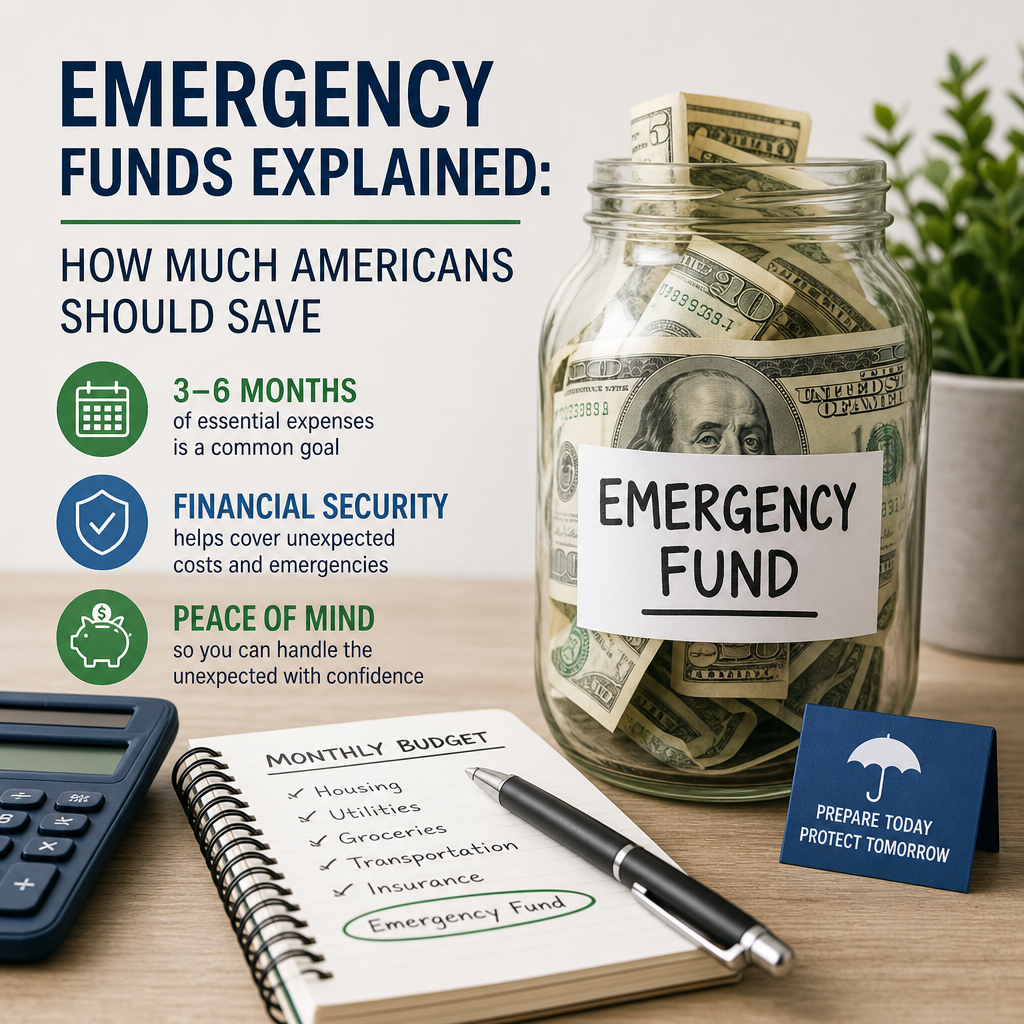
An emergency fund is money set aside specifically for unexpected expenses or financial disruptions. It should be easy to access, relatively safe, and separate from your everyday checking account.
Common examples of emergency expenses include:
- Losing your job or facing reduced hours
- A medical bill not covered by insurance
- Emergency car repairs
- A broken furnace or roof leak
- Travel for a family emergency
- A temporary income interruption for self-employed workers
An emergency fund is not the same as a vacation fund, holiday budget, or savings for a planned purchase. Its purpose is to help you avoid debt and financial stress when life changes suddenly.
How Much Should Americans Save in an Emergency Fund?
The most common rule of thumb is to save three to six months of essential expenses. That range works for many households, but the right target may be smaller or larger depending on your circumstances.
A simple starting point
If saving several months of expenses feels overwhelming, start with:
- $500 to $1,000 for a starter emergency fund
- Then build toward one month of essential expenses
- Eventually aim for three to six months of necessities
This gradual approach is especially helpful if you are paying down debt or living paycheck to paycheck.
What counts as essential expenses?
Focus on the basics you would still need if your income stopped:
- Rent or mortgage
- Utilities
- Groceries
- Transportation
- Minimum debt payments
- Insurance premiums
- Childcare, if necessary
- Prescription medications or critical healthcare costs
Nonessential spending like dining out, streaming subscriptions, shopping, and travel should not be included in your emergency fund target.
Why the Right Emergency Fund Amount Depends on Your Situation
Not everyone needs the same buffer. A single freelancer in a variable-income job has different needs than a dual-income household with stable government employment.
Factors that affect your goal
1. Job stability
If your income is steady and your industry is in demand, you may feel comfortable with a smaller reserve. If you work in a cyclical field, contract role, or commission-based job, a larger emergency fund can provide more security.
2. Household size
Families with children often face higher fixed costs and more potential emergencies. A larger cushion may help cover childcare, healthcare, and everyday living costs.
3. Health and insurance coverage
If you have high deductibles, ongoing medical needs, or limited insurance coverage, your emergency fund should account for possible out-of-pocket expenses.
4. Debt obligations
If you have significant debt, missing payments could hurt your credit and add fees. Your emergency plan should consider the minimum payments you would need to keep current.
5. Homeownership
Homeowners often need a larger reserve because repairs can be expensive and unpredictable. Even a small issue—like a plumbing leak or HVAC failure—can create a large bill.
6. Income volatility
Freelancers, gig workers, and seasonal employees may need more than six months of expenses because their income can fluctuate dramatically.
Emergency Fund Rules of Thumb That Actually Work
There are several practical ways to set an emergency fund goal without overcomplicating the process.
Option 1: Starter fund
If you are just beginning, save $500 to $1,000 first. That amount can handle many small emergencies and help you avoid using a credit card for unexpected costs.
Option 2: One month of expenses
Once you have a starter fund, aim for one month of essential expenses. This gives you a stronger foundation and more breathing room.
Option 3: Three months of essentials
This is a common goal for people with stable jobs and manageable expenses. It can cover a significant interruption without forcing immediate financial panic.
Option 4: Six months or more
A six-month emergency fund is often recommended for:
- Single-income households
- Families with dependents
- Self-employed workers
- People in unstable industries
- Homeowners with major responsibilities
In some cases, even more than six months may be appropriate, especially if replacing income would take a long time.
Where Should You Keep Your Emergency Fund?
Your emergency fund should be safe, accessible, and separate from day-to-day spending. You do not want it tied up in an investment that could lose value right when you need the money.
Best places to store emergency savings
High-yield savings account
This is one of the best options for most people. It keeps your money liquid while often paying better interest than a traditional savings account.
Money market account
These accounts can also be a strong option, especially if they offer easy access and competitive rates.
Separate savings account at a different bank
Keeping your emergency fund separate from your checking account can reduce the temptation to spend it.
What to avoid
Try not to store your emergency fund in:
- Stocks or mutual funds
- Retirement accounts unless it is a true last resort
- Cash at home for large amounts
- Accounts with withdrawal penalties or delays
An emergency fund should be available when you need it, without market risk or complicated restrictions.
How to Build an Emergency Fund on Any Budget
Building savings can feel difficult, especially if your income is tight. The good news is that consistency matters more than speed. Even small contributions add up.
1. Start with a realistic monthly amount
Choose an amount you can save regularly, such as:
- $25 per week
- $50 per paycheck
- $100 per month
The exact number is less important than creating the habit.
2. Automate your savings
Set up automatic transfers from checking to savings right after payday. This “pay yourself first” approach makes saving easier and more consistent.
3. Use windfalls strategically
Tax refunds, bonuses, gift money, and side hustle income can jump-start your emergency fund. Consider directing a portion of unexpected money into savings.
4. Cut one or two temporary expenses
You do not need a total lifestyle overhaul. Redirecting a small amount from subscriptions, takeout, or impulse purchases can help you build momentum.
5. Save in stages
Break the goal into milestones:
- First $500
- First $1,000
- One month of expenses
- Three months of expenses
- Six months of expenses
Each milestone provides real financial protection and keeps you motivated.
How to Use an Emergency Fund the Right Way
An emergency fund is for genuine emergencies, not routine spending or predictable expenses.
Good reasons to use it
You can use emergency savings for:
- Lost income
- Urgent medical costs
- Necessary vehicle repairs
- Emergency home repairs
- Critical family needs
- Short-term financial disruption
Reasons not to use it
Avoid using your emergency fund for:
- Sales or bargains
- Planned vacations
- Holiday gifts
- Routine car maintenance
- Nonessential home upgrades
- Everyday overspending
A helpful question to ask is: Would I still need this if my income stopped tomorrow? If the answer is yes, it may belong in your emergency budget.
How to Rebuild Your Emergency Fund After Using It
Using your emergency fund is not a failure. In fact, it means the fund did its job. The key is to rebuild it as soon as you can.
Steps to replenish your savings
- Review what caused the emergency and whether you can plan better next time.
- Put savings transfers back into your monthly budget.
- Temporarily reduce nonessential spending.
- Use future windfalls to restore your balance.
- Revisit your target if your expenses or household needs have changed.
If you used the fund because of a long-term hardship, you may need to adjust your savings goal and rebuild gradually.
Emergency Funds and Debt: Which Comes First?
Many Americans wonder whether to save first or pay off debt first. In most cases, the answer is both.
A balanced approach
It can make sense to:
- Save a small starter emergency fund first
- Continue making debt payments
- Build your emergency savings over time
This approach helps prevent new debt if an unexpected expense arises. Without even a modest buffer, many people end up borrowing again when life gets expensive.
If you have high-interest credit card debt, a small emergency fund is especially useful because it keeps you from relying on cards for every surprise expense.
Emergency Funds for Different Types of Americans
Young adults and recent graduates
Start small and focus on consistency. A starter emergency fund can protect you from car issues, moving costs, or job transitions.
Families
Families often need more than a basic buffer because their monthly expenses are higher and emergencies can multiply quickly.
Homeowners
Homeownership brings added responsibility. A larger fund can help with appliance failures, maintenance surprises, and major repairs.
Retirees
Retirees should keep enough accessible savings to cover unexpected healthcare or household expenses without disrupting investment accounts.
Freelancers and gig workers
If your income changes month to month, your emergency fund may need to be larger than average. Aim for a deeper cushion to cover slow periods.
Practical Example: How to Set Your Emergency Fund Goal
Let’s say your essential monthly expenses look like this:
- Rent: $1,500
- Groceries: $450
- Utilities: $200
- Transportation: $250
- Insurance and minimum debt payments: $600
Your essential monthly total is $3,000.
From there, your emergency fund goals might look like:
- Starter fund: $1,000
- One month of essentials: $3,000
- Three months of essentials: $9,000
- Six months of essentials: $18,000
This gives you a clear target based on your actual life, not a vague rule of thumb.
Common Mistakes to Avoid
Building an emergency fund is straightforward, but a few common mistakes can reduce its usefulness.
Mistakes to watch for
- Keeping the money in your checking account and spending it accidentally
- Investing emergency savings in risky assets
- Setting an unrealistic target and giving up
- Using the fund for non-emergencies
- Forgetting to rebuild after using it
- Not adjusting your goal as your life changes
A strong emergency fund should be easy to access, clearly labeled, and protected from impulse spending.
Frequently Asked Questions
1. How much should I save in an emergency fund if I live paycheck to paycheck?
Start with a small goal, such as $500 or $1,000. That may not cover every emergency, but it can prevent many common setbacks from turning into debt. Once you reach that amount, keep building toward one month of essential expenses.
2. Is three months of expenses enough for an emergency fund?
For many people with stable income and manageable obligations, three months may be enough. However, households with children, variable income, or higher financial risk may want to save closer to six months or more.
3. Should I keep my emergency fund in cash?
A small portion can be kept in cash if you want immediate access, but most of your emergency fund is usually safer in a high-yield savings account or money market account. That keeps it liquid while reducing the temptation to spend it.
4. Can I use my emergency fund for car repairs?
Yes, if the repair is unexpected and necessary for your transportation or job. Emergency funds are meant for urgent, unplanned costs. Routine maintenance, however, should usually come from a separate car budget.
5. What if I have debt and no emergency fund?
A small starter emergency fund is still important, even if you have debt. Saving a modest amount first can help you avoid adding more debt when something unexpected happens. After that, continue paying down debt while slowly growing your savings.
Official Resources
- Consumer Financial Protection Bureau: Emergency savings
- Federal Deposit Insurance Corporation: Savings options
- U.S. Department of Labor: Budgeting and saving
- National Foundation for Credit Counseling
- FINRA Investor Education Foundation
Conclusion
An emergency fund is not just a nice-to-have savings account—it is a financial safety net that can protect your budget, reduce stress, and help you avoid expensive debt when life gets unpredictable. For most Americans, the right target is somewhere between three and six months of essential expenses, but a smaller starter fund is an excellent first step if you are beginning from scratch.
The most important thing is to start with a realistic goal and build consistently. Even saving a little each paycheck can move you closer to financial resilience. Choose a secure place to keep your money, use it only for true emergencies, and rebuild it after each use. Whether you are trying to recover from a setback, prepare for the unexpected, or strengthen your overall financial plan, an emergency fund gives you options—and that flexibility is worth a lot.
If you have not started yet, now is a smart time to set your first savings target and make your emergency fund part of your long-term financial plan.