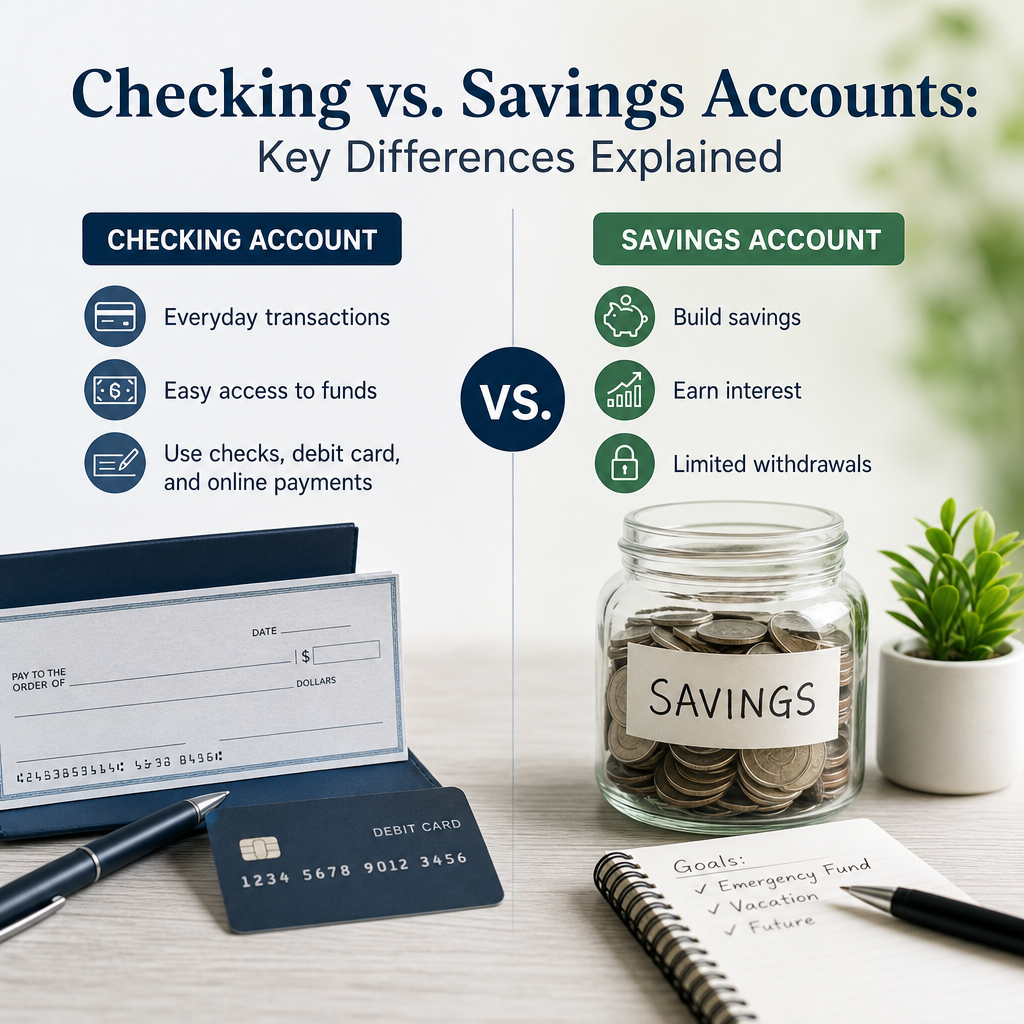
Checking vs. Savings Accounts: Key Differences Explained
Checking and savings accounts may both help you manage your money, but they serve very different purposes. A checking account is best for everyday spending, while a savings account helps you set money aside and build toward future goals.
By: Peter B on July 23, 2026
Última atualização em: agosto 3, 2026
Choosing between a checking vs. savings account is one of the first money decisions most people make, but it’s also one of the most important. These two account types can look similar at first glance because both help you store money safely and manage your finances. Still, they serve very different purposes.
A checking account is built for everyday spending. A savings account is designed to help you set money aside and grow it over time. Knowing how each one works can help you avoid fees, stay organized, and make smarter financial decisions.
In this guide, we’ll break down the key differences between checking vs. savings accounts, explain when to use each one, and show how they can work together to support your financial goals.
What Is a Checking Account?
A checking account is a bank account you use for day-to-day money management. It’s the account most people use to pay bills, make purchases, deposit paychecks, and withdraw cash.
Because checking accounts are meant for frequent use, they usually offer easy access to your money through:
Debit cards
Checks
Online bill pay
Mobile banking apps
ATM withdrawals
Checking accounts are designed for convenience, not growth. Many pay little to no interest, though some banks do offer interest-bearing checking accounts.
Common Uses for a Checking Account
A checking account is ideal for:
Paying rent or mortgage
Buying groceries and gas
Receiving direct deposit from your employer
Transferring money to friends or family
Paying monthly utility bills
If you need money available quickly and often, a checking account is the better fit.
What Is a Savings Account?
A savings account is meant for money you don’t plan to spend right away. It helps you build financial cushion for emergencies, future purchases, or long-term goals.
Savings accounts typically earn interest, which means your balance can grow over time. They also encourage saving by limiting how often you can withdraw money without triggering fees or restrictions, depending on the bank.
Common Uses for a Savings Account
People often use savings accounts for:
Emergency funds
Vacation savings
Down payments on a home
Holiday spending
Short- or medium-term financial goals
A savings account works best when you want your money to stay safe and out of your everyday spending routine.
Checking vs. Savings Accounts: The Main Differences
The biggest differences between checking vs. savings accounts come down to accessibility, purpose, and earning potential.
1. Purpose
A checking account is for spending. A savings account is for storing money.
That simple difference shapes everything else about how they work. Checking helps you manage cash flow. Savings helps you build reserves and reach goals.
2. Access to Money
Checking accounts offer fast, frequent access. You can usually spend directly from the account with a debit card or write checks.
Savings accounts are more limited. You can still access your money, but the goal is to make withdrawals less convenient so you’re less tempted to spend.
3. Interest
Checking accounts usually earn little or no interest.
Savings accounts often earn interest, though the rate can vary widely by bank and account type. High-yield savings accounts generally offer better rates than standard savings accounts.
If growing your balance matters, savings has the advantage.
4. Transaction Limits
Checking accounts typically allow unlimited transactions for spending and payments.
Savings accounts may limit certain types of withdrawals or transfers. Banks can still set their own rules, so it’s important to check the account disclosures.
5. Fees and Requirements
Both account types can come with monthly maintenance fees, minimum balance requirements, or other conditions. Some banks waive these fees if you set up direct deposit, maintain a minimum balance, or use e-statements.
Always compare fee structures before opening an account.
When to Use a Checking Account
A checking account should be your financial hub for everyday activity. If money moves in and out regularly, checking is the right place.
Good Situations for Checking
Use checking when you need to:
Pay bills on a recurring schedule
Spend money each week on daily expenses
Keep your paycheck accessible
Make purchases with a debit card
Send payments electronically
Example
Suppose you get paid every two weeks. Your paycheck goes into checking, and you use that account to pay your phone bill, buy groceries, and cover gas. This keeps your spending simple and organized.
When to Use a Savings Account
Savings accounts are ideal for money you want to keep separate from your everyday spending.
Good Situations for Savings
Use savings when you want to:
Build an emergency fund
Save for a trip or major purchase
Set aside money for irregular expenses
Earn interest on idle cash
Avoid the temptation to overspend
Example
Imagine you want to buy a new laptop in six months. Instead of leaving that money in checking, you move it to savings. The money stays protected, and you’re less likely to spend it on something unplanned.
Why You Probably Need Both
For most people, the smartest approach is not choosing checking vs. savings accounts as an either-or decision. Instead, it’s using both together.
A checking account handles the money you need right now. A savings account protects the money you want to keep for later.
A Simple Money Setup
Here’s a practical way to divide your finances:
Checking account
Use for income, bills, and regular spending.
Savings account
Use for emergency funds and planned goals.
Optional sub-savings accounts
Some banks let you create separate buckets for travel, taxes, or holidays.
This setup helps you stay organized and reduces the chance of accidentally spending money you meant to save.
How to Decide Which Account Comes First
If you’re just starting out, you may wonder whether to open a checking or savings account first. The answer depends on your immediate needs.
Start with Checking If You Need to:
Receive direct deposit
Pay bills electronically
Use a debit card for purchases
Manage everyday cash flow
Start with Savings If You Need to:
Separate a growing emergency fund
Keep money away from regular spending
Save for a specific goal
Earn interest on money you aren’t using yet
In many cases, opening both accounts together is the best solution.
Features to Compare Before Opening an Account
Not all checking and savings accounts are the same. Before you choose, review the account features carefully.
Key Factors to Look At
Monthly fees: Does the bank charge a maintenance fee?
Minimum balance requirements: Do you need to keep a certain amount in the account?
Interest rates: Especially important for savings accounts
ATM access: How easy is it to withdraw cash?
Online and mobile banking: Can you deposit checks or transfer money easily?
Overdraft protection: Does the bank offer transfers from savings to checking?
FDIC or NCUA insurance: Is your money protected by a federal deposit insurer?
A Helpful Tip
If you’re comparing banks, don’t focus only on the advertised perks. Read the fee schedule and account terms. A high-interest account may not be worth it if it comes with strict balance rules or monthly charges.
How Checking and Savings Work Together
When used correctly, checking and savings can support each other and improve your financial habits.
A Common Strategy
Many people set up an automatic transfer from checking to savings every payday. Even a small amount can build momentum.
For example:
Paycheck goes into checking
Fixed bills are paid from checking
A set amount moves to savings automatically
Remaining checking balance covers daily spending
This approach makes saving easier because it happens before you have time to spend the money.
Overdraft Protection
Some banks link checking and savings for overdraft protection. If your checking balance runs low, the bank may transfer money from savings to cover a transaction.
This can help you avoid declined payments or overdraft fees, but it shouldn’t replace good budgeting habits.
Common Mistakes to Avoid
Even though checking and savings accounts are straightforward, people still make avoidable mistakes.
1. Keeping Too Much in Checking
If your checking balance is much higher than what you need for regular expenses, you may be missing out on interest you could earn in savings.
2. Using Savings for Routine Spending
It’s easy to dip into savings for impulse buys, but that defeats the purpose. Savings should stay reserved for emergencies and planned goals.
3. Ignoring Fees
Monthly fees, overdraft fees, and out-of-network ATM fees can quietly drain your balance. Review account terms regularly.
4. Not Automating Transfers
If saving depends on memory alone, it’s easy to forget. Automation makes it more consistent.
5. Failing to Revisit Your Setup
Your financial needs change over time. A student, a new parent, and a retiree may all need different account structures.
What About High-Yield Savings Accounts?
A high-yield savings account is a savings account that typically offers a better interest rate than a standard savings account. These accounts are often available through online banks and may have fewer branch services, but they can be a smart option if you want your savings to work harder.
Best For
Emergency funds
Short- to medium-term goals
Money you want to keep accessible but separate
Things to Watch
Transfer limits
Withdrawal timing
Minimum balance requirements
Linkage to a checking account
If your goal is to maximize interest while keeping funds available, a high-yield savings account may be worth considering.
Which Account Is Better for Daily Use?
For daily use, checking wins. It’s built for frequent transactions, bill payments, and purchases.
Savings accounts are not ideal for everyday spending because they are meant to limit access and encourage growth. If you use savings like checking, you may weaken the habit of setting money aside.
Which Account Is Better for Saving Money?
For saving money, savings wins.
A savings account gives your money a dedicated place to grow while keeping it separate from your daily spending. If you’re building an emergency fund or saving for a goal, it’s usually the better choice.
A Simple Way to Organize Your Money
If you’re not sure how to divide your funds, try this general approach:
Checking: One to two months of regular spending needs
Savings: Emergency fund and short-term goals
Extra cash: Move it to savings or investments based on your priorities
This is not a one-size-fits-all formula, but it can help you create a cleaner financial system.
Frequently Asked Questions
1. Can I use a savings account like a checking account?
Technically, yes, but it’s not a good idea. Savings accounts are meant for money you don’t need to spend often. Using savings for daily purchases can lead to transfer limits, fees, and weaker savings habits.
2. Do checking accounts earn interest?
Some do, but many do not. Interest-bearing checking accounts exist, though they may require higher balances or direct deposit. Even when they pay interest, the rate is often lower than a savings account.
3. Is it safe to keep money in a checking or savings account?
Yes, as long as the bank or credit union is insured. In the U.S., bank deposits are typically protected by FDIC insurance, and credit union deposits by NCUA insurance, up to applicable limits.
4. How much money should I keep in checking?
That depends on your bills and spending habits. A practical target is enough to cover upcoming expenses without leaving too much idle cash in the account. Anything extra may be better placed in savings.
5. What is the best first account for a teenager or student?
A checking account is often the best starting point for managing allowance, part-time income, or basic spending. Adding a savings account helps build the habit of setting money aside early.
Understanding the difference between checking vs. savings accounts can make a real difference in how well you manage money. A checking account gives you fast access for everyday spending, bill payments, and deposits. A savings account helps you protect cash, earn interest, and stay focused on future goals. Used together, they create a simple but powerful foundation for better money management.
The best setup depends on your lifestyle, income, and priorities, but most people benefit from having both accounts open. Start by using checking for daily expenses and savings for emergency funds or planned purchases. Then look for features that fit your needs, such as low fees, mobile access, and automatic transfers. Small improvements in how you organize your money can lead to better habits over time.
If you want to strengthen your finances, begin by reviewing where your money sits today. A clearer system is often the first step toward more control, less stress, and better savings habits.
Peter B holds a degree in Journalism and has 5 years
of experience covering U.S. economic policy, labor markets, and
financial news. He writes data-driven news content on topics
like inflation, interest rates, and employment trends.