How to Protect Financial Accounts From Fraud Safely
Fraud can happen fast, and it often starts with something small: a suspicious text, a fake login page, or a phone call that sounds convincing. If you manage bank accounts, credit cards, retirement funds, or payment apps, knowing how to protect your financial accounts from fraud is no longer optional. It is a basic part of staying financially secure.
The good news is that most people can reduce their risk dramatically with a few practical habits. You do not need to be a cybersecurity expert to defend your accounts. You need strong passwords, a little skepticism, and a routine for checking your accounts before a problem grows.
Why Financial Account Fraud Is So Common
Fraudsters target financial accounts because they offer quick access to money, personal data, and credit. Once they get in, they may transfer funds, open new accounts, or use stolen details for identity theft.
Common attack methods include:
- Phishing emails that mimic a bank or card issuer
- Smishing, which uses text messages to trick you into clicking links
- Vishing, or phone scams that pressure you to “verify” information
- Data breaches that expose passwords and account details
- Card skimming at gas pumps or ATMs
- Account takeover through weak or reused passwords
Understanding these methods helps you spot warning signs early. Fraud prevention starts with recognizing how criminals get access.
How to Protect Your Financial Accounts From Fraud
The best defense is a layered one. No single step can stop every scam, but several habits together can make your accounts much harder to attack.
1. Use strong, unique passwords for every account
Reused passwords are one of the biggest security risks. If a scammer gets one password from a breached website, they may try it on your banking or credit card account.
A strong password should:
- Be long, ideally 14 characters or more
- Include a mix of letters, numbers, and symbols
- Avoid names, birthdays, or common words
- Be unique for each financial account
A password manager can help you create and store unique logins securely. This is especially useful if you have multiple bank accounts, cards, and investment platforms.
2. Turn on multi-factor authentication
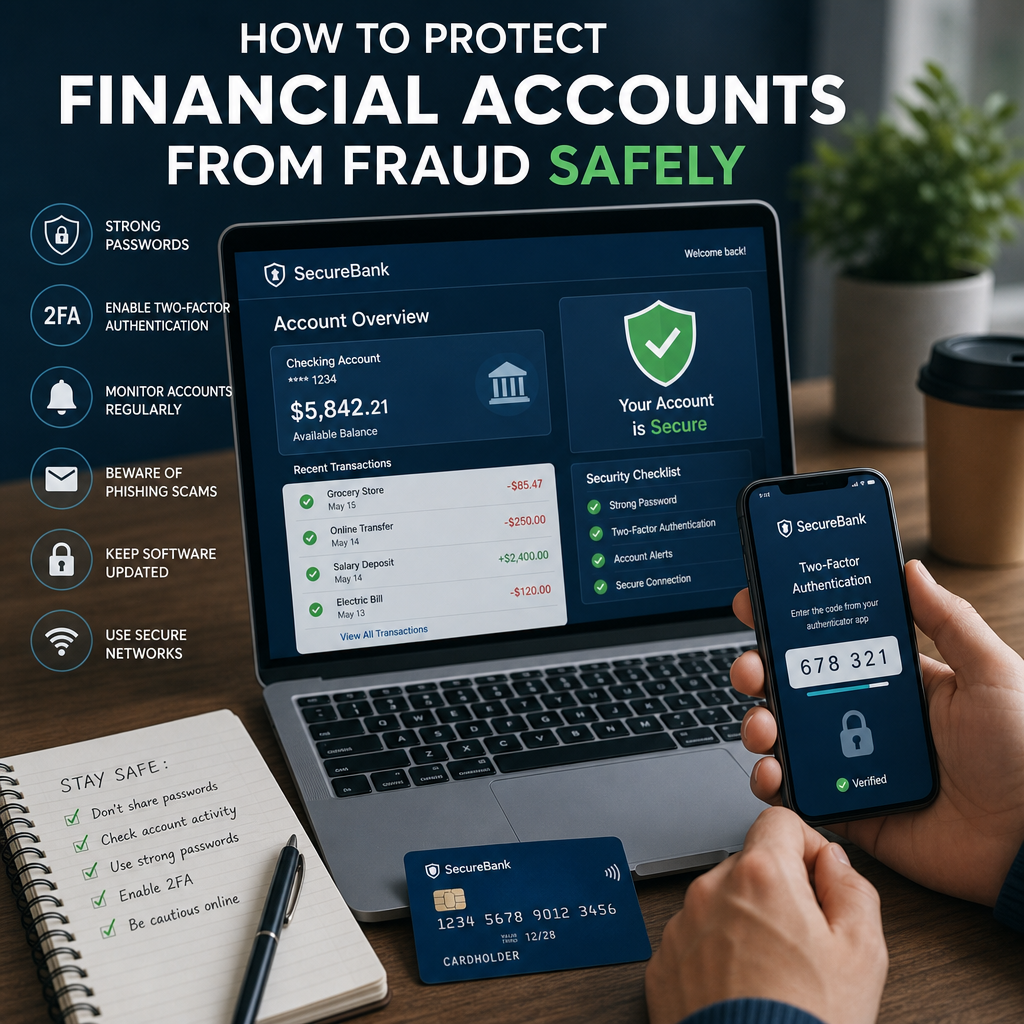
Multi-factor authentication, or MFA, adds another layer of protection beyond your password. It may require a code sent to your phone, an authenticator app, or a biometric check such as a fingerprint.
This matters because even if someone steals your password, they still need the second factor to log in.
When possible, use:
- An authenticator app instead of text messages
- Device-based approval prompts
- Biometrics on secure devices
Text codes are better than nothing, but app-based MFA is generally stronger.
3. Monitor account activity regularly
Checking your accounts often helps you catch fraud quickly. That matters because the sooner you notice a problem, the easier it is to limit damage.
Review:
- Bank and credit card transactions
- Pending transfers
- New payees or linked accounts
- Login alerts
- Changes to contact information
If you see even a small unfamiliar charge, do not ignore it. Fraudsters sometimes test an account with tiny transactions before making larger ones.
A simple weekly review can make a major difference.
4. Set up alerts for key account changes
Most banks and credit card companies offer alerts for transactions, password changes, withdrawals, and logins from new devices. Turn these on.
Useful alerts include:
- Purchases above a certain amount
- Cash withdrawals
- Online transfers
- Password resets
- Changes to email, phone number, or mailing address
- Login attempts from unrecognized devices
These alerts can help you respond quickly when something suspicious happens. If you get an alert you did not trigger, act immediately.
5. Be careful with emails, texts, and phone calls
Phishing remains one of the easiest ways for criminals to steal financial information. They often create a sense of urgency so you act before thinking.
Watch for these red flags:
- Messages that claim your account is locked
- Requests to “confirm” your password, PIN, or one-time code
- Links that look slightly wrong or shortened URLs
- Grammar mistakes or odd formatting
- Callers who pressure you to verify account details right away
A safer approach is to go directly to your bank’s official website or app. Do not click links in unsolicited messages. If you receive a suspicious call, hang up and call the number on the back of your card or on the institution’s official website.
6. Secure your devices and home network
Your financial accounts are only as safe as the devices you use to access them. If a phone, laptop, or tablet is compromised, fraudsters may get account access without needing to guess your password.
Basic device security includes:
- Keeping your operating system and apps updated
- Using device passcodes and screen locks
- Installing reputable security software
- Avoiding public Wi-Fi for banking whenever possible
- Using a trusted VPN on unsecured networks
- Logging out after using financial apps on shared devices
Also make sure your home Wi-Fi uses a strong router password and modern encryption settings. Weak network security can create unnecessary exposure.
7. Protect your identity, not just your accounts
Account fraud often begins with identity theft. If someone gets enough personal information, they may open new accounts in your name or reset existing ones.
To reduce this risk:
- Keep your Social Security number private
- Shred statements and documents with sensitive information
- Store financial records securely
- Limit what you share on social media
- Check whether your email address has appeared in data breaches
If you suspect your personal information has been exposed, consider placing a fraud alert or credit freeze with the credit bureaus. That can make it harder for someone to open new accounts in your name.
8. Review your credit reports
Your credit report can reveal signs of fraud that bank statements will not. New accounts, hard inquiries, or unfamiliar addresses may indicate identity theft.
You can typically review your credit reports for free through the official annual credit reporting system. Look for:
- Accounts you did not open
- Inquiries you did not authorize
- Personal information that is incorrect
- Collections you do not recognize
If something looks wrong, dispute it quickly. Early action can prevent more serious damage.
9. Be cautious with payment apps and peer-to-peer transfers
Cash apps and payment platforms are convenient, but they can also be easy targets for fraud. Transactions may be difficult to reverse once sent.
Use safer habits such as:
- Sending money only to people you know and trust
- Double-checking usernames, phone numbers, and email addresses
- Confirming payment requests through a separate communication method
- Avoiding payment for goods or services that seem too good to be true
Treat peer-to-peer transfers like handing over cash. If you would not pay a stranger in person, do not send money casually through an app.
10. Know your bank’s fraud policies
Different financial institutions handle fraud differently. Learn how your bank, card issuer, or investment platform responds to unauthorized activity.
Find out:
- How to report fraud
- Whether transaction alerts are available
- What the institution does during account lockouts
- How reimbursement works for unauthorized charges
- Whether you can temporarily freeze a debit or credit card
Knowing the process ahead of time saves time during an emergency. Keep the fraud reporting number somewhere easy to find.
Signs Your Financial Account May Be Compromised
Fraud is not always obvious. Some signs are subtle, especially early on.
Look out for:
- Small unexplained charges
- Logins from unfamiliar locations or devices
- Missing statements or email notifications
- Password reset messages you did not request
- New beneficiaries or payees added to your account
- Funds transferred without your authorization
- Denied transactions when your account should have funds available
If you notice any of these, do not wait. Contact the financial institution right away and ask them to freeze the account if needed.
What to Do If You Suspect Fraud
Quick action can limit the damage. If you think an account has been compromised, take these steps in order.
- Contact the financial institution immediately.
Use the official number from your card, statement, or website. - Change your passwords.
Start with the affected account, then update any account that used the same password. - Review recent activity.
Look for unauthorized purchases, transfers, or changes to contact details. - Freeze or lock cards and accounts if available.
Many banks and card apps let you pause activity instantly. - Report the fraud in writing if required.
Keep copies of emails, case numbers, and screenshots. - Check your credit reports.
Look for new accounts or inquiries you do not recognize. - Place fraud alerts or credit freezes if identity theft is suspected.
- Update security on all devices.
Run a malware scan and remove any suspicious apps or browser extensions.
The faster you act, the better your chances of reducing losses and stopping repeat attacks.
Practical Habits That Make a Big Difference
You do not have to overhaul your life to reduce fraud risk. Small routines matter.
Try these habits:
- Log in to financial accounts only from trusted devices
- Check balances and transactions on a set schedule
- Use a different password for every important account
- Keep recovery email and phone numbers current
- Ignore unexpected links in messages
- Save official customer service numbers in your phone
- Review monthly statements, even if you use mobile banking
For example, if you get a text claiming your debit card was declined, do not tap the link. Open your bank’s app manually and check the account. That one pause can stop a phishing attack before it starts.
Frequently Asked Questions
What is the safest way to protect financial accounts from fraud?
The safest approach combines multiple protections: strong unique passwords, multi-factor authentication, account alerts, and regular monitoring. You should also watch for phishing messages, keep your devices updated, and use official banking apps or websites instead of clicking links in emails or texts.
Should I use text message verification or an authenticator app?
An authenticator app is usually more secure than text message verification because it is less vulnerable to SIM-swapping and intercepted messages. If your bank or financial service offers app-based multi-factor authentication, it is often the better choice.
How often should I check my bank and credit card accounts?
Checking your accounts at least once a week is a smart habit, and daily checks are even better if you make frequent transactions. You should also review monthly statements carefully, because some fraudulent charges may not stand out right away.
What should I do if I clicked a suspicious link but did not enter information?
Act quickly. Close the page, avoid entering any credentials, and run a security scan on your device. Then monitor your financial accounts for unusual activity and consider changing your passwords, especially if you were already logged in somewhere else.
Can credit freezes help protect against financial fraud?
Yes. A credit freeze can make it harder for criminals to open new credit accounts in your name because lenders cannot access your credit report without your permission. It does not stop fraud on existing accounts, but it is a strong tool against identity theft.
Official Resources
- Consumer Financial Protection Bureau (CFPB) – Fraud and Scams
- Federal Trade Commission (FTC) – Report Fraud
- Federal Deposit Insurance Corporation (FDIC) – Consumer Protection
- IdentityTheft.gov – Recovery Steps from the FTC
- USA.gov – Identity Theft and Fraud
Conclusion
Knowing how to protect your financial accounts from fraud is one of the most valuable financial skills you can build. It does not require complicated tools or constant worry. It requires consistent habits: using strong passwords, enabling multi-factor authentication, reviewing accounts regularly, and staying cautious with messages that ask for personal information.
Fraudsters rely on speed, confusion, and trust. Your advantage is awareness and routine. When you slow down to verify a request, check an alert, or log in through an official app, you make it much harder for a scam to succeed. Even simple steps like setting transaction alerts and reviewing credit reports can help you catch trouble early.
Start with the basics today. Strengthen one password, turn on one alert, or review one account you have not checked in a while. Small actions now can prevent major losses later, and they put you in control of your financial security.