Why Cyberattacks Are a Major Global Economic Risk
Cyberattacks are no longer just an IT problem or a concern for large tech companies. They have become a major global economic risk that can disrupt supply chains, halt business operations, expose sensitive data, and weaken trust across entire markets. From ransomware attacks on hospitals to phishing campaigns targeting financial institutions, the scale and frequency of cyber threats have grown alongside the digital economy itself.
As businesses, governments, and consumers rely more on connected systems, the cost of a successful attack can spread far beyond one victim. That is why understanding why cyberattacks have become a major global economic risk matters for executives, policymakers, investors, and everyday internet users alike.
Why Cyberattacks Have Become a Major Global Economic Risk
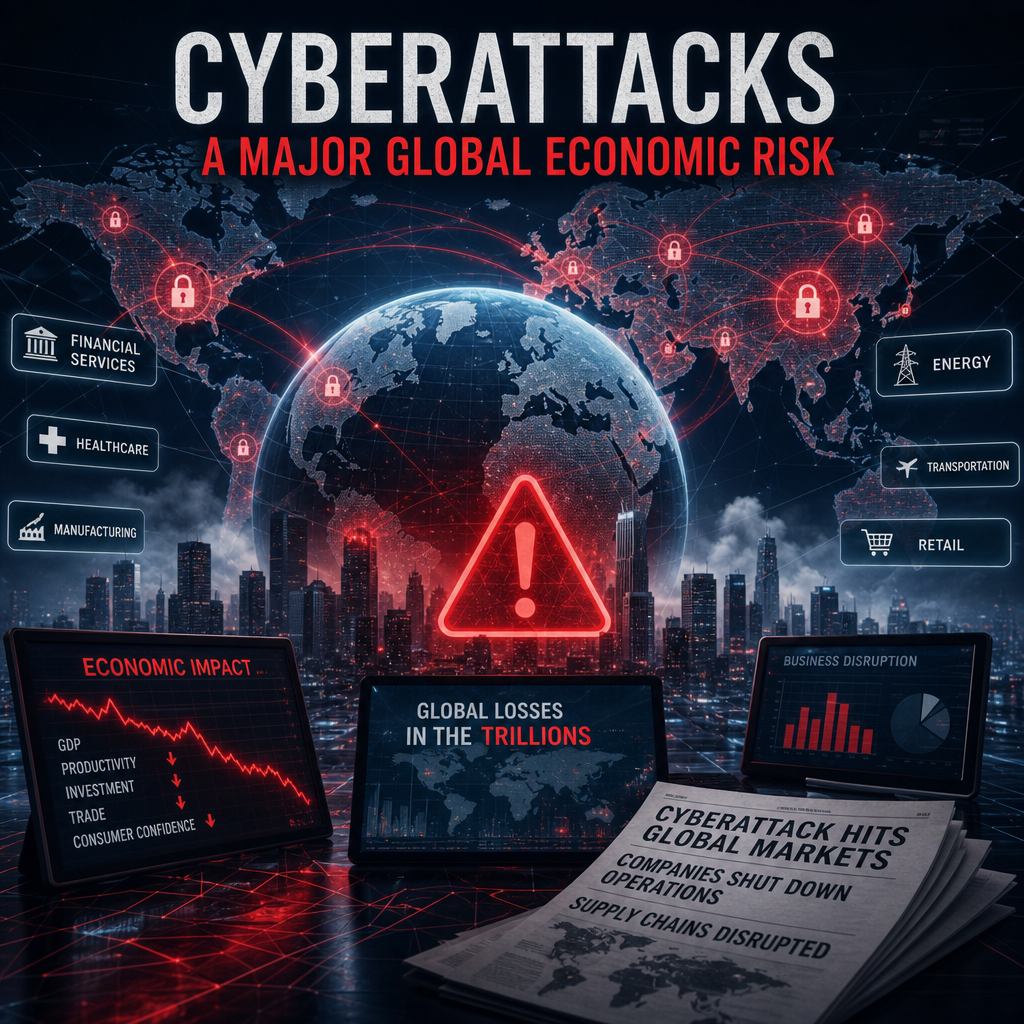
The world economy now depends on digital infrastructure. Cloud platforms, payment systems, logistics networks, remote work tools, and connected devices keep commerce moving. When attackers disrupt those systems, the impact can ripple through multiple sectors at once.
Cybercriminals and state-sponsored groups exploit this dependence in several ways:
- Stealing customer data and financial information
- Locking organizations out of critical systems through ransomware
- Disrupting operations with denial-of-service attacks
- Manipulating or destroying data
- Targeting suppliers to reach larger enterprises
A single breach can trigger legal costs, regulatory scrutiny, operational delays, reputational damage, and lost revenue. In some cases, the indirect costs exceed the initial loss because the attack undermines trust in the company or its entire ecosystem.
The Digital Economy Has Expanded the Attack Surface
The modern economy runs on interconnectivity. That creates efficiency, but it also creates more entry points for attackers.
More Devices, More Vulnerabilities
Businesses now use:
- Cloud applications
- Mobile devices
- Remote access systems
- Internet of Things (IoT) tools
- Third-party software and vendors
Each new connection can become a weak point if security practices lag behind growth. A manufacturer may secure its own network but still suffer damage through a compromised logistics provider. A hospital may protect patient records but still lose access to scheduling systems because of a phishing attack on a vendor account.
Remote Work Changed Risk Exposure
Remote and hybrid work models have improved flexibility, but they also expanded the perimeter of corporate networks. Employees often connect from personal devices, public networks, and home routers that may not have enterprise-level protection.
That shift has made basic cyber hygiene more important than ever:
- Strong passwords and multi-factor authentication
- Regular software updates
- Secure VPN use
- Employee training on phishing and social engineering
When organizations fail to adopt these practices consistently, attackers gain easier access to valuable data and systems.
Cyberattacks Create Direct and Indirect Economic Losses
The financial impact of cyberattacks goes far beyond the immediate incident response.
Direct Costs Hit Fast
Direct losses may include:
- Forensic investigations
- Data recovery
- Business interruption
- Legal counsel
- Regulatory fines
- Ransom payments, where applicable
- Customer notification and credit monitoring
These costs can escalate quickly, especially when systems remain offline for days or weeks.
Indirect Costs Often Last Longer
Indirect consequences can be just as damaging:
- Loss of customer trust
- Higher insurance premiums
- Delayed product launches
- Declining stock value
- Reduced productivity
- More expensive borrowing or financing
For example, if an e-commerce company suffers a major breach during peak shopping season, it may lose immediate sales, but it may also see long-term harm if customers decide not to return.
Critical Infrastructure Makes the Risk Bigger
Cyberattacks have become a major global economic risk partly because they increasingly target critical infrastructure. Energy grids, transportation systems, water utilities, telecommunications networks, and healthcare facilities all depend on digital control systems.
When Infrastructure Is Disrupted
If attackers hit a power company, the impact can spread to:
- Factories and warehouses
- Banks and payment systems
- Hospitals and emergency services
- Schools and public offices
- Small businesses that depend on uninterrupted service
This is what makes cyber risk so different from many other threats. A single attack can create a chain reaction across the real economy.
Sectors That Face Higher Exposure
Some sectors are especially vulnerable because of the data they hold or the importance of their services:
- Financial services
- Healthcare
- Manufacturing
- Energy and utilities
- Transportation and logistics
- Government and public services
These industries often manage sensitive information, rely on legacy systems, or operate under strict uptime requirements. That combination makes them attractive targets.
Supply Chain Attacks Multiply the Damage
One of the most important reasons cyberattacks have become a major global economic risk is the rise of supply chain attacks. Instead of attacking a large organization directly, criminals compromise a smaller vendor or software provider and use that access to reach many downstream victims.
Why Supply Chains Are Attractive to Attackers
Supply chain attacks are effective because they exploit trust. Businesses depend on third-party software, cloud providers, payroll services, and managed IT vendors to operate efficiently. If one trusted partner is breached, many organizations can be affected at once.
This can cause:
- Widespread service outages
- Mass exposure of sensitive data
- Cascading operational failures
- Increased regulatory and contractual liability
Practical Example
Imagine a company that uses a third-party billing platform. If attackers compromise that platform, they might gain access to customer payment records across hundreds of businesses. The original breach may start in one vendor, but the damage spreads across industries and regions.
Cybercrime Has Become More Organized and Accessible
Not long ago, launching a serious cyberattack required advanced technical skills. Today, cybercrime has become more commercialized and easier to scale.
The Criminal Ecosystem
Attackers now operate through networks that may include:
- Malware developers
- Credential brokers
- Phishing kit sellers
- Ransomware-as-a-service operators
- Money laundering services
This “as-a-service” model lowers the barrier to entry. Even less-skilled criminals can buy tools and launch sophisticated attacks.
Automation Increases Volume
Attackers also use automation to scan networks, harvest credentials, and send phishing emails at scale. As a result, organizations face constant pressure from a high volume of threats, not just occasional targeted incidents.
This makes cybersecurity a continuous business risk management issue rather than a one-time technology fix.
Geopolitical Tensions Make Cyber Risk a Global Issue
Cyberattacks are also tied to geopolitics. State-backed groups may use cyber operations for espionage, disruption, or influence. During periods of international tension, cyber activity often rises because digital attacks can be difficult to attribute and politically useful.
Why Governments Care
A cyberattack can target:
- Elections and public trust
- Defense contractors
- Energy and communications systems
- Financial markets
- Public health infrastructure
Because these systems support national stability, cyber risk has become a core policy concern, not just a private-sector problem.
Economic Spillover Effects
When state-linked cyber operations disrupt trade, logistics, or financial services, the consequences can extend across borders. Investors may become cautious, supply routes may slow, and companies may delay expansion plans in affected regions.
That is one reason cyber resilience is increasingly viewed as an economic security issue.
Consumer Trust Is a Valuable Asset
Trust is one of the most important economic assets in the digital age. If consumers believe a business cannot protect their data, they may take their money elsewhere.
Data Breaches Affect Behavior
After a breach, customers may:
- Close accounts
- Change service providers
- Reduce spending
- Avoid sharing data
- File complaints or lawsuits
The long-term cost of lost trust can be difficult to measure, but it often outlasts the technical recovery process.
Reputation Spreads Quickly
News of a cyberattack can travel quickly through media and social platforms. Even organizations that respond well may still face scrutiny if customers think security controls were weak. That puts pressure on leadership teams to prepare communication strategies before an incident happens.
Why Small Businesses and Local Economies Are Not Exempt
It is easy to assume cyberattacks only threaten large corporations or governments. In reality, small and medium-sized businesses are often more vulnerable because they have fewer resources, smaller security teams, and less room for disruption.
The Real Impact on Local Economies
When a small business is hit, the effect may include:
- Lost sales
- Payroll delays
- Temporary layoffs
- Vendor payment issues
- Reduced local spending
If a regional supplier, clinic, or service provider goes offline, the community can feel the effects quickly. That is why cybersecurity supports not just enterprise resilience but broader economic stability.
Building Resilience Requires Shared Responsibility
Reducing cyber risk takes action from organizations, employees, consumers, and governments. No single group can solve the problem alone.
What Businesses Should Do
Organizations should focus on practical defenses:
- Use multi-factor authentication everywhere possible
- Patch software and devices regularly
- Segment networks to limit lateral movement
- Back up critical data and test recovery plans
- Train staff to recognize phishing and social engineering
- Review vendor and supply chain security
- Maintain an incident response plan
What Policymakers Can Do
Governments can strengthen resilience by:
- Updating cybersecurity regulations
- Supporting information sharing
- Investing in critical infrastructure protection
- Encouraging public-private cooperation
- Promoting workforce development in cybersecurity
What Individuals Can Do
Individuals can reduce their own exposure by:
- Using unique passwords with a password manager
- Enabling multi-factor authentication
- Updating devices promptly
- Being cautious with links and attachments
- Monitoring financial and account activity
Cybersecurity Is an Economic Strategy
The conversation about cyberattacks should not stop at threat detection. It should include productivity, competitiveness, and long-term stability. Organizations that invest in cybersecurity reduce downtime, protect customer confidence, and avoid preventable losses.
In many industries, strong security is now part of operational excellence. It helps businesses win contracts, satisfy regulators, and protect brand value. In that sense, cybersecurity is no longer just a defensive cost. It is an investment in economic continuity.
Frequently Asked Questions
1. Why are cyberattacks considered a global economic risk?
Cyberattacks can interrupt business operations, damage infrastructure, expose sensitive data, and affect supply chains across countries. Because so many industries depend on digital systems, one attack can create broad financial and operational fallout.
2. Which industries are most affected by cyberattacks?
Financial services, healthcare, energy, transportation, manufacturing, and government sectors are often high-value targets. These industries manage critical data or essential services, so even short disruptions can create significant economic consequences.
3. How do cyberattacks hurt small businesses?
Small businesses may lose revenue, face downtime, and struggle with recovery costs after an attack. They may also lose customer trust and spend money on legal, technical, and communication support. In some cases, a serious attack can threaten the business’s survival.
4. What makes supply chain attacks so dangerous?
Supply chain attacks target trusted vendors or software providers to reach many victims at once. Because businesses rely on third parties for key services, a single compromise can spread quickly and affect multiple organizations.
5. How can organizations reduce the economic impact of cyberattacks?
Companies can reduce risk by using multi-factor authentication, keeping software updated, training employees, backing up data, testing incident response plans, and reviewing vendor security. Preparation helps limit downtime and lowers recovery costs.
Official Resources
- Cybersecurity and Infrastructure Security Agency (CISA)
- National Institute of Standards and Technology (NIST) Cybersecurity
- Federal Bureau of Investigation (FBI) Internet Crime Complaint Center
- U.S. Small Business Administration: Cybersecurity
- World Economic Forum: Cybersecurity
Conclusion
Cyberattacks have become a major global economic risk because the modern economy is built on digital systems that are deeply interconnected and constantly exposed. A successful attack can do far more than compromise data. It can interrupt production, slow trade, damage reputations, raise costs, and weaken trust in essential services. As supply chains, critical infrastructure, and customer relationships grow more digital, the stakes continue to rise.
The good news is that cyber risk is manageable when organizations treat it as a core business issue rather than a technical afterthought. Strong authentication, employee awareness, secure vendors, reliable backups, and tested response plans all make a real difference. Governments and individuals also have an important role in building resilience.
If you run a business, work in public policy, or simply want to better understand today’s economy, cybersecurity deserves your attention. The more proactive the response, the less likely a cyberattack is to become an economic crisis.