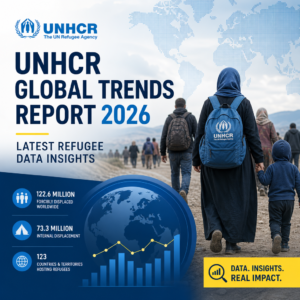
UNHCR Global Trends Report 2026: Latest Refugee Data Insights
The UNHCR Global Trends Report 2026 offers one of the clearest snapshots of displacement in the modern world. Each year, UNHCR compiles refugee data, asylum trends, and broader forced displacement figures to help governments, aid organizations, and the public understand how crises are evolving. The latest report matters because it goes beyond a simple count of people on the move. It shows where displacement is growing, how long people remain displaced, and what the world is doing—or failing to do—to respond.
For anyone following humanitarian issues, the UNHCR Global Trends Report 2026 is essential reading. It helps explain why refugee protection, asylum systems, and long-term solutions like resettlement and voluntary repatriation remain under pressure. It also highlights a sobering reality: displacement is not a short-term event for most people. For millions, it becomes a long chapter of life shaped by conflict, instability, and uncertainty.
What the UNHCR Global Trends Report 2026 Covers

The UNHCR Global Trends Report 2026 is the agency’s annual assessment of forced displacement worldwide. It typically draws on data from governments, UN agencies, and humanitarian partners to measure several key categories:
- Refugees under UNHCR’s mandate
- Palestine refugees under UNRWA’s mandate
- Asylum seekers
- Internally displaced people
- Stateless persons
This broad view matters because refugee data alone does not tell the whole story. Many people flee violence but remain inside their home country. Others seek asylum across borders and wait months or years for decisions. The report connects these different displacement patterns and shows how they interact.
Why the report is important
The report helps decision-makers answer practical questions such as:
- Where are the largest refugee populations?
- Which regions are hosting the most displaced people?
- Are people finding durable solutions?
- How long are refugee situations lasting?
- Which crises are driving new displacement?
That makes the UNHCR Global Trends Report 2026 useful not just for policymakers, but also for journalists, researchers, advocates, and anyone trying to understand humanitarian trends.
Key Themes Emerging From the Latest Refugee Data
While the exact figures and country rankings shift from year to year, the latest refugee data in the UNHCR Global Trends Report 2026 continues to reinforce several familiar patterns.
1. Forced displacement remains high and persistent
One of the biggest takeaways from recent UNHCR reporting is that displacement is not easing in a meaningful way. Conflicts, persecution, political instability, and human rights violations continue to push people from their homes. In many cases, people remain displaced for years.
This persistence matters because long-term displacement affects every part of life:
- Access to education
- Ability to work legally
- Mental health and family stability
- Housing and food security
- Access to healthcare
The report shows that refugee situations are increasingly complex, with many countries hosting large displaced populations for extended periods.
2. Host countries continue to carry much of the burden
The report also underscores the role of countries that host large refugee populations, often in regions already facing economic and political strain. In many cases, neighboring countries receive the largest share of people fleeing a crisis.
This is important for two reasons:
- It shows that displacement is often regional, not distant.
- It highlights the need for international responsibility-sharing.
Host communities often provide access to schools, jobs, shelter, and public services, but those systems can become stretched quickly. The UNHCR Global Trends Report 2026 reinforces the need for sustained funding and political support for host countries.
3. Children remain heavily affected
Children make up a significant share of displaced populations in many crises, and the latest refugee data reflects the long-term impact of displacement on young people. When children are forced to flee, their education is disrupted, family stability changes, and their protection needs increase.
Common risks include:
- Interrupted schooling
- Child labor
- Early marriage
- Separation from family members
- Trauma and anxiety
The report’s data reminds readers that refugee protection is not only about survival. It is also about safeguarding childhood and helping families rebuild normal lives.
What the Report Says About Refugee Data Trends
The UNHCR Global Trends Report 2026 is especially useful because it turns broad humanitarian concerns into concrete refugee data. While readers should always consult the report itself for the exact figures, several data trends remain central to how UNHCR presents the global picture.
Refugee populations are unevenly distributed
Refugee populations are not spread evenly around the world. A relatively small number of countries host large numbers of refugees, often because of geography, shared borders, or regional conflict patterns.
This uneven distribution has practical consequences:
- Some countries absorb large pressures quickly
- Local infrastructure can become overstretched
- Urban areas may see population increases
- Humanitarian needs can rise faster than funding
The report helps explain why local and regional responses are so important.
Asylum systems face major strain
Another clear trend in refugee data is the pressure on asylum systems. When people flee conflict or persecution, they often need legal protection through asylum. But in many countries, case backlogs, policy changes, and limited staffing slow the process.
This can leave asylum seekers in limbo. They may be allowed to stay temporarily, but without clear status, they often face barriers to:
- Employment
- Housing
- Education
- Family reunification
- Long-term planning
The UNHCR Global Trends Report 2026 shows why efficient, fair asylum systems are critical to refugee protection.
Durable solutions remain limited
The report also points to a familiar challenge: far too few displaced people reach durable solutions quickly. Durable solutions usually include:
- Voluntary repatriation
- Local integration
- Resettlement to a third country
Each pathway has limits. Return is only safe when conditions in the home country have improved. Local integration depends on laws, social acceptance, and resources. Resettlement is available to only a small fraction of refugees worldwide.
That means many people remain in prolonged uncertainty, even years after fleeing.
Why This Matters for Policymakers and Humanitarians
The UNHCR Global Trends Report 2026 is not only a record of humanitarian need. It is also a planning tool. Governments and aid agencies use refugee data to allocate resources, design protection programs, and coordinate emergency response.
For governments
Policymakers can use the report to:
- Plan for school enrollment and healthcare needs
- Improve asylum processing
- Support local communities hosting refugees
- Strengthen border and protection systems
- Coordinate with international partners
For humanitarian organizations
Aid groups use refugee data to:
- Target emergency assistance
- Prepare protection services
- Advocate for funding
- Monitor trends in displacement
- Prioritize vulnerable groups
For the public
The report helps the public understand that displacement is not abstract. It affects real families and creates long-term social and economic needs that require sustained attention.
Practical Ways to Read the Report Critically
Because the UNHCR Global Trends Report 2026 covers a large amount of data, it helps to read it with a clear framework. Here are a few practical ways to approach it.
Look for both scale and duration
A large number matters, but duration matters too. A crisis that displaces fewer people for many years can be just as urgent as a larger, short-term emergency.
Compare regions, not just totals
Global totals can hide differences between regions. One area may see rising asylum claims, while another hosts long-term refugee populations. Regional comparisons provide a more accurate picture.
Pay attention to definitions
Terms like refugee, asylum seeker, internally displaced person, and stateless person are not interchangeable. UNHCR uses specific legal and statistical definitions. Understanding those terms prevents confusion and misinterpretation.
Watch for protection gaps
Numbers alone do not reveal whether people are safe. The most useful reports also show where legal protection, access to services, or durable solutions are missing.
What the Latest Refugee Data Means in Real Life
Behind every line in the UNHCR Global Trends Report 2026 is a human story. Refugee data can feel abstract, but it usually reflects a family making impossible choices.
Imagine a parent who leaves home with two children after violence escalates nearby. They may spend the first night in a crowded shelter, then move to a border town, then wait months for asylum processing. The children may miss school. The parent may struggle to find legal work. Even after immediate danger passes, the family’s future can remain uncertain.
That is why refugee protection is about more than emergency aid. It includes:
- Legal status
- Safe housing
- Education access
- Mental health support
- Livelihood opportunities
- Family reunification
The report helps keep those broader needs in view.
How the UNHCR Global Trends Report 2026 Shapes the Future
The UNHCR Global Trends Report 2026 does more than document the past year. It also shapes the conversation about what comes next. When the data shows ongoing displacement, the response must move beyond crisis management and toward long-term solutions.
That means investing in:
- Conflict prevention and peacebuilding
- Stronger asylum systems
- Support for host countries
- Refugee education and employment
- Resettlement pathways
- Safe and voluntary returns when conditions allow
The report makes one thing clear: the world cannot solve displacement with short-term attention alone. It takes sustained political will, funding, and cooperation across borders.
Frequently Asked Questions
1. What is the UNHCR Global Trends Report 2026?
The UNHCR Global Trends Report 2026 is an annual report that summarizes global forced displacement data. It covers refugees, asylum seekers, internally displaced people, and stateless persons, helping readers understand trends in displacement and humanitarian needs.
2. Why is refugee data from UNHCR important?
Refugee data helps governments and aid organizations plan responses, allocate resources, and improve protection services. It also provides a reliable picture of where displacement is happening and which populations need support the most.
3. Does the report only focus on refugees?
No. Although refugees are a major focus, the report also includes asylum seekers, internally displaced people, and stateless persons. This broader scope helps present a fuller picture of forced displacement worldwide.
4. How can I use the report for research or advocacy?
You can use the report to support policy analysis, humanitarian fundraising, media reporting, academic research, or advocacy campaigns. It is especially helpful for identifying regional trends, long-term displacement patterns, and gaps in protection.
5. What are durable solutions in refugee situations?
Durable solutions are long-term outcomes that allow displaced people to live safely and rebuild their lives. The main durable solutions are voluntary repatriation, local integration, and resettlement to a third country.
Official Resources
- UNHCR Global Trends Reports
- UNHCR Refugee Statistics
- UNHCR Data Portal
- UNHCR Emergency and Humanitarian Action
- UNHCR Resettlement
Conclusion
The UNHCR Global Trends Report 2026 provides more than a yearly update on refugee numbers. It shows how displacement continues to shape lives across regions, strain host countries, and test the world’s ability to protect people fleeing danger. The latest refugee data makes one message especially clear: forced displacement remains a long-term global challenge, not a temporary crisis.
By examining refugee populations, asylum patterns, and durable solutions, the report helps readers understand both the scale of the problem and the gaps in response. It also reminds us that every data point represents a person, a family, or a community trying to survive and rebuild.
For policymakers, humanitarian workers, researchers, and informed readers, the report offers a valuable foundation for better decisions. The next step is not just to read the data, but to use it—whether that means supporting refugee protection, learning more about asylum systems, or following how global displacement trends evolve over time.