Humanitarian Organizations Face Growing Demand Amid Funding Shortages
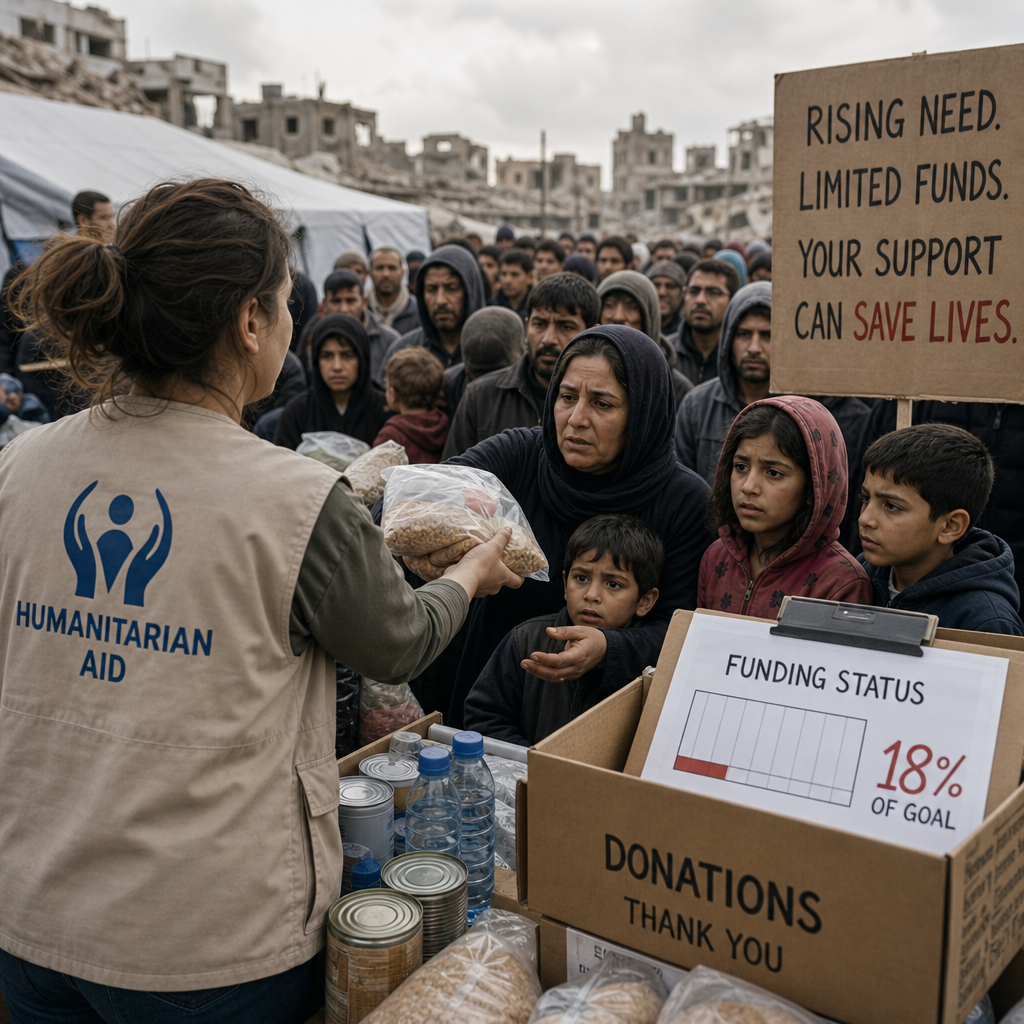
Humanitarian organizations are under unprecedented strain as conflict, climate disasters, and food insecurity push more people into crisis while funding falls short. This growing gap is forcing aid groups to make difficult choices about where help can go—and who may be left waiting.
By: Peter B on July 24, 2026
Última atualização em: agosto 3, 2026
Humanitarian organizations face growing demand and funding shortages at the same time, creating one of the most difficult operating environments in recent memory. From conflict-driven displacement to climate-related disasters and food insecurity, the number of people needing assistance keeps rising. Yet the money, staff, and logistics needed to respond are not keeping pace.
For nonprofits, aid agencies, and international relief groups, this gap is more than a budget problem. It affects how quickly emergency food arrives, whether medical care reaches remote communities, and how many families can recover after a crisis. Understanding why humanitarian organizations face growing demand and funding shortages is essential for donors, policymakers, and anyone who wants to support effective aid work.
Why Humanitarian Organizations Face Growing Demand and Funding Shortages
The pressure on humanitarian systems has been building for years, but several forces have made the situation more severe.
Rising global needs
More people are being pushed into crisis by overlapping challenges:
Armed conflicts and political instability
Extreme weather events and climate-related disasters
Displacement and migration
Economic shocks and inflation
Public health emergencies
Food and water insecurity
These crises rarely happen in isolation. A drought can drive food shortages, which can fuel migration, which can strain health systems and local services. Humanitarian organizations often respond to all of these needs at once, making the work more complex and expensive.
Funding has not kept pace
While needs grow, donations and institutional funding often lag behind. Many humanitarian appeals are underfunded, forcing organizations to make hard choices about what they can support and where they must scale back.
Several issues contribute to this shortfall:
Donor fatigue after repeated global crises
Competition among many urgent causes
Inflation increasing the cost of supplies and transport
Longer and more complex emergencies that require sustained funding
Shifts in government priorities and foreign aid budgets
When humanitarian organizations face growing demand and funding shortages, they may be forced to delay programs, reduce rations, or limit services to the most severe cases.
Humanitarian emergencies last longer
In the past, some disasters were treated as short-term crises. Today, many emergencies stretch on for years. Conflict zones can become protracted humanitarian situations. Families displaced by violence or climate impacts may remain in temporary shelters far longer than expected.
Longer crises create a funding mismatch. Emergency grants are often designed for immediate response, but long-term needs require consistent support for housing, education, health care, and livelihood recovery.
What the Funding Gap Means on the Ground
The funding shortage is not abstract. It changes what aid looks like in real communities.
Fewer services reach fewer people
When resources are limited, humanitarian organizations must prioritize. That often means:
Supporting only the most vulnerable households
Reducing the number of service locations
Scaling back mobile medical teams
Cutting food distributions or cash assistance
Delaying repairs to shelters, water systems, or sanitation facilities
This triage approach can save lives, but it also leaves many people without support.
Response time slows
Fast response is critical in humanitarian work. Delays can turn a manageable emergency into a life-threatening one. Funding shortages can prevent organizations from pre-positioning supplies, hiring staff quickly, or deploying emergency teams at the start of a crisis.
Staff face heavier workloads
Humanitarian workers often do more with less. Underfunded programs can lead to burnout, high turnover, and difficulty retaining local staff. That matters because experienced workers know the local context, speak the language, and build trust with communities.
Local partners feel the strain
Local and national organizations are often first responders, but they may have the least access to flexible funding. When humanitarian organizations face growing demand and funding shortages, local groups can be squeezed hardest even though they are essential to effective aid delivery.
Why This Challenge Is Hard to Solve
The problem is not simply that donors are unwilling to help. Humanitarian funding is constrained by structural and practical realities.
Aid needs are unpredictable
It is difficult to plan budgets when a conflict escalates overnight or a hurricane destroys entire communities. Emergency funding systems must be able to respond quickly, but they also need enough flexibility to support sustained recovery.
Donor preferences shape where money goes
Some crises attract strong media attention and major donations. Others remain underfunded because they are geographically remote, politically complex, or no longer in the headlines. This can create serious inequities in humanitarian response.
Administrative costs are often underestimated
High-quality humanitarian work requires coordination, monitoring, compliance, logistics, and safeguarding. These functions are sometimes viewed as overhead, but they are central to delivering aid safely and effectively.
Access restrictions make delivery more expensive
In conflict zones or areas with poor infrastructure, simply reaching people can require additional security, transport, and negotiation. Those costs add up quickly.
How Humanitarian Organizations Are Adapting
Even in a difficult funding environment, many organizations are changing how they work to stretch resources and improve impact.
1. Prioritizing the most urgent needs
Many groups now use evidence-based assessments to direct aid where it is most needed. That can mean focusing on:
Severe malnutrition
Emergency shelter
Clean water and sanitation
Critical health services
Protection for children, women, and displaced people
This targeted approach helps ensure that limited funds save as many lives as possible.
2. Using cash assistance when appropriate
Cash-based aid can be more flexible and efficient than in-kind distributions in some settings. When markets are functioning, giving families cash or vouchers allows them to buy what they need most, while also supporting local economies.
3. Strengthening local partnerships
Working with local organizations improves reach, cultural understanding, and accountability. It can also reduce costs and speed up response. Many humanitarian organizations now invest more heavily in local capacity, shared planning, and direct funding to community-based partners.
4. Investing in preparedness
Preparedness can reduce the need for expensive emergency response later. Examples include:
Pre-positioning supplies
Training local responders
Building stronger early warning systems
Planning for climate risks
Protecting essential infrastructure
5. Improving data and coordination
Better data helps organizations avoid duplication and identify gaps. Coordination across agencies, governments, and local partners can make scarce funds go further and reduce overlap in service delivery.
What Donors and Supporters Can Do
The good news is that individual donors, foundations, companies, and governments can help close the gap. Even modest changes in funding practices can improve how humanitarian organizations respond.
Support flexible funding
Unrestricted or lightly restricted funding helps organizations respond quickly when needs change. It allows them to shift resources to the most urgent priorities instead of waiting for grant approvals tied to a narrow use.
Fund both emergency response and recovery
Crisis response does not end when the immediate disaster fades. Recovery funds help communities rebuild housing, restart livelihoods, and restore essential services. Supporting both phases leads to stronger long-term outcomes.
Back local organizations
Local partners are often closest to the need and best positioned to respond quickly. Providing them with direct, multi-year support can strengthen the entire humanitarian system.
Consider recurring gifts
For individual donors, smaller recurring donations can be valuable because they provide predictable income. Consistent support helps organizations plan ahead and maintain readiness.
Advocate for smarter public funding
Public aid budgets matter. Support for humanitarian organizations can also come through advocacy for effective foreign assistance, disaster preparedness, and climate resilience policies.
Practical Example: How Funding Flexibility Changes Outcomes
Imagine two organizations responding to the same displacement crisis.
Organization A receives a tightly restricted grant for a specific item, such as blankets.
Organization B receives flexible funding that can cover shelter repairs, hygiene kits, local transport, and staff coordination.
If the community’s most urgent need turns out to be clean water and sanitation rather than blankets, Organization B can adapt immediately. Organization A may have to wait, apply for additional funds, or distribute supplies that are not the top priority.
This example shows why flexible support is so important when humanitarian organizations face growing demand and funding shortages. The ability to adapt can determine how effective a response will be.
The Bigger Picture: Why This Matters Beyond Crisis Zones
Humanitarian crises do not stay contained. When aid systems weaken, the effects can spill into neighboring regions and broader global systems.
Public health risks increase
Inadequate medical support and poor sanitation can contribute to disease outbreaks. Supporting humanitarian organizations helps protect both crisis-affected communities and public health more broadly.
Displacement can grow
If people cannot survive safely in their home communities, displacement often continues. That increases pressure on host communities, schools, health systems, and labor markets.
Instability can deepen
Food insecurity, lack of shelter, and limited access to services can intensify conflict and undermine recovery. Humanitarian aid is not a substitute for peacebuilding or development, but it can reduce suffering and buy time for longer-term solutions.
Building a More Resilient Humanitarian System
The current funding gap is a warning sign, but it can also be a catalyst for improvement. A stronger humanitarian system would include:
More predictable multi-year funding
Greater support for local and national responders
Better coordination across agencies
Stronger preparedness and early action
More flexible grant structures
Transparent reporting and accountability
When humanitarian organizations face growing demand and funding shortages, resilience depends on partnerships. Governments, private donors, multilateral institutions, and communities all play a role in shaping how aid is delivered.
Frequently Asked Questions
Why are humanitarian organizations facing so much pressure right now?
They are dealing with more crises at once, including conflict, climate disasters, displacement, and economic instability. At the same time, funding often does not increase fast enough to match the scale or duration of these emergencies.
What happens when humanitarian funding falls short?
Organizations may have to reduce services, prioritize only the most urgent cases, cut supplies, or delay response efforts. This can leave vulnerable people without food, shelter, health care, or clean water when they need it most.
Why is flexible funding important for humanitarian aid?
Flexible funding lets organizations respond to changing conditions. Instead of being locked into one narrow expense, they can direct resources to the most urgent needs, whether that is medical care, logistics, shelter repair, or sanitation support.
Do local organizations play a major role in humanitarian response?
Yes. Local and national organizations are often the first on the ground and have deep knowledge of the communities they serve. They can respond faster and more effectively, especially when they have direct access to funding and strong partnerships.
How can individuals help humanitarian organizations most effectively?
Individuals can make recurring donations, support trusted organizations, and advocate for public policies that strengthen humanitarian response. Donations that are unrestricted or flexible often give nonprofits the most room to respond to changing needs.
Humanitarian organizations face growing demand and funding shortages because global crises are becoming more frequent, more complex, and more prolonged. The result is a widening gap between what communities need and what aid groups can realistically provide. That gap affects food security, shelter, health care, protection, and long-term recovery.
Yet this challenge is not hopeless. Humanitarian organizations are adapting through better targeting, stronger local partnerships, cash assistance, preparedness efforts, and smarter coordination. Donors and supporters can make a meaningful difference by choosing flexible funding, backing local responders, and supporting both emergency relief and recovery.
The takeaway is simple: effective humanitarian action requires more than urgency. It requires steady investment, trust, and a commitment to helping organizations respond where the need is greatest. If you care about global stability and human dignity, now is the time to learn more, support credible relief efforts, and stay engaged with the systems that help people survive and rebuild.
Peter B holds a degree in Journalism and has 5 years
of experience covering U.S. economic policy, labor markets, and
financial news. He writes data-driven news content on topics
like inflation, interest rates, and employment trends.