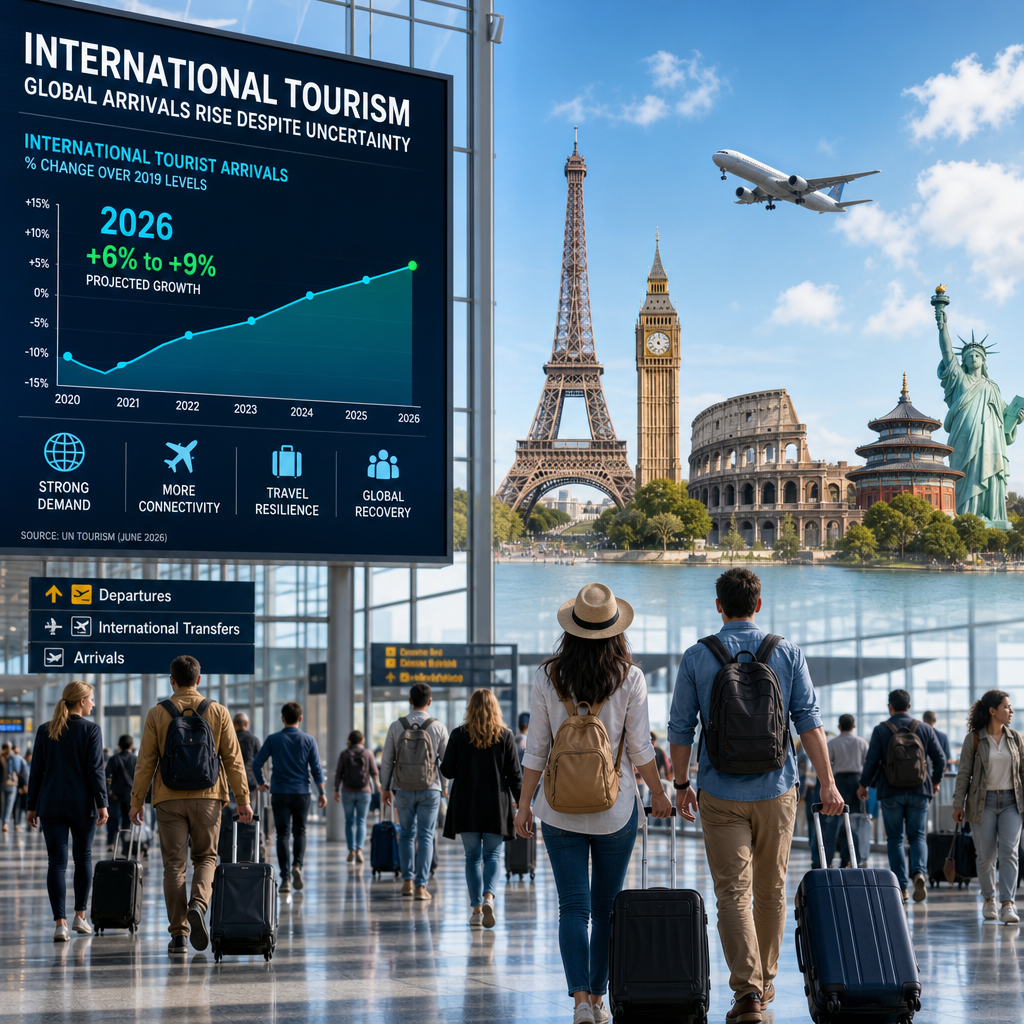
International Tourism in 2026: Global Arrivals Rise Despite Uncertainty
International tourism in 2026 is rising even as travelers face higher costs, shifting rules, and global uncertainty. From family visits to long-haul vacations, demand remains strong as people become more selective about where they go and how they plan their trips.
By: Peter B on July 24, 2026
Última atualização em: agosto 3, 2026
International tourism in 2026 is shaping up to be a study in contrasts. On one hand, global travel demand continues to recover, with many destinations reporting stronger visitor numbers, fuller hotel calendars, and growing interest in long-haul trips. On the other hand, uncertainty still hangs over the industry. Travelers are navigating higher costs, geopolitical tensions, climate-related disruptions, changing visa rules, and an uneven global economy.
Even so, international tourism is proving resilient. People still want to explore new cultures, visit family abroad, attend major events, and take the trips they postponed in recent years. What’s changing is how they travel, where they go, and what they expect from the experience. For tourism businesses, destination marketers, and travelers alike, understanding the direction of international tourism in 2026 is essential.
The State of International Tourism in 2026
International tourism in 2026 is being driven by a mix of pent-up demand and practical decision-making. Travelers are no longer simply chasing the cheapest flight or the most famous landmark. Instead, they are weighing safety, value, sustainability, convenience, and flexibility more carefully than before.
Why arrivals continue to rise
Several factors are helping international arrivals grow:
Restored travel confidence: Many travelers are now comfortable booking international trips again.
Broader route networks: Airlines have continued rebuilding international connectivity.
Flexible planning habits: Travelers are booking earlier in some markets and more last-minute in others, depending on price and confidence.
Strong leisure demand: Vacations, family visits, and event travel remain powerful motivators.
Digital booking tools: It is easier than ever to compare fares, hotels, entry rules, and local experiences.
This growth does not look the same everywhere. Some regions are seeing a faster rebound than others, and certain destinations are benefiting from shifts in traveler preferences. But overall, international tourism remains on an upward path.
What uncertainty means for travel demand
Rising arrivals do not erase the risks. In 2026, uncertainty continues to influence how travelers plan and spend.
Climate events such as heat waves, wildfires, flooding, and storms
Delays in visa processing or border policy changes
Pressure on household budgets from inflation and living costs
These factors make travelers more selective. They may shorten trips, choose destinations with better value, or build in more cancellation flexibility. For tourism professionals, this means the market is growing, but expectations are higher than ever.
Key Trends Driving International Tourism in 2026
International tourism in 2026 is not just about volume. It is also about changing behavior. The following trends are shaping the global market and influencing where people go.
1. Value-conscious travel is rising
Travelers want memorable experiences, but they are also watching their budgets. Many are comparing destinations not only by airfare and hotel rates, but by the total cost of the trip.
That includes:
Local transportation
Restaurant prices
Attraction fees
Exchange rates
Seasonal surcharges
Destinations that offer strong perceived value often perform well, even if they are not the cheapest options overall. A mid-priced destination with good transit, safe neighborhoods, and diverse activities can outcompete a more expensive market.
2. Secondary cities are gaining attention
Big-name capitals and resort hubs still attract millions of visitors, but secondary cities are becoming more attractive in international tourism. They often provide:
Lower crowd density
More affordable accommodations
Authentic cultural experiences
Easier access to local communities
For example, travelers who once focused only on top-tier destinations may now add a smaller city or regional stop to create a richer itinerary. This spreads tourism revenue more broadly and can reduce pressure on overvisited locations.
3. Experience-based travel is outpacing sightseeing alone
Travelers increasingly want experiences that feel personal and meaningful. This is especially true among younger adults and repeat international travelers.
Popular examples include:
Cooking classes
Wine and food tours
Nature and wildlife excursions
Cultural workshops
Wellness retreats
Sporting events and festivals
Traditional sightseeing still matters, but it is often part of a larger experience package. Destinations that combine iconic attractions with hands-on activities have a stronger competitive edge.
4. Sustainability is becoming a deciding factor
Sustainable travel is no longer a niche concern. Many travelers now ask questions about local impact, transportation options, and responsible tourism practices.
They may look for:
Eco-certified hotels
Public transit access
Protected natural areas
Community-based tourism
Low-impact activities
This does not mean every traveler prioritizes sustainability equally. But for a growing share of the market, environmental and social responsibility affects booking decisions. Destinations and businesses that communicate their efforts clearly can build trust.
How Different Regions Are Responding
International tourism in 2026 varies by region, shaped by infrastructure, accessibility, and traveler confidence.
Europe
Europe continues to be a major destination region thanks to its dense network of cities, train connections, and cultural attractions. However, many popular areas are also managing overtourism concerns. Some cities are focusing on dispersing visitors across neighborhoods, seasons, and nearby destinations.
Asia-Pacific
The Asia-Pacific region is benefiting from renewed long-haul interest and reopening momentum in several markets. Business travel and leisure travel are both contributing to recovery, though visa requirements and flight capacity still matter greatly.
The Americas
North and South American destinations are seeing strong interest from regional and intercontinental travelers. Nature tourism, city breaks, and major events are important drivers. The region also benefits from diverse travel styles, from road trips to luxury stays.
Middle East and Africa
These regions continue to invest in tourism infrastructure, airline connectivity, and destination branding. In many cases, growth comes from a mix of stopover travel, luxury tourism, heritage tourism, and adventure experiences. Stability, accessibility, and service quality remain crucial.
What Travelers Want in 2026
Understanding traveler expectations is central to international tourism in 2026. Today’s tourists are more informed, more connected, and less patient with friction.
Flexibility matters more than ever
Travelers want booking options that protect them from uncertainty. This includes:
Flexible cancellation policies
Easy date changes
Refund clarity
Travel insurance options
Transparent fees
If a destination or business makes planning feel risky, travelers may choose a competitor that feels easier and safer.
Seamless entry and mobility are essential
The smoother the entry process, the more attractive a destination becomes. Confusing visa requirements, long waits, or fragmented airport transfers can discourage visitors.
Travelers value:
Clear entry guidance
Efficient immigration procedures
Reliable public transport
Easy airport-to-city connections
Mobile-friendly travel information
Authenticity still wins
Even as international tourism grows, travelers do not want generic experiences. They want to feel connected to the place they are visiting. That means local food, neighborhood culture, historical context, and real human interaction matter more than ever.
Business Implications for Tourism Operators
International tourism in 2026 presents opportunities, but businesses need to adapt. Growth alone does not guarantee success.
Focus on trust and clarity
Tourism operators should make it easy for travelers to understand what they are buying. Clear pricing, accurate descriptions, and responsive customer service can improve conversion and reduce complaints.
Practical steps include:
Updating websites with current entry and visa information
Showing full pricing early in the booking process
Offering multilingual support where needed
Making cancellation and refund terms easy to find
Use digital channels wisely
Most international travelers research online before booking. Strong visibility across search engines, social platforms, and travel review sites matters. But digital marketing should not rely on hype alone.
Effective content includes:
Destination guides
Local travel tips
Itinerary suggestions
Seasonal advice
Transport and safety information
This kind of helpful content supports SEO and builds traveler confidence.
Prepare for demand shifts
Tourism businesses should not assume growth will be smooth or evenly distributed. Demand can change quickly because of weather, air capacity, or political developments. Flexible staffing, diversified markets, and scenario planning can help operators stay resilient.
How Destinations Can Attract More Visitors
Destinations that want to benefit from international tourism in 2026 should think beyond slogans. Sustainable growth requires clear strategy.
Improve accessibility
A destination becomes more attractive when visitors can reach it easily and move around without stress. That means improving:
Air connectivity
Ground transportation
Signage
Digital maps
Accessibility for travelers with disabilities
Spread tourism beyond hotspots
Overdependence on a few famous sites can create congestion and damage the visitor experience. A better approach is to promote nearby attractions, lesser-known neighborhoods, and off-season travel.
This can help:
Support local businesses
Reduce crowding
Extend average visitor stays
Improve destination reputation
Invest in visitor experience
A good trip is more than a list of attractions. Visitors remember how easy a destination felt, how welcomed they were, and whether information was easy to find.
Destinations can improve experience by offering:
Multilingual information centers
Mobile-friendly tourism websites
Honest travel advisories
Community-led tours
Reliable transit and signage
Practical Tips for Travelers Planning International Trips in 2026
If you’re planning a trip, a little preparation can make international tourism in 2026 far less stressful.
Before you book
Compare total costs, not just flight prices.
Check passport validity and visa requirements.
Review entry rules from official government sources.
Look at seasonal weather patterns and local holidays.
Read recent traveler reviews for practical context.
After you book
Save digital and printed copies of important documents.
Confirm cancellation and change policies.
Consider travel insurance that matches your itinerary.
Build in extra time for connections and border checks.
Learn a few basic local phrases if helpful.
While traveling
Keep a backup payment method.
Use official transport or reputable providers.
Stay aware of local advisories.
Respect local customs and community guidelines.
Leave room for spontaneous experiences.
Frequently Asked Questions
1. Why is international tourism still growing in 2026 despite uncertainty?
International tourism continues to grow because travelers still value leisure, family connections, business meetings, and cultural experiences. While uncertainty affects how and where people travel, it has not eliminated demand. Instead, it has changed traveler behavior, making flexibility, value, and trust more important.
2. Which factors are most affecting international tourism in 2026?
The biggest factors include travel costs, visa policies, air capacity, geopolitical conditions, climate disruptions, and household budgets. These influences can change demand by region and season, which is why destinations and businesses must stay adaptable.
3. Are travelers choosing cheaper destinations in 2026?
Many travelers are more budget-conscious, but they are not always choosing the lowest-cost option. Instead, they are looking for strong value. A destination with good transport, safety, quality accommodations, and memorable experiences can still be attractive even if it is not the cheapest.
4. How can tourism businesses respond to changing traveler expectations?
Businesses can respond by improving transparency, offering flexible booking options, updating digital content, and creating experiences that feel authentic and useful. Clear communication and responsive service are especially important when travelers feel uncertain.
5. What should travelers check before booking an international trip?
Travelers should review passport validity, visa requirements, entry rules, travel insurance options, seasonal weather, and total trip costs. It is also smart to check official government travel advisories and local transportation options before finalizing plans.
International tourism in 2026 shows that travel demand remains remarkably resilient, even in a world shaped by uncertainty. Global arrivals are rising because people continue to seek connection, discovery, and meaningful experiences. At the same time, travelers are more selective than before. They want value, flexibility, clear information, and destinations that feel both welcoming and practical.
For tourism businesses, this is a moment to focus on trust, accessibility, and relevance. For destinations, it is an opportunity to spread benefits more evenly, manage crowds responsibly, and build stronger long-term appeal. And for travelers, it is a reminder that smart planning can make international trips smoother and more rewarding.
The global travel market in 2026 is not defined by stability alone. It is defined by adaptation. Those who understand changing expectations and respond with clarity will be best positioned to benefit from the continued rise in international tourism. The next trip, strategy, or investment decision should be guided by that reality.
Peter B holds a degree in Journalism and has 5 years
of experience covering U.S. economic policy, labor markets, and
financial news. He writes data-driven news content on topics
like inflation, interest rates, and employment trends.