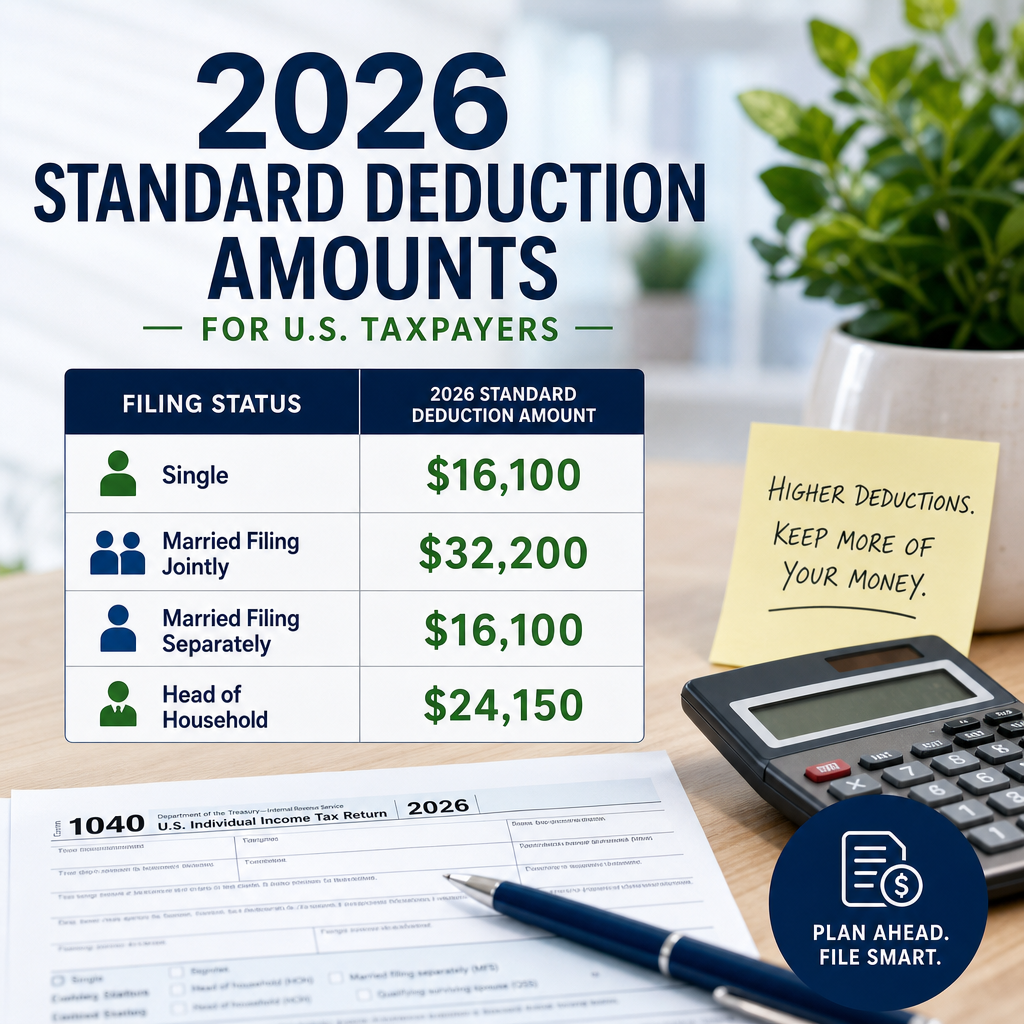
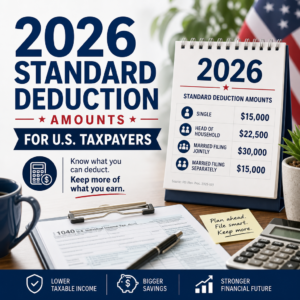
The 2026 standard deduction could make a big difference in how much of your income is actually taxable next year. Whether you file as single, married, or head of household, understanding the new amounts can help you plan ahead and choose the smartest tax strategy.
By: Mary on July 23, 2026
Última atualização em: agosto 3, 2026
The 2026 standard deduction is one of the most important tax numbers for Americans to watch because it directly affects how much income you may owe federal tax on. If you’re a wage earner, retiree, or small business owner, knowing the 2026 standard deduction can help you plan ahead, estimate your refund, and decide whether itemizing still makes sense.
The standard deduction changes each year, usually because of inflation adjustments. For many taxpayers, it’s the easiest way to lower taxable income without collecting piles of receipts or tracking deductible expenses. But the right choice between the standard deduction and itemizing depends on your filing status, your spending, and the tax law in effect for 2026.
In this guide, we’ll break down the 2026 standard deduction in plain English, explain how it works, and show how it may affect different types of taxpayers.
What Is the Standard Deduction?
The standard deduction is a fixed dollar amount that reduces the income the IRS taxes. Instead of listing deductible expenses like mortgage interest, medical costs, or charitable donations, you can take the standard deduction if it gives you a better result.
Most taxpayers choose the standard deduction because it is simple and often larger than their itemized deductions. The IRS adjusts the amount each year to help account for inflation and changes in the tax system.
Why the Standard Deduction Matters
The standard deduction matters because it:
Lowers your taxable income
Can reduce your federal tax bill
Simplifies tax filing
Helps many taxpayers avoid itemizing
For example, if you earn $70,000 and your standard deduction is $15,000, you are generally taxed as though your income were $55,000 instead of the full $70,000.
2026 Standard Deduction: What Taxpayers Need to Know
The exact 2026 standard deduction amounts are expected to be set by the IRS through annual inflation adjustments and any tax law changes that may apply for that year. Because tax rules can shift, taxpayers should always confirm the final numbers with the IRS before filing.
In general, the standard deduction is available based on your filing status:
Single
Married filing jointly
Married filing separately
Head of household
Qualifying widow(er)
These filing categories matter because the deduction amount differs for each one.
Who Can Claim the Standard Deduction?
Most taxpayers can claim the standard deduction unless they fall into a category that requires itemizing or limits their ability to use it. Some exceptions may apply, including certain nonresident aliens, married individuals filing separately when one spouse itemizes, and some taxpayers with short tax years or special filing situations.
You may also get an additional amount if you qualify as:
Age 65 or older
Blind
These extra amounts are added on top of the basic standard deduction.
How the Standard Deduction Works in Practice
The standard deduction is applied to your gross income after adjusting for certain above-the-line deductions such as contributions to a traditional IRA or self-employed retirement plan, if eligible. What remains is your taxable income.
Here’s the basic flow:
Start with your total income.
Subtract adjustments to income.
Subtract the standard deduction or itemized deductions.
Apply tax rates to the remaining amount.
Simple Example
Suppose a single taxpayer has:
$60,000 in wages
$2,000 in retirement plan contributions that qualify as an adjustment
A standard deduction for 2026 that applies to their filing status
Their taxable income would be reduced by both the adjustment and the standard deduction, which can make a meaningful difference in the final tax bill.
How the 2026 Standard Deduction Affects Different Taxpayers
The 2026 standard deduction doesn’t affect everyone the same way. Your filing status, age, family size, and expenses all influence whether it helps you most.
Single Filers
Single filers usually receive one of the lower standard deduction amounts because the tax system is designed around household filing status. If you file as single, the 2026 standard deduction can still provide a strong benefit, especially if you do not own a home or have limited itemizable expenses.
Married Filing Jointly
Married couples filing jointly often receive one of the largest standard deductions. This can be especially helpful for households with one primary earner, two moderate incomes, or combined financial expenses.
Joint filers should compare:
Their combined itemized deductions
Their eligible standard deduction
Any extra deductions related to age or blindness
Head of Household
This filing status is available for eligible taxpayers who support a qualifying dependent and pay more than half the cost of keeping up a home. The standard deduction for head of household filers is typically more favorable than for single filers, which can make a meaningful difference for single parents and caregivers.
Seniors and Taxpayers Who Are Blind
If you are age 65 or older, or legally blind, you may qualify for an additional standard deduction amount. That extra deduction can lower your taxable income further.
For example, a retired taxpayer who does not itemize may still reduce taxable income significantly by combining the base standard deduction with the additional age-based amount.
Standard Deduction vs. Itemizing: Which Is Better?
Choosing between the standard deduction and itemizing is one of the most important tax decisions for many households.
Choose the Standard Deduction If:
Your deductible expenses are modest
You do not own a home
You had few medical expenses
Your charitable giving is limited
You want a simpler tax return
Consider Itemizing If:
You paid a lot in mortgage interest
You made large charitable donations
You had significant medical expenses that qualify under IRS rules
You paid substantial state and local taxes, subject to federal limits
Your total itemized deductions are clearly higher than the standard deduction
Practical Comparison
Imagine a married couple with:
Mortgage interest: $8,000
Charitable gifts: $3,500
State and local taxes: $10,000
Their itemized deductions may be worth comparing against the 2026 standard deduction for married filing jointly. If the standard deduction is higher, itemizing would not help. If itemized deductions exceed it, they may save more by listing them.
Tax Planning Tips for 2026
The 2026 standard deduction should be part of your broader tax planning strategy. A little preparation early in the year can help you avoid surprises later.
1. Track Deductible Expenses Throughout the Year
Even if you expect to claim the standard deduction, keep records of major deductible expenses. Your situation may change by year-end.
Helpful items to track include:
Mortgage interest statements
Charitable donation receipts
Medical bills
Property tax records
State tax payments
Education-related expenses, if relevant
2. Watch Your Filing Status
Your filing status directly affects your standard deduction. Life events such as marriage, divorce, the birth of a child, or the death of a spouse can change which status you use.
3. Review Retirement Contributions
Some contributions may reduce adjusted gross income before the standard deduction is applied. That means retirement planning can work hand in hand with the 2026 standard deduction to lower taxes.
4. Check for Age or Blindness Add-ons
If you qualify for additional deductions because of age or blindness, make sure those amounts are properly claimed. These extra deductions are easy to overlook.
5. Reevaluate Before Filing
Do not assume itemizing will always be better. Recalculate both options before you file. Tax software or a qualified tax professional can help you compare the two.
Common Misunderstandings About the Standard Deduction
Many taxpayers misunderstand how the standard deduction works. Clearing up these issues can help you file more accurately.
“I Can Claim Both the Standard Deduction and Itemized Deductions”
Usually, you must choose one or the other. You cannot double dip on the same return.
“Only Homeowners Benefit From Tax Deductions”
Not true. Renters, retirees, students, and families without mortgages may benefit greatly from the standard deduction.
“Itemizing Is Always Better”
Also false. Many taxpayers save time and money by taking the standard deduction, especially when their deductible expenses are not unusually high.
“The Standard Deduction Is the Same for Everyone”
The amount varies by filing status and may increase for older taxpayers or those who are blind.
How to Prepare for Filing Season
To make the most of the 2026 standard deduction, take a few practical steps before tax time.
Keep Your Records Organized
Use folders, apps, or spreadsheets to track:
Income statements
Donation receipts
Mortgage interest forms
Medical expense summaries
Tax payment confirmations
Use Reliable Tax Tools
If you prepare your own return, choose tax software that helps compare itemized deductions and the standard deduction. If your taxes are more complex, a CPA or enrolled agent can help you identify the best approach.
Review IRS Guidance
Tax law can change, and final deduction amounts are published by the IRS. Checking official guidance ensures you are using the correct figures for your filing year.
Frequently Asked Questions
What is the 2026 standard deduction?
The 2026 standard deduction is the amount taxpayers can subtract from income before federal income tax is calculated. The IRS adjusts it annually, usually for inflation, and the final amount depends on filing status and eligibility for additional deductions.
Will the 2026 standard deduction be higher than 2025?
It may be, but the exact amount depends on IRS inflation adjustments and any tax law changes. Taxpayers should check official IRS announcements before filing to confirm the final figures.
Can I claim the standard deduction if I’m retired?
Yes. Many retirees use the standard deduction because they often have fewer itemized expenses. If you are age 65 or older, you may also qualify for an additional deduction amount.
Is itemizing worth it if I own a home?
Sometimes. Homeownership can create deductible expenses such as mortgage interest and property taxes, but itemizing only helps if those expenses exceed the standard deduction available for your filing status.
How do I know whether to take the standard deduction or itemize?
Compare your total itemized deductions with your standard deduction amount. If itemized deductions are higher, itemizing may lower your tax bill more. If not, the standard deduction is usually the better choice.
The 2026 standard deduction is a key piece of the tax planning puzzle for millions of U.S. taxpayers. It can simplify filing, lower taxable income, and reduce the need to sort through itemized expenses. For many households, it will remain the most practical and beneficial choice.
Still, the best option depends on your individual situation. Filing status, age, homeownership, charitable giving, medical costs, and retirement contributions can all affect whether you should claim the standard deduction or itemize. That is why it pays to review your numbers before filing rather than assuming last year’s approach will still work this year.
As tax season approaches, keep good records, watch for IRS updates, and compare both deduction methods carefully. A little planning now can help you avoid missed savings later. If you want to make the most of your return, stay informed and use the official IRS guidance when final 2026 figures are released.
Mary S, CFP®, is a Certified Financial Planner with over 12 years of experience in personal finance, retirement planning, and wealth management. She writes educational content that helps readers understand financial concepts and make informed decisions based on reliable information.