How to Respond to a Debt Collector and Protect Your Rights
Getting a call, letter, or email from a debt collector can be stressful, especially if you’re not sure whether the debt is valid or how to handle the conversation. The good news is that you have rights, and you do not have to navigate the process blindly. Knowing how to respond to a debt collector can help you avoid mistakes, protect your credit, and make sure the collector follows the law.
Whether the debt is yours, inaccurate, or unfamiliar, the way you respond matters. A calm, informed approach can prevent harassment, create a paper trail, and give you more control over the situation. In this guide, you’ll learn practical steps to take, what debt collectors can and cannot do, and how to protect your rights from the first contact forward.
What a Debt Collector Can and Cannot Do
Before you decide how to respond to a debt collector, it helps to understand the rules they must follow. In the United States, many third-party debt collectors are regulated by the Fair Debt Collection Practices Act (FDCPA). That law limits abusive, deceptive, and unfair collection practices.
Common things debt collectors can do
A debt collector may:
- Contact you by phone, mail, or email
- Ask you to pay a debt
- Request updated contact information
- Send a written notice about the debt
- Report the debt to credit bureaus, if allowed
Things debt collectors cannot do
A collector generally cannot:
- Harass you with repeated calls or threats
- Lie about the amount you owe
- Pretend to be law enforcement or a lawyer if they are not
- Call at unreasonable hours
- Discuss your debt with other people in most situations
- Threaten actions they cannot legally take
If a collector crosses the line, document what happened. Your notes may help if you need to dispute the debt or file a complaint later.
First Steps to Take When a Debt Collector Contacts You
When you first hear from a collector, don’t panic and don’t rush into a payment arrangement before you understand the debt. A careful response can save you from paying a debt that is not valid or already too old to collect in court.
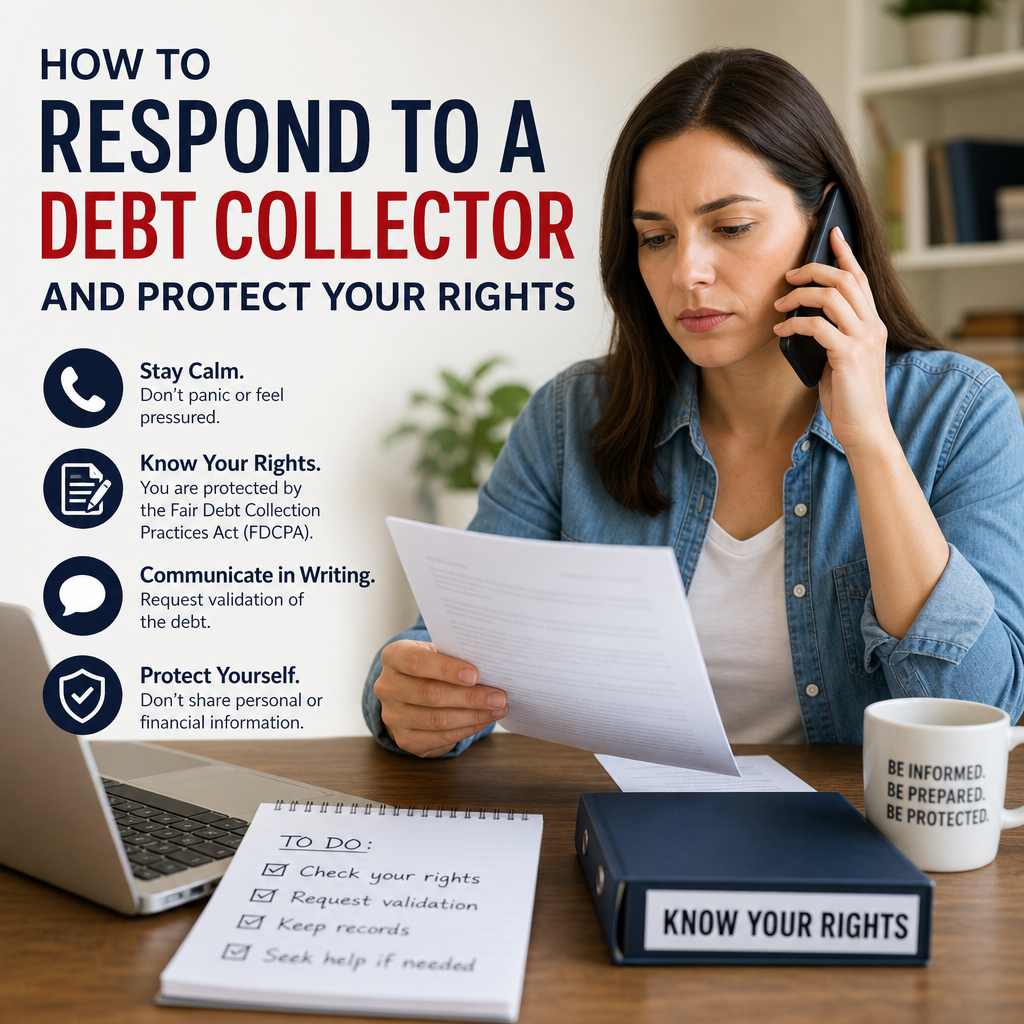
1. Stay calm and collect details
Write down or save:
- The collector’s name
- Company name
- Phone number and mailing address
- Date and time of contact
- The amount claimed
- The original creditor’s name
- Any account number or reference number
If the contact was by phone, you can also ask for the information in writing.
2. Do not admit the debt immediately
Avoid saying things like, “Yes, that’s my debt,” until you verify the details. A simple, neutral response is better:
- “Please send me the information in writing.”
- “I’d like to review the debt before discussing payment.”
- “I’m requesting validation of the debt.”
3. Request debt validation
One of the most important ways to respond to a debt collector is to ask for debt validation. This means you want proof that:
- The debt is yours
- The amount is correct
- The collector has the right to collect it
A validation request should be made in writing, and it is wise to send it quickly after first contact. Keep a copy for your records.
How to Respond to a Debt Collector in Writing
Written communication gives you more control and creates a record of what was said. That paper trail can matter if there is a dispute later.
Use a clear, professional tone
You don’t need to be rude, apologetic, or overly detailed. Keep your letter or email short and factual. A strong response might include:
- Your name and mailing address
- The collector’s name and address
- The account number, if available
- A request for validation
- A request that all future communication be in writing, if desired
Sample structure for a debt validation letter
You can organize your response like this:
- State that you are requesting validation of the debt.
- Ask for the name of the original creditor.
- Request an itemized breakdown of the balance.
- Ask for proof that the collector is authorized to collect.
- Request that communication be sent in writing.
Send it the right way
When possible, send important letters by certified mail with return receipt requested. That gives you evidence that the collector received your request. Save copies of everything you send and receive.
What to Do If the Debt Is Not Yours
Sometimes a collector contacts the wrong person, or a debt ends up on your record because of identity theft, a billing mistake, or a mixed-up account. If that happens, do not ignore it.
Dispute the debt immediately
If the debt is not yours:
- Tell the collector in writing
- Explain why it is not yours
- Ask for supporting documentation
- Keep copies of any evidence that supports your position
Helpful documents may include:
- Account statements
- Credit reports
- Police reports, if identity theft is involved
- Proof of a different address or name
Check your credit reports
If the debt appears on your credit report, review all three major credit reports. You can dispute inaccurate information with the credit bureaus and the furnisher of the information. If the account is fraudulent or mistaken, filing a credit dispute can help correct the record.
What to Do If the Debt Is Ours But You Cannot Pay
If the debt is valid but you can’t pay right away, you still have options. Ignoring the collector usually makes the problem worse, but agreeing too quickly can also hurt you if you can’t afford the plan.
Ask for options in writing
You may be able to request:
- A payment plan
- A lower monthly amount
- A temporary hardship arrangement
- A settlement for less than the full amount
- A pause in collection activity while you review your finances
Before agreeing to anything, ask:
- Is the debt being settled in full or partially?
- Will the collector report the account as settled?
- Will interest or fees continue to grow?
- Can the agreement be put in writing?
Know the risk of partial payment
In some situations, making a payment on an old debt can restart the statute of limitations or affect your legal exposure. Because the rules vary by state, it’s smart to understand the age of the debt before sending money. If the debt may be time-barred, get advice before paying.
Understanding the Statute of Limitations
The statute of limitations is the time period during which a creditor or collector can sue you to collect a debt. Once that period passes, the debt may still exist, but the collector may no longer be able to win a lawsuit in court.
Why this matters
If you respond to a debt collector without checking the debt’s age, you could accidentally make things more complicated. In some states, certain actions—like making a payment or acknowledging the debt—may affect the statute of limitations.
Check the laws in your state
The time limit depends on:
- Your state
- The type of debt
- The contract terms
- Whether the debt is written or open-ended
If a collector threatens to sue over a very old debt, verify the timeline before taking action.
How to Protect Your Rights During Collection Calls
Phone calls are often the most stressful part of debt collection. You may feel pressured to answer questions on the spot or agree to a payment plan you haven’t reviewed. You do not have to do that.
Set boundaries early
You can say:
- “Please communicate with me in writing.”
- “I do not discuss financial matters by phone.”
- “I am requesting validation of the debt.”
- “Do not call me at work.”
If you want the collector to stop calling, you can send a written request asking them to contact you only in writing. In many cases, they must honor that request, with limited exceptions.
Keep a call log
Document each call with:
- Date and time
- Caller name
- Phone number
- Summary of what was said
- Any threats, false statements, or harassment
If the collector breaks the rules, this log can support a complaint or legal claim.
When to Dispute, Negotiate, or Ignore
Not every situation calls for the same response. The right approach depends on whether the debt is valid, how old it is, and whether the collector has provided proof.
Dispute the debt if:
- You do not recognize it
- The amount seems wrong
- You believe it is not yours
- The collector has not validated it
Negotiate if:
- The debt is valid
- You can afford a reduced payment or settlement
- You want to avoid escalation
Consider limited communication if:
- The debt may be time-barred
- You need time to review documents
- The collector is being aggressive
Do not simply ignore everything
Ignoring a collector may lead to:
- More calls and letters
- Credit reporting
- A possible lawsuit, if the debt is still legally collectible
Even if you plan not to pay, it is better to know your rights and respond strategically.
Warning Signs of Scam Debt Collectors
Some scammers pose as collectors and use fear to pressure people into paying quickly. Before you respond to a debt collector, make sure the contact is legitimate.
Red flags include:
- Refusing to provide written verification
- Demanding immediate payment by wire transfer, gift card, or cryptocurrency
- Threatening arrest or jail
- Refusing to identify the original creditor
- Pressuring you not to consult anyone
- Calling from a number that doesn’t match the company name
What to do if you suspect a scam
- Do not give personal or financial information
- Ask for written validation
- Look up the company independently
- Contact the original creditor directly, if applicable
- Report suspicious activity to the proper authorities
How to File a Complaint If a Collector Breaks the Rules
If a collector harasses you, lies, or refuses to honor your rights, you can take action.
Possible complaint channels include:
- The Consumer Financial Protection Bureau
- Your state attorney general
- The Federal Trade Commission
- The Better Business Bureau, in some cases
- A consumer law attorney, if the conduct is serious
Keep all documentation organized. Strong records make it easier to explain what happened and when.
Practical Example: A Smart First Response
Imagine a collector calls you about a medical bill you don’t remember. Instead of agreeing to pay, you:
- Write down the caller’s name and company
- Ask for a written notice
- Request debt validation
- Review your old bills and credit reports
- Check whether the account is yours and whether the amount is accurate
- Decide whether to dispute, negotiate, or seek advice
That approach is calm, informed, and protective. It gives you time to verify the facts before making a financial decision.
Best Practices to Follow Every Time
If you remember nothing else, keep these habits in mind:
- Never pay before verifying the debt
- Always get important agreements in writing
- Save every letter, email, and voicemail
- Do not share more personal information than necessary
- Track deadlines for validation and disputes
- Review your credit reports regularly
These simple steps can make a major difference in how the situation unfolds.
Frequently Asked Questions
1. What should I say the first time a debt collector contacts me?
Keep it brief and calm. Ask for the debt information in writing and request validation. Avoid admitting the debt or agreeing to payment until you’ve reviewed the details.
2. Can a debt collector call me at work?
They may contact you, but if you tell them that calls at work are not allowed, they should stop. You can also request that all communication happen in writing instead.
3. How do I know if a debt collector is legitimate?
A legitimate collector should provide the company name, address, and details about the debt. You should also receive a written notice. If they refuse to validate the debt or pressure you to pay with unusual methods, be cautious.
4. What if the debt is too old to sue over?
That debt may be time-barred, depending on your state and the type of debt. It can still be collected in some cases, but the collector may not be able to win a lawsuit. Be careful not to restart the clock by making a payment or acknowledging the debt without understanding the consequences.
5. Can I stop debt collection calls completely?
You can usually request that the collector stop calling and communicate only in writing. In many cases, they must honor that request, though they may still contact you for specific legal notices or to confirm they are ending collection efforts.
Official Resources
- Consumer Financial Protection Bureau: Debt Collection
- Federal Trade Commission: Debt Collection
- U.S. Department of Justice: Fair Debt Collection Practices Act
- USA.gov: Debt Collection
- Nolo: Debt Collection and Consumer Rights
Conclusion
Knowing how to respond to a debt collector can make a stressful situation far more manageable. The key is to slow down, gather facts, and protect yourself before you agree to anything. Ask for validation, keep everything in writing, and check whether the debt is accurate, yours, and still legally collectible. If the collector violates the law, document the conduct and use the complaint channels available to you.
You do not have to handle collection efforts blindly or react out of fear. A thoughtful response gives you leverage, protects your rights, and helps you make informed decisions about dispute, negotiation, or payment. Even if the debt is valid, you still deserve respectful treatment and clear information. Start with the basics: verify the debt, know your rights, and keep your records organized. From there, you can choose the path that best fits your situation and move forward with greater confidence.