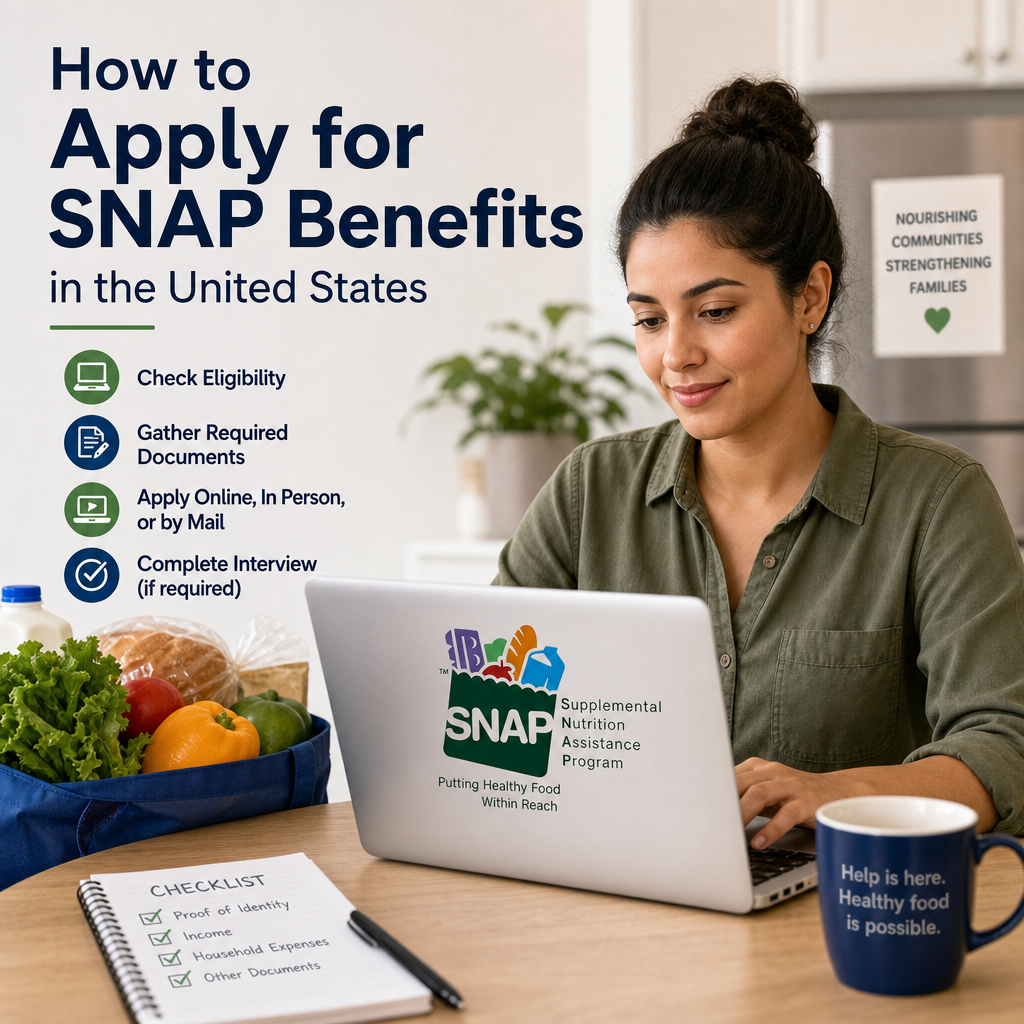
How to Apply for SNAP Benefits in the United States
If you’re struggling to afford groceries, it may be easier than you think to apply for SNAP benefits and get food assistance for your household. This guide breaks down the process step by step so you can apply with confidence and know what to expect next.
By: Emilly on July 23, 2026
Última atualização em: agosto 3, 2026
Applying for SNAP benefits can feel overwhelming at first, especially if you are juggling work, family responsibilities, or a sudden drop in income. The good news is that the process is designed to help eligible individuals and households access food assistance through the Supplemental Nutrition Assistance Program, often called SNAP or food stamps. If you understand the steps, gather the right documents, and apply through the correct state agency, the process becomes much more manageable.
This guide explains how to apply for SNAP benefits in the United States, what information you need, how eligibility is typically reviewed, and what to expect after you submit your application. Whether you are applying for the first time or helping someone else, this article will walk you through the process in plain English.
What SNAP Is and How It Helps
SNAP is a federal nutrition program that helps low-income households buy groceries. Benefits are issued on an Electronic Benefit Transfer, or EBT, card, which works like a debit card at approved stores and farmers markets.
SNAP can help people who are:
Working but earning too little to cover food costs
Between jobs and looking for work
Caring for children, older adults, or someone with a disability
Living on a fixed income
Experiencing a short-term financial setback
Because SNAP is administered by each state, the exact application process may differ slightly depending on where you live. Still, the general steps are similar across the country.
Who Should Apply for SNAP Benefits?
You should consider applying if your household has trouble affording enough food each month. “Household” usually means people who live together and buy and prepare food together.
You may qualify even if you:
Have a job
Own a car
Rent or own a home
Receive Social Security, unemployment, or child support
Are a student, depending on your situation
Are an immigrant with eligible status
Many people assume they won’t qualify and never apply, but SNAP rules are broader than many expect. The only way to know for sure is to submit an application and let your state agency review your case.
How to Apply for SNAP Benefits
The application process usually follows the same basic structure, even though state websites and forms may look different.
1. Find Your State SNAP Agency
Start by locating your state’s SNAP office or online portal. Since SNAP is run at the state level, you must apply through the agency where you currently live.
You can usually apply in one of these ways:
Online through your state benefits portal
By mail using a paper application
In person at a local social services office
By phone in some states, especially if you need help completing the form
If you are unsure where to apply, the U.S. Department of Agriculture provides a state-by-state directory.
2. Complete the Application
The application asks for basic information about your household, income, expenses, and living situation. You do not need to have every document in hand before you begin, but accuracy matters.
Typical questions include:
Names, dates of birth, and Social Security numbers for household members
Current address and contact information
Monthly income from work or other sources
Housing costs such as rent, mortgage, and utilities
Childcare or dependent care expenses
Medical expenses for older adults or people with disabilities
If you do not know how to answer a question, contact your local SNAP office for help. Never leave out important information just to speed things up.
3. Submit the Application Promptly
Once you finish, submit the application as soon as possible. In many states, your application date matters because benefits may be dated back to the day you submit it, not the day you complete the interview.
Even if you do not yet have all supporting documents, getting the application in on time is important. You can usually provide missing documents later.
4. Complete the Interview
Most applicants must complete an interview with a caseworker. This is usually done by phone, though some offices may offer in-person interviews.
The interview is used to confirm details from your application and ask follow-up questions. Be prepared to discuss:
Who lives in your home
What income your household receives
Your monthly expenses
Any recent changes in work, housing, or family status
Treat the interview seriously, but do not panic. The interviewer is verifying information, not trying to trick you.
5. Provide Verification Documents
Your state agency may ask you to prove the information in your application. This is a normal part of the process.
Common documents include:
Pay stubs or employer letters
Bank statements
Lease or rent receipts
Utility bills
ID cards or driver’s licenses
Proof of citizenship or eligible immigration status, if required
Childcare or medical expense records
Respond quickly when the office asks for documents. Delays are one of the most common reasons applications take longer than expected.
6. Wait for the Decision
After your interview and document review, the agency will send you a notice telling you whether you were approved, denied, or need more information.
If approved, the notice should explain:
Your monthly SNAP benefit amount
When benefits will be loaded onto your EBT card
How long your certification period lasts
What reporting responsibilities you have
If denied, the notice should explain the reason and tell you how to appeal the decision.
Documents You May Need for SNAP
Gathering documents early can save you time and reduce stress. While requirements vary by state and household situation, it helps to have the following ready:
Identity and Household Information
Government-issued ID
Social Security numbers
Birth dates for everyone in the household
Proof of address, if needed
Income Records
Recent pay stubs
Self-employment records
Unemployment benefits letters
Social Security award letters
Child support documentation
Pension or retirement income statements
Expense Records
Lease or mortgage statements
Utility bills
Childcare receipts
Medical bills and prescription costs, if applicable
Disability-related expenses
Immigration or Citizenship Documents
Some households may need to show proof of U.S. citizenship or eligible immigration status. Your state agency can tell you what applies to your situation.
SNAP Eligibility: What States Usually Look At
SNAP eligibility rules are based on federal guidelines, but states use those rules to review household circumstances. The main factors usually include:
Household size
Gross income
Net income after certain deductions
Assets in some situations
Work requirements for able-bodied adults without dependents
Citizenship or eligible immigration status
Income and Deductions
Your household income is one of the most important factors. SNAP takes into account wages and other sources of income, but it may also consider certain deductions, such as:
Housing costs
Utility expenses
Dependent care
Medical expenses for eligible households
These deductions can affect whether you qualify and how much support you receive.
Special Circumstances
Some households may have unique situations that affect eligibility, including:
Elderly adults
People with disabilities
Veterans
Students
Migrant or seasonal workers
Households with no permanent address
If any of these apply to you, mention them during your application. Special rules may help your case.
How Long Does SNAP Approval Take?
Processing times vary by state and by household situation. In general, SNAP agencies are expected to act on applications within a set timeframe, often about 30 days for standard cases. Some households with very limited income or resources may qualify for expedited processing and receive benefits sooner.
Expedited SNAP
You may qualify for faster processing if your situation is urgent. This can happen when your household has:
Very little income
Very limited cash or available resources
High housing costs compared with income
If you think your case is urgent, tell the office right away. Ask whether you qualify for expedited SNAP benefits.
What Happens After You Are Approved?
If your application is approved, your benefits are loaded onto an EBT card. If you already have one, funds may be added to that card. If not, your state will explain how to get one.
Using Your EBT Card
You can use SNAP benefits to buy eligible food items such as:
Fruits and vegetables
Meat, poultry, and fish
Dairy products
Bread and cereals
Seeds and plants that produce food
SNAP cannot usually be used for:
Alcohol
Tobacco
Hot prepared meals in most cases
Nonfood household items
Vitamins or supplements
Pet food
Keep Your Information Updated
After approval, you may need to report certain changes, such as:
A change in income
A move to a new address
Changes in household size
New employment or job loss
Report changes according to your state’s rules to avoid overpayments or interruptions in benefits.
Common Mistakes to Avoid
A careful application can reduce delays and denials. Watch out for these common problems:
Leaving blanks on the application
Forgetting to sign or date forms
Missing the interview appointment
Failing to submit requested documents
Reporting income incorrectly
Not opening mail from the SNAP office
Assuming you do not qualify without applying
A small mistake can slow down the process, but most issues can be corrected if you respond quickly.
If Your SNAP Application Is Denied
A denial is not always the end of the road. If you believe the decision was wrong, you may have the right to appeal.
Before You Appeal
Review the denial notice carefully. It should explain why you were denied. Sometimes the problem is missing paperwork or a misunderstanding that can be fixed with additional documentation.
Filing an Appeal
If you disagree with the decision, ask about your state’s fair hearing process. Appeals usually have deadlines, so do not wait too long. Bring any records that support your case.
Reapplying Later
If your situation changes, you can often reapply. For example, a new job loss, rent increase, or medical issue may change your eligibility.
Tips to Make the Process Easier
Applying for SNAP benefits does not have to be stressful. These practical steps can help:
Apply as soon as you need help. Waiting can delay assistance.
Keep copies of everything. Save your application, documents, and notices.
Answer calls and mail quickly. The office may need more information.
Be honest and complete. Accurate information protects your case.
Ask for help if needed. Community organizations, food banks, and legal aid groups often help with applications.
Check your state’s portal regularly. Some offices let you upload documents and track your case online.
How to Apply for SNAP Benefits if You Need Help
If you are uncomfortable filling out the application on your own, you are not alone. Many people get help from:
State or county SNAP offices
Community action agencies
Food banks and hunger relief organizations
Legal aid services
Senior centers
Disability advocacy groups
School social workers or family resource staff
These groups can help explain the forms and make sure you do not miss an important step.
Frequently Asked Questions
1. Can I apply for SNAP online?
Yes, many states allow online applications through a benefits portal. Some also accept paper applications, in-person submissions, or phone assistance. Check your state SNAP office website for the exact options available where you live.
2. Do I need a job to qualify for SNAP?
No. Having a job is not required. SNAP looks at your household income, expenses, and other eligibility factors. Many working households qualify because their wages are still too low to cover basic food needs.
3. How do I know if I qualify for expedited SNAP?
You may qualify for expedited processing if your household has very limited income, limited resources, or especially urgent food needs. The rules vary by state, but if you are in a crisis, tell the SNAP office right away and ask to be screened for expedited benefits.
4. What if I do not have all the documents when I apply?
Apply anyway. It is better to submit the application on time and provide missing documents later than to delay filing. Your state agency may request verification after you apply, and you should send documents as soon as possible.
5. Can college students get SNAP benefits?
Some college students can qualify, but special rules apply. Eligibility often depends on factors such as work hours, work-study, caregiving responsibilities, disability status, or other exemptions. Students should review their state rules carefully before assuming they are ineligible.
Learning how to apply for SNAP benefits is an important first step if your household needs help affording groceries. The process may seem complicated at first, but it becomes much easier when you break it down into manageable steps: find your state agency, submit the application, complete the interview, provide documents, and follow up promptly.
SNAP exists to provide practical support when money is tight and food budgets are under pressure. If you think you might qualify, do not let uncertainty stop you from applying. Many households are surprised to learn they are eligible once their income, expenses, and household size are reviewed.
The most important thing is to act early, stay organized, and respond to requests from your local office. If you need help, use trusted community resources and official government information to guide you through the process. Taking that first step can make a meaningful difference in your access to healthy food and household stability.
Emily A, holds a Master's degree in Public Administration (MPA) and has over 7 years of experience researching federal and state assistance programs. She writes educational content focused on government benefits, public policy, and community resources, using information from official agencies to help readers understand available programs and eligibility requirements.