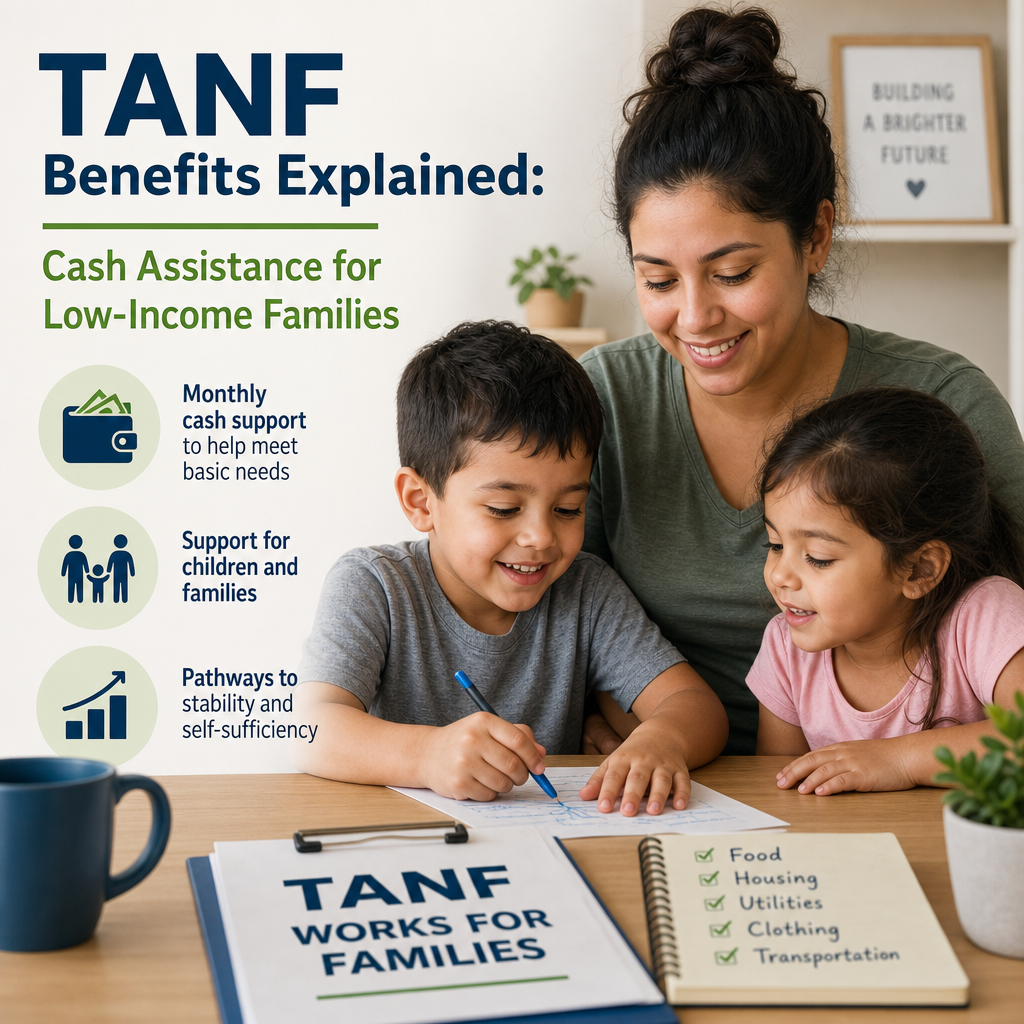
TANF Benefits Explained: Cash Assistance for Low-Income Families
TANF benefits can provide a crucial financial bridge for low-income families struggling to cover everyday essentials like rent, food, and child care. In this article, we’ll explain how the program works, who may qualify, and what kinds of support it can offer.
By: Emilly on July 23, 2026
Última atualização em: agosto 3, 2026
When money is tight, even basic expenses like food, rent, diapers, and transportation can start to feel overwhelming. That’s where TANF benefits can make a real difference. Temporary Assistance for Needy Families, better known as TANF, is a federally funded program administered by individual states to help low-income families meet essential needs while working toward stability.
Unlike some programs that only cover one type of expense, TANF cash assistance is designed to offer flexible support. Depending on where you live, it may help with monthly bills, child care, job preparation, or emergency expenses. Because each state runs its own version of the program, eligibility rules and benefit amounts can vary widely. Still, the goal is consistent: give families a temporary financial bridge during difficult times.
In this guide, we’ll break down how TANF works, who may qualify, what TANF benefits can cover, and how to apply. We’ll also cover common questions and official resources so you can better understand whether this program might help your family.
What Are TANF Benefits?
TANF stands for Temporary Assistance for Needy Families, a federal block grant program created to help states support families with limited income and resources. The program replaced Aid to Families with Dependent Children (AFDC) in the 1990s and shifted more flexibility to states in how they design and deliver assistance.
At its core, TANF benefits are usually cash payments provided to eligible families. These payments are meant to help cover basic living costs while parents or caregivers work toward self-sufficiency.
What TANF is designed to do
TANF has four main purposes:
Help needy families care for children in their own homes or with relatives.
Reduce dependence on public benefits by promoting job preparation, work, and marriage.
Prevent and reduce out-of-wedlock pregnancies.
Encourage the formation and maintenance of two-parent families.
While the policy goals are broad, families most often interact with TANF as a source of short-term cash support and related services.
TANF vs. other assistance programs
TANF is often compared with other government benefits such as:
SNAP, which helps with food purchases
Medicaid, which helps with health coverage
SSI, which supports people with disabilities or age-related limitations
Housing assistance, which helps with rent in some situations
TANF benefits are different because they usually provide cash assistance, giving families more flexibility to decide which urgent need to address first.
How TANF Benefits Work
Because TANF is state-administered, the rules are not exactly the same everywhere. One state might offer monthly cash assistance plus employment support, while another may focus more on diversion payments or short-term emergency help.
Common features of TANF programs
Many TANF programs include some combination of the following:
Monthly cash payments
Child care assistance
Job training or employment services
Transportation help
Case management
Emergency assistance for housing, utilities, or essential bills
In some states, TANF cash assistance is very targeted and time-limited. In others, families may receive benefits for a longer period, as long as they continue to meet program requirements.
Time limits and work rules
Federal law places time limits on how long families can receive federally funded TANF cash assistance, though states have flexibility in how they implement those limits. In many cases, adult recipients must also meet work-related requirements such as:
Job search
Employment
Vocational training
Participation in approved work activities
These rules are meant to connect families with longer-term stability, but they can also make the application and ongoing eligibility process more complex. That’s why understanding your state’s specific TANF guidelines is so important.
Who Can Qualify for TANF Benefits?
Eligibility for TANF benefits depends on several factors, including your household size, income, citizenship or immigration status, work status, and whether you have dependent children. Since every state sets its own standards within federal guidelines, qualifying in one state does not guarantee approval in another.
General eligibility factors
Most TANF programs look at:
Household income: Your earnings and other income sources must usually fall below a state-set limit.
Family composition: Many TANF programs are for households with children, though some also assist pregnant individuals.
Residency: You typically must live in the state where you apply.
Citizenship or eligible immigration status: Rules vary, but many applicants must be U.S. citizens or qualified noncitizens.
Assets/resources: Some states limit savings or other resources.
Employment status: You may need to be working, looking for work, or participating in approved activities.
Examples of who may qualify
A family might qualify for TANF benefits if they are:
A single parent with one or more dependent children and very low income
A two-parent household facing a sudden job loss
A caregiver raising a relative’s child with limited financial support
A pregnant person with little or no income, depending on the state
A family experiencing a temporary crisis that affects basic living needs
Common reasons people may not qualify
Applicants may be denied if they:
Earn too much income for the program
Do not meet the state’s asset limit
Fail to provide required documentation
Do not live in the state where they applied
Do not meet work participation requirements
Do not have eligible dependent children, depending on state rules
What TANF Benefits Can Help Pay For
One of the biggest advantages of TANF benefits is flexibility. Unlike narrowly targeted programs, cash assistance can be used where the need is greatest.
Typical uses for TANF cash assistance
Families often use TANF to cover:
Rent or partial rent payments
Utilities
Groceries and household essentials
Diapers and baby formula
Gas or bus fare for work and appointments
School supplies or clothing for children
Emergency car repairs needed for employment
Fees tied to work or training
A practical example
Imagine a parent who recently lost hours at work and is struggling to keep the lights on while caring for two young children. TANF benefits might help that household pay for utility bills and transportation while the parent looks for a new job or completes a training program. The money may not solve every problem, but it can reduce immediate pressure and help the family stay afloat.
How to Apply for TANF Benefits
The application process usually starts with your state’s human services or social services agency. Some states let you apply online, while others require an in-person visit, phone interview, or mailed application.
Steps to apply
Find your state agency.
Search for your state’s TANF or cash assistance office.
Review eligibility rules.
Check income limits, family requirements, and work rules before applying.
Gather documents.
You may need proof of:
Identity
Residency
Income
Household members
Child care expenses
Rent or utility bills
Citizenship or immigration status
Submit the application.
Complete all required forms accurately and on time.
Attend interviews or appointments.
Some states require a phone or in-person interview to verify information.
Wait for a decision.
Processing times vary by state and case volume.
Tips for a smoother application
Keep copies of everything you submit
Respond quickly to requests for more information
Report changes in income or household size as required
Ask about expedited help if your family has an urgent need
What Ongoing Requirements Come with TANF?
Getting approved for TANF benefits is only the first step. Most recipients must continue meeting program requirements to keep receiving assistance.
Common ongoing rules
Depending on the state, you may need to:
Participate in work activities
Meet with a caseworker
Report income changes
Provide proof of school attendance or child care arrangements
Follow a personal responsibility or employment plan
Why compliance matters
If you miss appointments, fail to submit paperwork, or do not meet work participation rules, your benefits may be reduced or stopped. That’s why it helps to keep a calendar of deadlines and stay in contact with your caseworker.
TANF Benefits and Work: What to Expect
Many people assume TANF is only for families not working, but that’s not always true. In many cases, TANF benefits are available to working families whose income is still too low to cover basic expenses.
Working while receiving TANF
Depending on the state and household situation, you may be able to receive TANF while:
Working part-time
Searching for a job
Attending approved training or education
Participating in transitional employment services
For some households, TANF acts as a bridge that supplements low wages. This can be especially important for parents balancing child care costs and unstable work schedules.
How TANF may support employment
TANF programs often connect families to:
Resume help
Interview preparation
Work experience programs
Child care support
Transportation assistance
These supports can make it easier to move from short-term assistance to more stable employment.
Challenges Families May Face
Although TANF benefits can be helpful, the program is not always easy to navigate. Families may encounter barriers such as:
Confusing eligibility rules
Short application windows
Required paperwork that is hard to gather
Limited benefit amounts
Time limits on assistance
Transportation or child care challenges that make compliance difficult
If you run into problems, contact the local agency as soon as possible. Many states have supervisors, appeals processes, or community partners that can help you resolve issues.
How TANF Fits into a Bigger Support Plan
TANF is often most effective when combined with other forms of support. For families in crisis, cash assistance can fill a gap, but it may not cover every need.
Other resources that may help
You may also want to explore:
SNAP for food assistance
Medicaid or CHIP for health coverage
WIC for pregnant individuals, infants, and young children
Child care subsidy programs
Local food banks and community emergency relief
Housing and utility assistance programs
Using multiple programs together can help families stabilize faster and reduce the risk of falling behind on essentials.
Frequently Asked Questions
1. How long can I receive TANF benefits?
The length of time you can receive TANF benefits depends on your state and your household situation. Federal rules place limits on how long families can receive certain TANF cash assistance, and states also set their own policies. Some households may receive help for only a short period, while others may qualify for longer support if they continue to meet program rules.
2. Can I get TANF if I have a job?
Yes, in many cases. TANF benefits are often available to working families with very low income. If your earnings are still not enough to cover basic expenses, you may qualify for cash assistance or related support. The amount you receive usually depends on your income, family size, and state guidelines.
3. Do I have to have children to qualify for TANF?
Most TANF programs are designed for families with dependent children. However, some states offer support to pregnant individuals or caregivers in certain situations. Because the rules vary, it’s important to check your state’s eligibility criteria before applying.
4. Is TANF the same thing as welfare?
TANF is one form of welfare, but the term “welfare” can refer to several public assistance programs. TANF specifically provides temporary cash assistance and related services for low-income families. It is one part of the broader safety net, which also includes food, health, and housing support programs.
5. What should I do if my TANF application is denied?
If your application is denied, review the reason carefully. You may be able to fix missing documentation, provide updated information, or file an appeal. Contact your local agency right away and ask whether you qualify for reconsideration. You may also be able to access other programs while you resolve the issue.
TANF benefits can provide an important lifeline for low-income families facing a temporary financial setback, a job loss, or the challenge of making ends meet with limited income. While the program is not the same in every state, its core purpose remains the same: to help families cover essential needs and move toward greater stability.
If you’re considering applying, start by checking your state’s rules, gathering your documents, and understanding any work or reporting requirements. Even if TANF does not cover every expense, it can offer meaningful short-term relief when your budget is stretched thin. For many families, that support creates breathing room to pay bills, stay housed, and focus on the next step forward.
Learning how TANF works is a practical step toward finding the right resources for your household. With the right information, you can make informed decisions, avoid delays, and connect with other support programs that strengthen your long-term financial security.
Emily A, holds a Master's degree in Public Administration (MPA) and has over 7 years of experience researching federal and state assistance programs. She writes educational content focused on government benefits, public policy, and community resources, using information from official agencies to help readers understand available programs and eligibility requirements.