Medicaid 101: Eligibility, Enrollment, and Covered Benefits Explained
Medicaid is one of the most important health coverage programs in the United States, yet many people still find it confusing. If you’ve ever wondered who qualifies, how to apply, or what Medicaid actually covers, this guide breaks it down in plain English. Whether you’re exploring coverage for yourself, a child, an older parent, or someone with a disability, understanding Medicaid eligibility, enrollment, and covered benefits can help you make confident decisions.
Medicaid is a joint federal and state program that helps eligible individuals and families get access to medical care with little or no cost. Because each state runs its own Medicaid program within federal guidelines, rules can vary depending on where you live. That makes it especially important to understand the basics before you apply.
What Is Medicaid?
Medicaid is a public health insurance program that provides coverage to millions of Americans with limited income and resources. It is designed to support people who may not be able to afford private health insurance or who need help paying for medical care.
Unlike Medicare, which primarily serves people age 65 and older and some younger people with disabilities, Medicaid focuses more on financial need. Some people qualify for both programs, known as dual eligibility.
Medicaid can help pay for:
- Doctor visits
- Hospital care
- Prescription drugs
- Preventive services
- Long-term care in certain situations
- Mental health and substance use treatment
- Maternity and pediatric care
Because the program is state-administered, the exact details can differ from one state to another. Still, the core goal remains the same: to provide affordable health coverage to people who qualify.
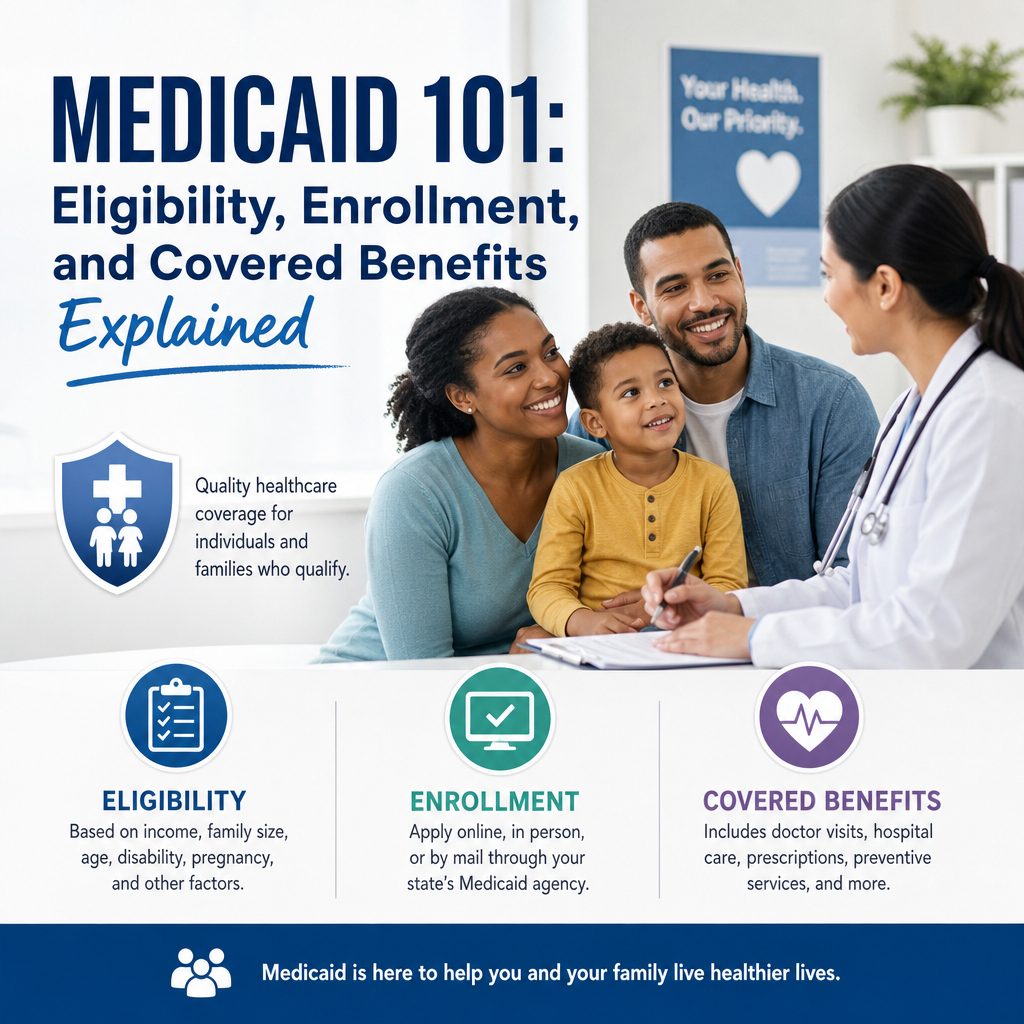
Medicaid Eligibility: Who Can Qualify?
Understanding Medicaid eligibility starts with one important idea: your state decides who qualifies, but it must follow federal rules.
Common Eligibility Groups
Many states cover the following groups:
- Low-income adults
- Children
- Pregnant people
- Parents or caregivers
- People age 65 and older
- People with disabilities
- Individuals who need nursing home or long-term care services
Some states also expanded Medicaid under the Affordable Care Act, which increased eligibility for many adults with incomes up to a certain level. If your state expanded Medicaid, you may qualify even if you do not have children or a disability.
Income Matters
Income is one of the most important factors in determining whether you qualify. Medicaid programs often compare your household income to the Federal Poverty Level (FPL). The exact income limits vary by:
- Your state
- Your household size
- Your age
- Your family situation
- Your eligibility category
For example, a pregnant person may have a different income threshold than an adult applying through expansion coverage. Because of this, it’s best to check your state’s rules rather than assuming you do or do not qualify.
Other Factors That May Affect Eligibility
In some cases, Medicaid eligibility also depends on:
- U.S. citizenship or qualified immigration status
- State residency
- Household composition
- Disability status
- Age
- Need for long-term care
States may ask for documentation to verify some of these details. If your income changes or your household size changes, your eligibility could change too.
How to Apply for Medicaid
The Medicaid enrollment process is usually straightforward, but it helps to know what to expect before you start.
Step 1: Find the Right Application Channel
You can usually apply through:
- Your state Medicaid agency
- The Health Insurance Marketplace
- An online benefits portal
- By mail, phone, or in person in some states
If you apply through the Marketplace and may qualify for Medicaid, your application is often transferred automatically to your state Medicaid office.
Step 2: Gather Your Information
Before applying, collect documents and details such as:
- Full names and dates of birth for household members
- Social Security numbers, if available
- Proof of income, such as pay stubs or tax returns
- Proof of residency
- Immigration documents, if applicable
- Information about other health coverage
- Current medical or disability information, if relevant
Having your paperwork ready can make the process faster and reduce delays.
Step 3: Submit Your Application
When you complete the application, answer every question honestly and carefully. Mistakes or missing details can slow down your approval.
If you are unsure how to answer a question, it’s better to ask for help than to guess. Many states offer enrollment assistance through:
- Local social service offices
- Community health centers
- Hospitals
- Certified application counselors
- Navigators
Step 4: Wait for a Decision
Processing times vary. Some applications are approved quickly, while others take longer if the state needs more information. If the Medicaid office asks for additional documents, respond as soon as possible.
If you’re approved, you’ll receive information about your benefits and how to use them. If you’re denied, you usually have the right to appeal.
What Documents Do You Need for Medicaid Enrollment?
Different states may ask for different paperwork, but the most common documents include:
- A government-issued ID
- Proof of address, such as a lease or utility bill
- Proof of income
- Birth certificates for children
- Social Security numbers
- Immigration documents, if applicable
- Medical records for disability-based applications
- Proof of pregnancy, if applying under that category
Not everyone will need every document. The state will let you know what is required for your case.
What Does Medicaid Cover?
One of the biggest benefits of Medicaid is broad health coverage. While exact services vary by state, many programs cover a strong set of essential medical services.
Common Covered Benefits
Most Medicaid programs include coverage for:
- Primary care visits
- Specialist visits
- Preventive care
- Vaccinations
- Emergency services
- Inpatient and outpatient hospital care
- Laboratory tests and X-rays
- Family planning services
- Pregnancy and maternity care
- Pediatric services
- Mental health services
- Substance use disorder treatment
- Prescription medications
- Medical transportation in some cases
- Durable medical equipment
- Home health services for eligible individuals
Coverage for Children
Children enrolled in Medicaid often receive comprehensive benefits, including:
- Well-child checkups
- Dental and vision care
- Immunizations
- Developmental screenings
- Treatment for physical and behavioral health needs
This is especially important because early care can identify issues before they become more serious.
Coverage for Pregnant People
For pregnant people, Medicaid may cover:
- Prenatal visits
- Lab work
- Ultrasounds
- Labor and delivery
- Postpartum care
- Nutrition support in some cases
Access to prenatal and postpartum care can make a meaningful difference in maternal and infant health.
Coverage for Seniors and People with Disabilities
Medicaid also plays a major role in long-term services and supports. In certain situations, it may help with:
- Nursing facility care
- Home and community-based services
- Personal care assistance
- Rehabilitation services
- Specialized medical equipment
These benefits can help people remain safe and supported, whether at home or in a care setting.
What Medicaid Usually Does Not Cover
Although Medicaid covers a lot, it does not pay for everything. Common exclusions or limitations may include:
- Cosmetic procedures
- Non-medically necessary services
- Certain over-the-counter products
- Some vision or dental services in adult plans, depending on the state
- Services from providers who do not accept Medicaid
Some states offer expanded dental, vision, or hearing benefits for adults, but these are not universal. Always check your state’s plan details.
How Medicaid Differs by State
Because states administer their own programs, Medicaid benefits and eligibility rules are not identical nationwide. That means two people in different states may have different coverage even if their financial situations are similar.
Examples of State Differences
States may differ in:
- Income eligibility limits
- Covered optional benefits
- Premiums or cost-sharing
- Managed care arrangements
- Provider networks
- Renewal requirements
This is why it is so important to use official state resources when checking your coverage.
How to Keep Your Medicaid Coverage
Once you’re enrolled, you usually need to maintain eligibility through periodic renewal. This process is sometimes called redetermination.
Tips to Avoid Losing Coverage
- Respond quickly to renewal notices
- Update your address and contact information
- Report changes in income or household size
- Keep copies of important documents
- Watch for mail or email from your Medicaid office
If you miss a renewal deadline, your coverage could end even if you still qualify. If that happens, you may be able to reapply or request reconsideration.
What If You Don’t Qualify for Medicaid?
If your income is too high for Medicaid, you may still have options. Depending on your situation, you could explore:
- Marketplace health plans
- Premium tax credits
- Employer-sponsored coverage
- CHIP for children in some households
- Short-term options in limited situations
If your income changes during the year, you may become eligible later. It’s worth checking again during open enrollment or after a life event.
Practical Example: How Medicaid Helps in Real Life
Consider a single parent with two children working a part-time job. Their income is modest, and they don’t have access to employer coverage. In many states, the children may qualify for Medicaid or CHIP, and the parent may qualify depending on the state’s rules.
In another example, a pregnant person with limited income may qualify for Medicaid during pregnancy even if they did not qualify before. After delivery, they may also be eligible for postpartum coverage, depending on the state.
These examples show why Medicaid eligibility is not one-size-fits-all. The program is designed to adapt to different life circumstances.
Why Medicaid Matters
Medicaid is more than just health insurance. For many families, it is the difference between getting timely care and putting off treatment. It can help people manage chronic conditions, access preventive services, and get support during major life events like pregnancy, disability, or aging.
Just as important, Medicaid often serves as a safety net during financial hardship. If your income drops, your household changes, or you face unexpected medical costs, Medicaid may provide critical support when you need it most.
Frequently Asked Questions
1. How do I know if I qualify for Medicaid?
Eligibility depends on your state, income, household size, age, disability status, and other factors. The fastest way to check is to apply through your state Medicaid agency or the Health Insurance Marketplace. Even if you think you may not qualify, it can still be worth submitting an application.
2. Can adults without children qualify for Medicaid?
Yes, in many states adults without children can qualify, especially in states that expanded Medicaid. Income limits and eligibility rules vary by state, so an adult’s chances of qualifying depend heavily on where they live and their household income.
3. Is Medicaid free?
Medicaid is often very low cost or no cost, but not always completely free. Some states charge small premiums, copays, or other cost-sharing amounts for certain services. Many eligible people, especially children and pregnant individuals, pay little or nothing out of pocket.
4. Does Medicaid cover dental and vision care?
It depends on the state and the age group. Children usually receive more complete dental and vision coverage than adults. Some states offer adult dental and vision benefits, but these are optional and vary widely. Check your state’s Medicaid plan for exact details.
5. What should I do if my Medicaid application is denied?
If your application is denied, read the notice carefully to understand why. You may be able to appeal the decision if you believe there was an error. You can also reapply if your situation changes or if you were missing documents during the first application.
Official Resources
- Medicaid.gov
- Healthcare.gov: Medicaid & CHIP
- Centers for Medicare & Medicaid Services (CMS)
- MedlinePlus: Medicaid
- KFF: Medicaid
Conclusion
Medicaid can be a vital source of health coverage for people and families who need affordable care, but understanding the rules is essential. Eligibility depends on several factors, including income, household size, age, disability status, and where you live. The application process is usually manageable if you gather the right documents and apply through the correct channel. Once enrolled, Medicaid can cover a wide range of services, from doctor visits and prescriptions to maternity care, mental health support, and long-term services in some cases.
Because Medicaid programs vary by state, the most important next step is to check your local rules using official sources. If you think you may qualify, apply as soon as possible and keep your information up to date so you don’t miss important notices. With the right information, Medicaid enrollment becomes much less intimidating—and much more useful as a pathway to real health care access.