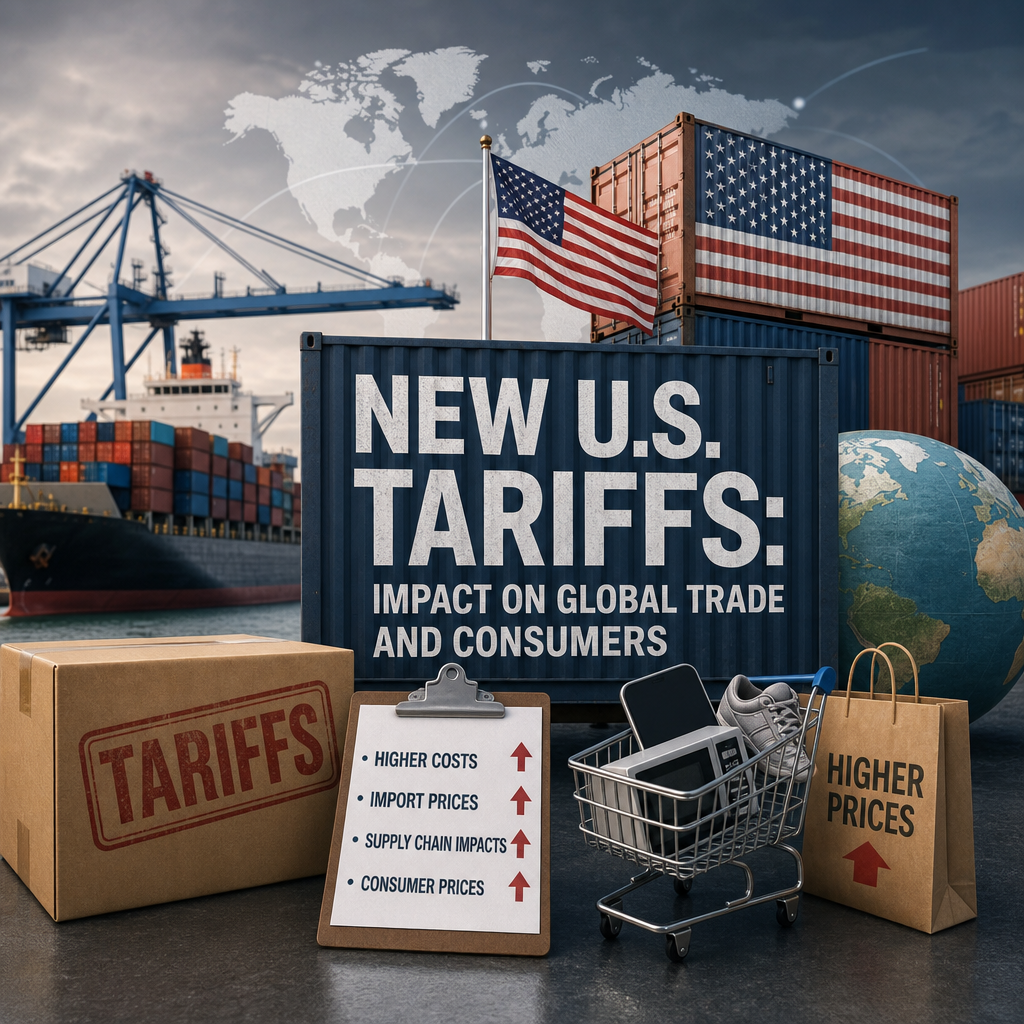
New U.S. Tariffs: Impact on Global Trade and Consumers
New US tariffs can do more than raise import costs — they can reshape supply chains, nudge up consumer prices, and alter how companies source goods around the world. Here’s what they mean for global trade, everyday purchases, and the businesses caught in the middle.
By: Peter B on July 24, 2026
Última atualização em: agosto 3, 2026
New U.S. tariffs have quickly become a major topic for businesses, policymakers, and shoppers alike. When the government raises import duties on certain goods, the effects rarely stay confined to one product category or one country. Instead, new U.S. tariffs can reshape supply chains, influence prices, change sourcing decisions, and create ripple effects across global trade.
For consumers, the impact may show up in everyday purchases like electronics, appliances, clothing, and even car parts. For companies, tariffs can force tough decisions about where to buy materials, how to price products, and whether to absorb higher costs or pass them along. Understanding how new U.S. tariffs work is essential if you want to make sense of the headlines and prepare for what comes next.
What Are New U.S. Tariffs?
Tariffs are taxes placed on imported goods. In the United States, they are usually collected at the border when products enter the country. New U.S. tariffs can apply broadly to certain countries, specific industries, or targeted product categories.
Governments use tariffs for several reasons:
To protect domestic industries from foreign competition
To respond to unfair trade practices
To encourage domestic manufacturing
To increase leverage in trade negotiations
To address national security concerns in select sectors
While tariffs may sound technical, their effects are highly practical. A tariff increases the cost of bringing a product into the U.S., and that additional cost often changes how businesses and consumers behave.
How tariffs differ from other trade measures
Tariffs are just one tool in trade policy. They are different from:
Quotas, which limit the quantity of goods that can be imported
Sanctions, which restrict trade with specific countries, companies, or individuals
Subsidies, which support domestic producers
Regulatory standards, which can affect what goods are allowed into a market
Understanding this distinction matters because new U.S. tariffs can be part of a larger trade strategy rather than a standalone policy.
Why the U.S. Imposes New Tariffs
New U.S. tariffs often arise when policymakers believe foreign competition is hurting domestic industries or when trade relationships become more strained. The exact reasons vary, but the logic usually falls into one or more of these categories.
Supporting domestic producers
If imported goods are significantly cheaper than U.S.-made products, domestic firms may struggle to compete. Tariffs can raise the price of imports, giving local businesses more room to compete on price.
Addressing unfair trade practices
Tariffs may be used in response to practices such as:
Dumping goods below fair market value
Government subsidies that distort competition
Intellectual property concerns
Trade barriers imposed by other countries
Strengthening supply chain resilience
Recent disruptions have made supply chain stability a priority. New U.S. tariffs may be designed to reduce dependence on a single foreign supplier or region, especially for strategic goods like semiconductors, steel, batteries, and critical minerals.
Using trade as a negotiation tool
Tariffs can also serve as bargaining leverage. Governments may use them to push trading partners toward new agreements or policy changes.
How New U.S. Tariffs Affect Global Trade
When the U.S. changes tariff policy, the impact extends far beyond its borders. As one of the world’s largest consumer markets, the U.S. influences how goods move, where companies invest, and which countries gain or lose market share.
Trade flows may shift
If one supplier country faces higher tariffs, importers often look elsewhere. That can benefit manufacturers in countries not affected by the tariff, while hurting exporters in the targeted country.
For example, if a tariff makes products from one region less competitive, businesses may redirect sourcing to alternate suppliers in Mexico, Vietnam, India, or other markets. Over time, this can redraw global trade patterns.
Companies may reconfigure supply chains
Businesses do not always stop importing when tariffs rise. Instead, they may:
Move assembly operations to another country
Source components from multiple suppliers
Redesign products to fall under a lower tariff category
Increase inventory to hedge against future changes
Renegotiate contracts with vendors and freight partners
These shifts can be expensive and time-consuming, but many companies see them as necessary to stay competitive.
Trade tensions can increase
New U.S. tariffs can prompt retaliation from affected countries. That often leads to reciprocal duties, trade disputes, or slower progress in negotiations. In some cases, tariff escalation can create uncertainty that discourages investment and complicates long-term planning.
What New U.S. Tariffs Mean for Consumers
Consumers often feel tariffs indirectly, but the effects can be real. When import costs rise, retailers and manufacturers may pass some of those costs on through higher prices, smaller discounts, or fewer product choices.
Higher prices on imported goods
Tariffs can increase the cost of goods such as:
Smartphones and computer accessories
Furniture and home goods
Clothing and footwear
Automotive parts
Tools and household appliances
Not every tariff leads to an immediate or dramatic price increase. Some companies absorb part of the cost, especially if competition is intense. Still, over time, higher import expenses often show up somewhere in the retail chain.
Fewer low-cost alternatives
If imported products become more expensive, shoppers may have fewer budget-friendly options. That can matter most for families relying on affordable basics or businesses that purchase goods in bulk.
Possible effects on domestic prices too
It is a common misconception that tariffs only affect imports. Domestic producers can also raise prices when imported competition becomes more expensive. If U.S. manufacturers face less pressure from overseas rivals, they may have more pricing power.
Mixed impact by product category
Not every consumer faces the same burden. The effect depends on:
How much the product relies on imported inputs
Whether domestic substitutes exist
How much competition is in the market
How easily companies can move production
For example, a tariff on raw materials may affect many downstream products, while a tariff on a finished consumer good may have a narrower but still noticeable impact.
How Businesses Respond to New U.S. Tariffs
Businesses typically respond quickly once tariffs are announced, especially if the changes affect high-volume imports. Their decisions often determine how much of the tariff burden reaches consumers.
Common business strategies
Companies may:
Absorb the cost to stay competitive
Pass the cost on through higher prices
Find new suppliers in lower-tariff countries
Reclassify products if the tariff schedule allows it
Lobby for exemptions or exclusions
Invest in domestic production
Adjust inventory and shipping schedules
Small businesses face special pressure
Large corporations usually have more flexibility. They may have legal teams, sourcing specialists, and multiple supplier relationships. Small businesses, by contrast, often rely on a few vendors and have less room to absorb cost increases.
A small importer of home décor, for example, may not be able to quickly switch suppliers or negotiate better shipping rates. That makes tariff changes especially disruptive for smaller firms.
Practical example: a retailer’s decision
Imagine a retailer importing kitchen appliances from overseas. If new U.S. tariffs raise the landed cost of those goods, the retailer has several choices:
Increase shelf prices
Reduce profit margins
Offer fewer models
Shift purchases to a different supplier
Delay new inventory orders
Each option carries trade-offs. The “best” answer depends on brand position, customer sensitivity, and the size of the tariff increase.
Industries Most Likely to Feel the Impact
While tariffs can affect many sectors, some industries are especially exposed because they rely heavily on imported materials or finished goods.
Manufacturing
Manufacturers often depend on imported steel, aluminum, electronics, plastics, and machinery parts. Higher tariff costs can affect everything from production budgets to final retail prices.
Retail
Retailers importing consumer goods may need to revise pricing, promotions, and inventory planning. Thin margins leave little room for extra cost.
Automotive
The auto industry uses globally sourced components, making it vulnerable to tariff changes on parts, batteries, semiconductors, and raw materials.
Technology
Tech companies may face higher costs for hardware components, assembly, or specialized materials. Even products assembled in the U.S. can be affected if imported inputs become more expensive.
Agriculture and food processing
If tariffs trigger retaliation, exporters may lose access to important markets. That can affect farmers, processors, and logistics companies even when the tariff itself targets a different sector.
How to Read Tariff News Without Getting Misled
Tariff headlines can be confusing because the details matter. A headline may say “new U.S. tariffs” without explaining which products, which countries, or which implementation dates are involved.
Key questions to ask
When you see tariff news, look for answers to these questions:
Which products are covered?
Which countries are affected?
When does the tariff take effect?
Is it permanent or temporary?
Are there exemptions or exclusions?
Does it apply to finished goods, inputs, or both?
Watch for hidden complexity
A tariff on one item may influence many related products. For example, a duty on imported aluminum can affect packaging, transportation, automotive parts, and construction materials. That broader context is often missing from simplified coverage.
Check official sources
Before drawing conclusions, review the actual government announcement or trade guidance. Trade policy can change quickly, and official documents usually provide the most accurate details.
What Consumers Can Do to Prepare
Consumers cannot control trade policy, but they can make smarter decisions when new U.S. tariffs are announced.
Practical steps for households
Compare prices across brands and retailers
Buy durable items before a known tariff takes effect, if appropriate
Watch for substitute products made with domestic materials
Plan larger purchases with price volatility in mind
Use trusted product reviews to avoid buying only on price
Focus on value, not just cost
A higher upfront price does not always mean poor value. If a product lasts longer, comes with better service, or has stronger repair support, it may still be worth it. In a tariff-driven market, thinking in terms of total value can help consumers avoid rushed decisions.
The Bigger Picture: Tariffs, Trade, and Inflation
Tariffs are not the only factor affecting prices. Freight costs, labor shortages, exchange rates, energy prices, and consumer demand all shape the final price tag. Still, new U.S. tariffs can add pressure in markets where margins are already tight.
That is why economists, business leaders, and policymakers pay close attention to tariff policy. It can help support domestic industries, but it can also increase costs and create uncertainty. The challenge is balancing those goals without creating unnecessary harm for consumers or global trade relationships.
Frequently Asked Questions
1. What are new U.S. tariffs in simple terms?
New U.S. tariffs are taxes the government places on imported goods. They make foreign products more expensive to bring into the country, which can affect prices, supply chains, and trade relationships.
2. Do tariffs always raise consumer prices?
Not always immediately, but they often put upward pressure on prices. Some businesses absorb part of the cost, while others pass it to shoppers. The effect depends on competition, product type, and how easily companies can switch suppliers.
3. Which products are most affected by tariffs?
Products with imported components or finished goods are often most affected. Common examples include electronics, appliances, furniture, automotive parts, apparel, and industrial materials like steel or aluminum.
4. Can businesses avoid tariffs legally?
Sometimes, yes. Businesses may adjust sourcing, shift production, change product design, or qualify for exemptions if they apply. However, they should always follow customs rules and trade regulations carefully.
5. How can I find out if a tariff affects a product I buy?
Start with official government trade resources or the retailer’s product information. Look for details on country of origin, material inputs, and whether the item is imported as a finished product or assembled from foreign parts.
New U.S. tariffs can influence much more than trade policy headlines. They can change how businesses source products, how global supply chains are organized, and how much consumers pay at the register. In some cases, tariffs help protect domestic industries or encourage investment at home. In other cases, they raise costs, create uncertainty, and trigger retaliatory measures that affect exporters and importers alike.
The key is to look beyond the headline and focus on the specifics: which goods are covered, when the policy takes effect, and how companies are likely to respond. For consumers, that means staying alert to price changes and buying decisions that may be influenced by import costs. For businesses, it means planning ahead, diversifying suppliers, and tracking official trade updates closely.
As trade policy continues to evolve, the most informed readers will be the ones best prepared to adapt. Understanding new U.S. tariffs now can help you make better financial, sourcing, and purchasing decisions in the months ahead.
Peter B holds a degree in Journalism and has 5 years
of experience covering U.S. economic policy, labor markets, and
financial news. He writes data-driven news content on topics
like inflation, interest rates, and employment trends.