How the Russia-Ukraine War Is Reshaping European Security
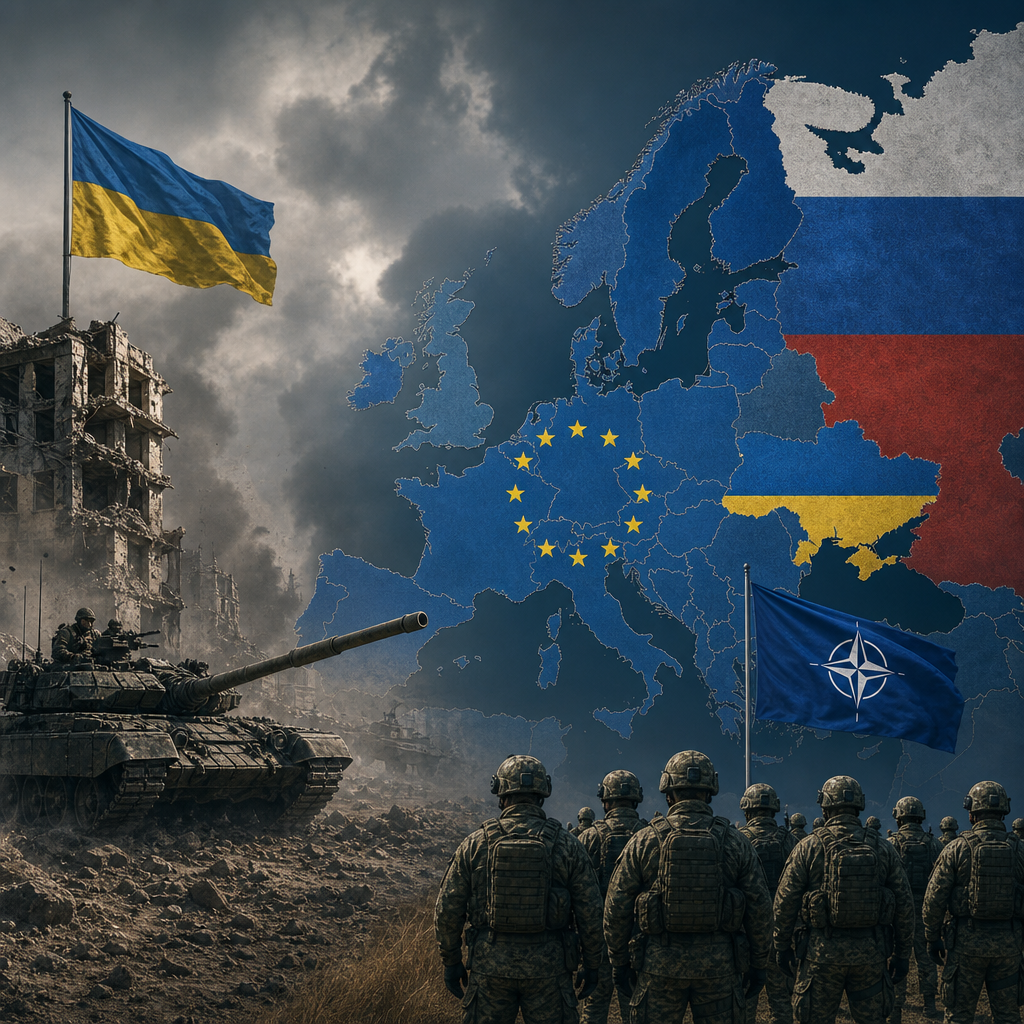
The Russia-Ukraine war has forced Europe to confront a new era of hard security, reshaping defense priorities, NATO strategy, and public expectations across the continent. As governments respond, European security is becoming less about assumptions of peace and more about readiness, resilience, and deterrence.
By: Peter B on July 24, 2026
Última atualização em: agosto 3, 2026
The Russia-Ukraine war has changed more than the map of Eastern Europe. It has forced governments, military planners, energy leaders, and ordinary citizens across the continent to rethink what security means in modern Europe. What began as a brutal assault on Ukraine has become a long-term strategic shock that is reshaping alliances, defense spending, energy policy, cyber defense, and the role of NATO.
For years, many European countries assumed that large-scale conventional war on the continent was unlikely. The war has shattered that assumption. As the conflict continues, the Russia-Ukraine war remains one of the most important drivers of European security policy, influencing everything from border protection to arms production and resilience against disinformation.
The Russia-Ukraine War and the Return of Hard Security
One of the most immediate effects of the war has been the return of “hard security” to the center of European politics. For decades, many governments focused on economic integration, diplomacy, and crisis management. Those priorities still matter, but the Russia-Ukraine war has made territorial defense, deterrence, and military readiness impossible to ignore.
NATO has become more central than ever
The war has strengthened NATO’s role as the core security framework for much of Europe. Member states on NATO’s eastern flank, especially in the Baltic region and Poland, have pushed for stronger deterrence and a more visible allied presence. In response, NATO has expanded troop deployments, improved rapid-response planning, and increased coordination among allies.
The alliance’s message is clear: any attack on one member must be treated as an attack on all. That principle has always been central, but the war has made it feel more concrete and relevant to everyday European security.
Neutrality is under pressure
The war has also affected countries that previously relied on neutrality or limited military alignment. Finland and Sweden, for example, moved closer to NATO in response to the new threat environment. Their decisions reflect a broader trend: the perception that geography alone can no longer guarantee safety.
Even countries outside the alliance now see a stronger need for defense cooperation, intelligence sharing, and contingency planning.
Defense Spending Is Rising Across Europe
The Russia-Ukraine war has accelerated a major shift in European defense budgets. Many governments have announced higher military spending, long-term modernization plans, and new investments in ammunition, air defense, drones, and logistics.
Why defense investment matters now
European militaries discovered that readiness depends not just on advanced technology, but also on stockpiles, maintenance, and industrial capacity. The war exposed several vulnerabilities:
Shortages of artillery shells and air defense interceptors
Limited production capacity for critical weapons systems
Aging infrastructure and equipment gaps
Dependence on external suppliers for key defense needs
These concerns have pushed many countries to rebuild their defense industries and strengthen procurement cooperation.
A shift from symbolic spending to operational readiness
In the past, defense debates often centered on meeting spending targets. Today, the conversation is more practical. Governments want to know whether their militaries can defend territory, support allies, and sustain operations over time.
That means prioritizing:
Ammunition production
Air and missile defense
Cyber capabilities
Military mobility across borders
Training and reserve readiness
This change is one of the clearest ways the Russia-Ukraine war is reshaping European security.
Energy Security Has Become a Strategic Priority
For years, Europe’s dependence on Russian energy created a major security vulnerability. The war exposed how tightly connected energy policy and national security can be. As a result, European states have worked to reduce reliance on Russian oil and gas while diversifying suppliers and accelerating the transition to other energy sources.
Energy dependence can create political leverage
The war showed that energy is not just a commercial issue. It can also be used as leverage in geopolitical conflict. When a state depends heavily on another for fuel, it may face pressure in foreign policy, economic decision-making, and crisis response.
That realization has prompted Europe to:
Expand liquefied natural gas imports
Increase interconnection between national energy grids
Invest in renewable energy and storage
Improve energy efficiency
Build emergency reserve mechanisms
Energy resilience is now part of security planning
Modern security planning in Europe now includes heating systems, electricity infrastructure, and supply chain resilience. Protecting civilian life during winter, maintaining industrial production, and ensuring reliable power are no longer separate from defense policy.
The Russia-Ukraine war has made it obvious that energy resilience is a core element of national security.
Cybersecurity and Information Warfare Are Growing Threats
The conflict has also highlighted the role of cyber operations and disinformation in modern war. European governments and companies have faced increased attempts to disrupt systems, spread false narratives, and weaken public trust.
Cyber threats affect more than military targets
Cybersecurity is now a frontline issue for:
Government agencies
Banks and financial institutions
Hospitals and emergency services
Transportation networks
Energy providers
Election systems
The danger is not limited to direct attacks. Even low-level intrusion attempts can force organizations to spend time and resources on defense, recovery, and monitoring.
Disinformation can destabilize societies
The war has also shown how narratives can be weaponized. False claims, manipulated images, and coordinated propaganda can deepen polarization and undermine trust in institutions. European policymakers now treat information security as part of broader resilience.
That includes:
Media literacy initiatives
Faster threat detection
Public communication strategies
Cooperation with tech platforms
Intelligence sharing among allies
In this environment, the Russia-Ukraine war is reshaping not only battlefield strategy, but also the digital and informational foundations of European security.
The War Has Changed Border Security and Migration Policy
The conflict has created the largest refugee movement in Europe in decades and has placed new pressure on border systems, social services, and local governments. While many countries have shown strong solidarity with Ukrainians fleeing the war, the scale of displacement has also influenced long-term policy.
Humanitarian response and security now overlap
European states have had to balance compassion with capacity. Supporting refugees requires:
Temporary housing
Education access
Healthcare support
Employment pathways
Administrative coordination
At the same time, governments must maintain border integrity and avoid creating bottlenecks that can be exploited by smugglers, traffickers, or hostile actors.
Border management has become more strategic
The war has encouraged a more integrated approach to border security, including improved surveillance, customs coordination, and law enforcement cooperation. This is especially important in regions near Ukraine, Belarus, and Russia, where risk assessments have changed significantly.
The broader lesson is that migration, humanitarian policy, and security cannot be treated as separate issues. The Russia-Ukraine war has made that interdependence impossible to ignore.
Europe’s Security Architecture Is Becoming More Unified
Another major effect of the war is the growing coordination among European institutions, NATO, and individual states. While Europe still faces political disagreements, the conflict has created a stronger sense of shared threat.
The EU is expanding its security role
The European Union has taken on a more active role in defense-related matters, including sanctions, military support, industrial policy, and resilience planning. While the EU is not a military alliance, it now plays a more visible part in shaping the security environment.
This includes efforts to:
Support defense manufacturing
Improve joint procurement
Strengthen sanctions enforcement
Protect critical infrastructure
Increase strategic autonomy in key sectors
Regional cooperation is becoming more important
Countries in Central and Eastern Europe, the Nordic region, and the Baltics have increased cooperation on defense and security. These partnerships help governments respond faster to emerging threats and share resources more efficiently.
In practice, this means more joint exercises, more cross-border planning, and greater attention to military mobility across Europe.
Ukraine’s Defense Matters for Europe’s Future
Ukraine’s ability to resist aggression has become a major factor in European security. The war has shown that Ukraine is not just defending its own sovereignty; it is also shaping the strategic environment of the entire continent.
Support for Ukraine is a security investment
Military, financial, and humanitarian support for Ukraine is widely seen as a way to prevent further destabilization in Europe. If aggression succeeds, the consequences could extend beyond Ukraine’s borders. That is why many European leaders view support for Ukraine as part of a broader deterrence strategy.
Support has included:
Air defense systems
Ammunition and equipment
Training and intelligence sharing
Economic assistance
Humanitarian aid
Ukraine’s battlefield experience is influencing modern defense thinking
European militaries are closely studying lessons from the war, especially in areas like drones, electronic warfare, air defense, and dispersed logistics. These lessons are likely to influence defense planning for years.
The Russia-Ukraine war has become a real-time case study in how modern conflict works and how European states must adapt.
The Long-Term Security Impact Will Outlast the Fighting
Even if the war eventually reaches a negotiated settlement or frozen front line, its effects on European security will remain. Trust has been damaged, threat perceptions have changed, and defense institutions have already adapted to a new reality.
Expect a more cautious Europe
In the years ahead, Europe is likely to remain more cautious about:
Overreliance on hostile powers
Underinvestment in defense
Weakness in energy and supply chains
Gaps in cyber resilience
Fragmented crisis response
This shift does not mean Europe is abandoning diplomacy or cooperation. It means those tools will be used in a more realistic security environment.
Resilience will matter as much as firepower
A secure Europe will need more than tanks and missiles. It will need resilient societies, trusted institutions, reliable infrastructure, and strong partnerships. In that sense, the war has broadened the definition of security itself.
The Russia-Ukraine war has shown that security is not just about preventing invasion. It is also about building systems that can absorb shocks, resist coercion, and recover quickly.
Frequently Asked Questions
1. Why has the Russia-Ukraine war changed European security so much?
The war has challenged long-standing assumptions about peace in Europe. It has pushed countries to increase defense spending, strengthen NATO, reduce energy dependence on Russia, and improve resilience against cyber threats and disinformation.
2. How has NATO responded to the war?
NATO has increased deterrence measures, strengthened its eastern flank, expanded troop deployments, and improved coordination among allies. The alliance has also become more central to European defense planning.
3. What role does energy security play in the conflict?
Energy security is a major issue because Europe previously depended heavily on Russian oil and gas. The war exposed how energy dependence can create political and economic vulnerability, prompting diversification and infrastructure upgrades.
4. How does the war affect cybersecurity in Europe?
The war has increased awareness of cyberattacks, espionage, and information warfare. Governments and private organizations are investing more in cyber defense, threat monitoring, and public resilience against disinformation.
5. Will the impact of the war continue after the fighting ends?
Yes. Even if active fighting decreases, the war will likely have lasting effects on defense policy, alliances, energy planning, and public attitudes toward security. Europe is unlikely to return to its pre-war assumptions.
The Russia-Ukraine war has become a defining event in modern European security. It has altered how governments think about deterrence, defense spending, energy independence, cyber resilience, border management, and alliance politics. What once seemed like separate policy areas now clearly connect to one another. A disruption in energy supply can become a security issue. A cyberattack can affect public trust. A battlefield lesson can reshape military procurement across the continent.
Europe’s response has been substantial, but the full consequences of the war are still unfolding. NATO is more central, the EU has taken on a larger security role, and countries across the continent are reassessing the risks of complacency. At the same time, Ukraine’s resistance continues to influence not only the future of the war, but also the future of European stability.
Understanding these changes is essential for policymakers, business leaders, journalists, and citizens alike. The security order in Europe is being rewritten in real time, and the choices made now will shape the continent for years to come. Staying informed is the first step toward understanding what comes next.
Peter B holds a degree in Journalism and has 5 years
of experience covering U.S. economic policy, labor markets, and
financial news. He writes data-driven news content on topics
like inflation, interest rates, and employment trends.