Renewable Energy Growth Is Transforming Global Electricity Markets
Renewable energy growth is no longer a niche trend. It is reshaping how electricity is generated, priced, traded, and delivered across the globe. From utility-scale solar farms to offshore wind projects and rapidly expanding battery storage, the energy system is moving toward cleaner, more flexible, and more decentralized models.
For consumers, businesses, and policymakers, this shift matters. Electricity markets that once relied heavily on large fossil fuel plants are now adapting to variable supply, evolving grid rules, and new investment priorities. In many regions, renewable energy growth is changing not just the source of power, but the economics of the entire market.
Why Renewable Energy Growth Is Accelerating
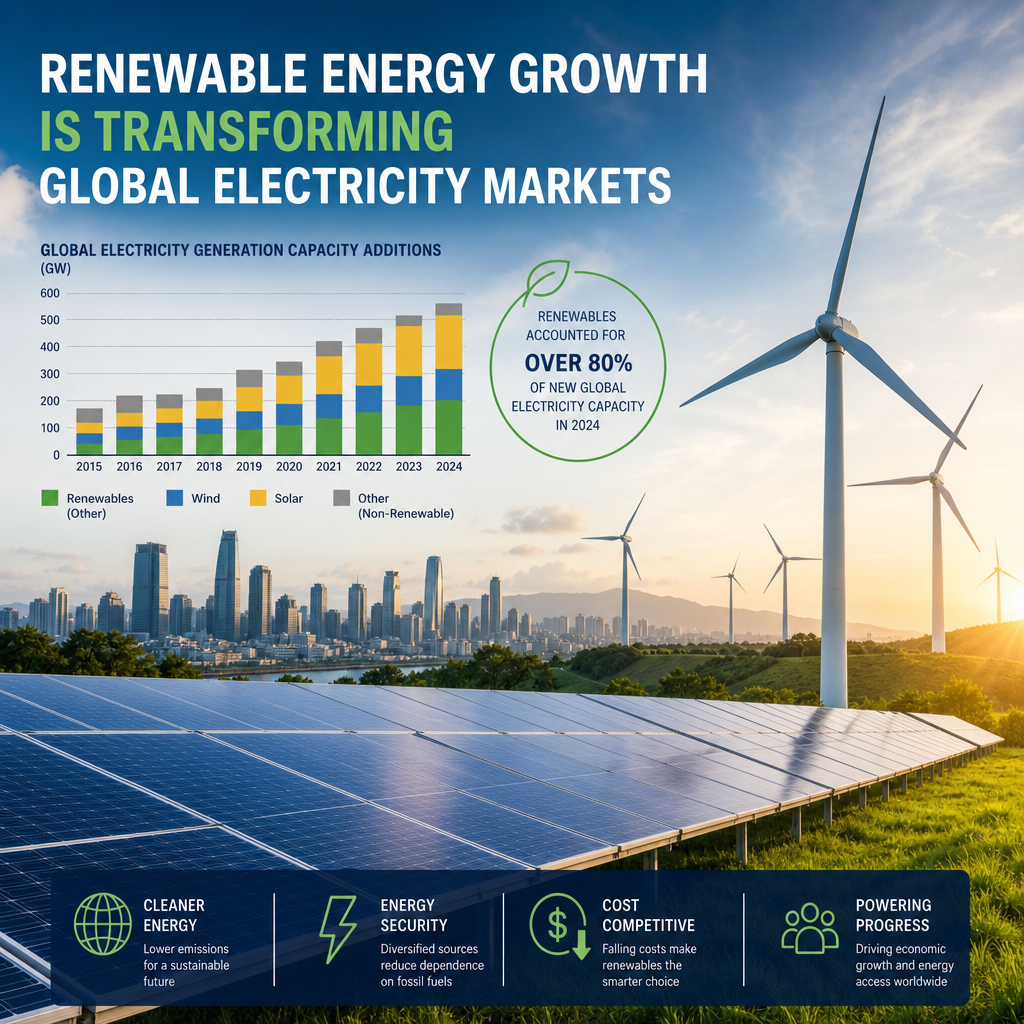
Several forces are pushing renewable energy growth forward at the same time. The transition is being driven by technology, policy, economics, and public demand.
Falling technology costs
Over the past decade, solar panels, wind turbines, and battery systems have become more affordable and more efficient. That has made renewable projects competitive in more markets without relying entirely on subsidies.
Stronger climate and energy goals
Governments and companies are setting net-zero targets, clean power targets, and emissions reduction commitments. These goals are increasing demand for wind, solar, hydro, geothermal, and storage.
Energy security concerns
Recent supply disruptions have reminded many countries that dependence on imported fossil fuels can create risk. Domestic renewable resources offer a way to improve energy security and stabilize long-term supply.
Corporate procurement
Large companies are buying renewable electricity directly through power purchase agreements, green tariffs, and utility programs. This corporate demand is helping accelerate project development in many electricity markets.
How Renewable Energy Growth Is Changing Electricity Markets
The traditional electricity market was built around centralized generation and predictable output. Renewable energy growth is changing those assumptions in several important ways.
The market is becoming more dynamic
Wind and solar output depend on weather conditions, which means supply can vary from hour to hour. As a result, electricity markets are placing more value on:
- Fast-ramping power plants
- Energy storage systems
- Demand response programs
- Better forecasting tools
- Flexible transmission and distribution networks
This shift is creating a more responsive grid, but it also requires market rules that can handle variability efficiently.
Wholesale prices are being reshaped
In markets with high renewable penetration, power prices can change quickly based on the time of day and weather patterns. Solar-heavy regions often see lower midday prices when output is strongest. In some cases, this can reduce the market value of additional solar capacity unless storage or flexible demand is available.
This does not mean renewables are weakening the market. Instead, it shows that electricity markets are evolving to reward flexibility, timing, and system balance, not just raw generation volume.
Traditional baseload models are under pressure
Large coal and nuclear plants were historically treated as steady baseload resources. Renewable energy growth is reducing the need for some of that structure. Instead of depending on a small number of constant-output plants, many systems are moving toward a portfolio that includes:
- Utility-scale renewable generation
- Distributed rooftop solar
- Grid batteries
- Interconnections between regions
- Flexible gas or hydro resources for backup
This creates a more diversified and resilient system, but it also means older business models must adapt.
The Rise of Energy Storage and Grid Flexibility
One of the most important changes linked to renewable energy growth is the expansion of energy storage. Batteries help solve the biggest challenge facing solar and wind: matching generation with demand.
Why storage matters
Solar produces the most electricity during the day, while demand may peak in the evening. Wind patterns can also change throughout the day and across seasons. Storage helps by:
- Shifting excess power to later hours
- Reducing curtailment of renewable output
- Supporting grid reliability during peak demand
- Providing frequency regulation and other ancillary services
Flexible demand is becoming valuable
Electricity markets are also rewarding consumers who can shift usage. This includes industrial facilities, commercial buildings, electric vehicle charging, and smart appliances. When demand can move to match renewable supply, the whole system becomes more efficient.
For example, a factory that runs energy-intensive equipment overnight or during high-wind periods can lower costs and support grid stability at the same time.
Policy and Regulation Are Adapting
Electricity markets do not change on their own. Regulatory frameworks play a major role in how renewable energy growth affects investment, pricing, and reliability.
Market design must evolve
Many power markets were designed before renewables became a major share of generation. Today, regulators are revisiting rules for:
- Capacity payments
- Ancillary services
- Transmission planning
- Interconnection queues
- Distribution-level resources
These updates matter because a market built around fossil fuel plants may not properly value flexibility, distributed generation, or storage.
Permitting and interconnection remain bottlenecks
In many countries, renewable energy growth is slowed by permitting delays and grid connection backlogs. Even when a solar or wind project is economically viable, it may take years to secure approvals or connect to the grid.
That is why many policymakers are focusing on:
- Faster permitting processes
- Modernized transmission planning
- Better coordination among utilities and regulators
- Upgrades to aging grid infrastructure
Without these changes, clean energy projects can face unnecessary delays.
Regional Impacts Differ Around the World
Renewable energy growth is global, but its impact looks different depending on local market structure, natural resources, and policy support.
United States
In the U.S., utility-scale solar, wind, and battery storage are expanding quickly. Regional transmission organizations and independent system operators are adapting market rules to better reward flexibility and reliability services. At the same time, distributed energy resources are growing on rooftops, in communities, and behind the meter.
Europe
European electricity markets have faced major pressure to improve energy security and reduce exposure to fuel price volatility. As a result, many countries are accelerating wind, solar, storage, and grid integration. Cross-border electricity trading is also playing a bigger role in balancing supply and demand.
China
China continues to invest heavily in renewable generation, transmission infrastructure, and manufacturing for solar and battery technologies. Its electricity market is evolving alongside industrial policy and long-term clean energy planning.
Emerging markets
In many developing economies, renewable energy growth offers a way to expand power access without building large fossil fuel systems. Lower-cost solar and modular storage can support electrification in regions where grid expansion is expensive or slow.
What This Means for Consumers and Businesses
The transformation of electricity markets is not just a policy story. It affects monthly bills, investment decisions, and long-term planning.
For households
Consumers may see more opportunities to:
- Install rooftop solar
- Pair solar with home batteries
- Participate in demand response programs
- Use time-of-use rates to save money
- Charge electric vehicles during low-cost hours
These options can lower electricity costs while giving households more control over energy use.
For businesses
Companies are facing both risks and opportunities. Renewable energy growth can help businesses:
- Hedge against fossil fuel price volatility
- Meet sustainability goals
- Improve brand reputation
- Reduce long-term operating costs
- Support resilience with onsite generation and storage
Businesses with large or flexible energy loads may also benefit from participating more actively in electricity markets.
For utilities and grid operators
Utilities must manage more complexity than before. They need to plan for variable generation, distributed resources, and changing customer demand. That means investing in:
- Grid modernization
- Advanced forecasting
- Digital control systems
- New tariff structures
- Stronger cyber and physical infrastructure
In the long run, these investments can improve efficiency and reliability.
Challenges That Still Need to Be Solved
Renewable energy growth offers major benefits, but the transition is not automatic. Several challenges remain.
Grid congestion
In some regions, renewable projects are being built faster than transmission lines. This leads to congestion, curtailment, and delayed project connections.
Supply chain constraints
Projects depend on equipment, skilled labor, and critical materials. Delays in manufacturing or shipping can slow deployment.
Affordability and equity
The clean energy transition must work for all consumers, including low-income households and communities historically left out of energy investment. Policy design should avoid shifting costs unfairly.
Reliability concerns
Electricity systems must remain reliable at all times. That means balancing renewable growth with enough flexibility, storage, demand management, and transmission to maintain dependable service.
The Future of Electricity Markets in a Renewable Era
The long-term direction is clear: electricity markets are becoming cleaner, smarter, and more flexible. The most successful systems will likely share a few traits.
More competition and diversification
Markets will rely on a broader mix of resources, including wind, solar, hydro, batteries, geothermal, nuclear, and responsive demand.
Better digital tools
Forecasting, pricing, automation, and grid analytics will become more important as systems handle more variable generation.
Greater regional coordination
Wider transmission networks and stronger market integration can help balance renewable output across larger areas.
Consumer participation
The line between producer and consumer is blurring. Households, businesses, and communities are becoming active participants through rooftop solar, batteries, smart devices, and flexible load management.
Renewable energy growth is not simply replacing one fuel with another. It is changing the architecture of electricity markets themselves.
Frequently Asked Questions
1. Why is renewable energy growth affecting electricity markets so strongly?
Renewable energy growth is increasing the share of variable generation in the power mix. Since solar and wind depend on weather, electricity markets must adapt by valuing flexibility, storage, forecasting, and transmission more than before.
2. Does more renewable energy always mean lower electricity prices?
Not always. Renewable generation can lower wholesale prices during periods of high output, especially when supply is abundant. But total consumer costs also depend on grid upgrades, market design, storage needs, and local regulations.
3. How does battery storage support renewable energy growth?
Battery storage stores extra electricity when renewable production is high and releases it when demand rises or output falls. This helps balance the grid, reduce waste, and improve reliability.
4. What role do governments play in renewable energy growth?
Governments set the rules that shape electricity markets. They influence permitting, interconnection, transmission investment, emissions policy, and incentives for clean energy deployment.
5. How can businesses benefit from renewable energy growth?
Businesses can reduce exposure to fuel price swings, lower long-term electricity costs, meet sustainability targets, and improve energy resilience through on-site generation, storage, and flexible demand strategies.
Official Resources
- U.S. Energy Information Administration (EIA)
- U.S. Department of Energy Office of Energy Efficiency & Renewable Energy
- International Energy Agency (IEA)
- National Renewable Energy Laboratory (NREL)
- International Renewable Energy Agency (IRENA)
Conclusion
Renewable energy growth is transforming electricity markets worldwide by changing how power is produced, priced, and delivered. What once depended on a small number of centralized generators is shifting toward a more flexible system built around solar, wind, storage, demand response, and smarter grid management.
This transition creates real opportunities. It can improve energy security, reduce emissions, support innovation, and give consumers and businesses more choices. At the same time, it also raises important questions about market design, reliability, transmission planning, and equity. The electricity systems that succeed in this new era will be the ones that adapt quickly, invest wisely, and value flexibility as much as generation.
For households, businesses, and policymakers, the message is simple: the clean energy transition is not a distant possibility. It is already reshaping electricity markets in practical ways. Understanding these changes now can help you make better decisions, whether you are investing in solar, planning grid upgrades, managing energy costs, or tracking global energy trends. The future of electricity is being built today, and renewable energy growth is at the center of it.