How Shipping Disruptions Impact Global Supply Chains and Consumer Prices
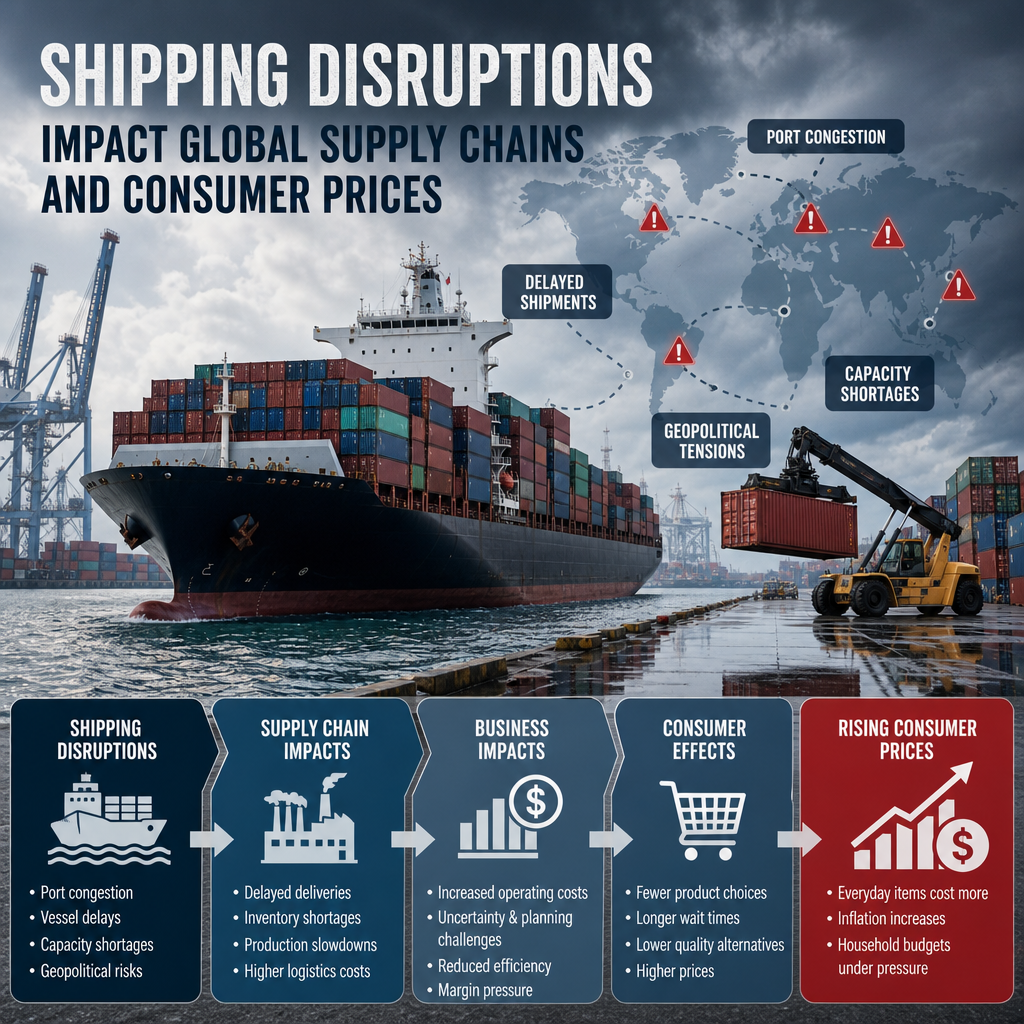
Shipping disruptions affect global supply chains and consumer prices in ways that are often invisible at first, then suddenly very noticeable. A delayed port shipment, a blocked canal, a labor shortage, or a spike in fuel costs can ripple through manufacturing, retail, and household budgets faster than many people expect. In a connected global economy, products rarely move from factory to shelf in a straight line. They pass through multiple suppliers, ports, warehouses, and transportation networks, which means even a single interruption can create broad and costly consequences.
For businesses, shipping disruptions can mean missed deadlines, higher operating costs, and unreliable inventory levels. For consumers, those same disruptions may show up as higher prices, fewer choices, and longer wait times. Understanding how this chain reaction works helps explain why an event thousands of miles away can affect what you pay for groceries, electronics, clothing, and everyday essentials.
What Causes Shipping Disruptions?
Shipping disruptions can come from many sources, and they often overlap. Some are temporary. Others expose deeper vulnerabilities in the global logistics system.
Common causes include:
- Port congestion caused by backlogs, limited labor, or equipment shortages
- Weather events such as hurricanes, floods, droughts, and severe storms
- Geopolitical conflict that affects trade routes, sanctions, or border access
- Labor shortages and strikes in trucking, warehousing, or port operations
- Fuel price volatility that raises transportation costs
- Manufacturing bottlenecks that delay goods before they even reach shipping channels
- Cyberattacks or technology outages that interrupt logistics systems
- Infrastructure failures such as damaged rail lines, bridges, or canals
These disruptions can happen separately, but they often interact. For example, a port delay may worsen truck shortages, which then slow warehouse deliveries and raise costs downstream.
How Shipping Disruptions Affect Global Supply Chains
Global supply chains depend on timing, coordination, and predictability. When shipping runs smoothly, companies can manage inventory efficiently and keep costs lower. When disruptions occur, that balance breaks.
1. Delays create inventory shortages
Many companies rely on just-in-time inventory systems to reduce storage costs. That approach works when shipments arrive on schedule. But if a critical component is delayed, production can slow or stop entirely.
For example, a furniture manufacturer waiting on imported hardware may not be able to finish products on time. A car maker that lacks semiconductors may have to reduce output. In both cases, one delayed shipment can interrupt an entire production line.
2. Businesses scramble for alternative suppliers
When a regular shipping route becomes unreliable, companies often look for backup suppliers or alternate transit options. That flexibility helps, but it usually comes at a cost.
Alternative sourcing can involve:
- Higher unit prices
- Faster but more expensive air freight
- Smaller shipment sizes
- Extra customs and logistics fees
These adjustments may keep products moving, but they reduce efficiency and increase expenses throughout the supply chain.
3. Lead times become less predictable
Shipping disruptions make it harder to estimate when goods will arrive. Lead times may stretch from days to weeks or even months. That uncertainty complicates ordering decisions and makes forecasting less reliable.
Retailers may over-order to avoid stockouts, which ties up cash and warehouse space. Manufacturers may delay production to wait for missing parts. Either way, uncertainty itself becomes expensive.
4. Global coordination becomes harder
Modern supply chains often span multiple countries. A product may be designed in one country, assembled in another, and sold worldwide. If one link fails, the entire network feels the impact.
A delay at a major port can affect cargo distribution across continents. A shortage of shipping containers can limit export capacity far from the original disruption. Because suppliers and buyers are connected, one bottleneck often becomes many bottlenecks.
Why Shipping Disruptions Raise Consumer Prices
Consumers usually feel shipping disruptions after businesses absorb as much of the cost as they can. Eventually, though, those higher expenses get passed along.
Higher transportation and logistics costs
Shipping itself becomes more expensive when fuel prices rise, routes lengthen, or carriers face congestion. Companies pay more to move goods by ocean, rail, truck, or air. Those costs can show up in retail pricing.
Even small increases in freight costs can matter for low-margin products. If a business pays more to transport each item, it may need to raise shelf prices to stay profitable.
Scarcity pushes prices upward
When supply falls behind demand, prices often rise. This is basic market behavior. If fewer products are available and shoppers still want them, retailers may raise prices or reduce promotions.
Common examples include:
- Imported foods
- Electronics and appliances
- Clothing and footwear
- Home improvement materials
- Seasonal goods and toys
When consumers have limited substitutes, price increases can be especially noticeable.
Businesses face higher operating costs
Shipping disruptions don’t only affect the products themselves. They also raise costs across the business:
- Emergency shipping fees
- Overtime labor
- Expedited customs processing
- Warehousing and storage expenses
- Inventory carrying costs
- Lost sales from stockouts
Businesses often spread these costs across their entire product line, not just the delayed item. That means disruption in one area can affect prices in several others.
Retailers may change pricing and promotions
Retailers may respond by:
- Reducing discounts
- Limiting purchase quantities
- Substituting lower-cost materials or packaging
- Adjusting product assortment
- Increasing base prices gradually
These moves can help manage margins, but consumers often notice the difference at checkout.
Real-World Examples of Supply Chain Pressure
The impact of shipping disruptions becomes clearer when you look at how they play out in everyday commerce.
Electronics and component shortages
Many electronics depend on globally sourced parts. If one component is delayed at a port, final assembly may slow down. Consumers may see higher prices, fewer models in stock, or longer waits for popular devices.
Food and grocery supply chains
Fresh food has a short shelf life, so delays can be costly. When shipping slows, produce may spoil before reaching stores. Importers may need to pay more for faster transit or adjust sourcing, which can affect grocery prices.
Construction materials
Lumber, steel, fixtures, and other building materials often move through complex logistics networks. If shipping slows, builders may face project delays and higher material costs. Those costs can then flow into housing prices or renovation budgets.
Apparel and seasonal items
Clothing retailers often plan months ahead. If a shipment is late, a seasonal collection may arrive after demand has already peaked. Retailers may discount unsold items later, but early shortages can still lead to higher prices and fewer options when shoppers need them most.
The Hidden Costs Beyond Sticker Price
When people think about consumer prices, they usually focus on the number on the shelf. But shipping disruptions create hidden costs that are less visible and just as important.
Reduced product choice
If a retailer cannot source a specific item, it may replace it with a different brand or version. Consumers may end up with fewer colors, sizes, features, or quality levels.
Lower service reliability
Restaurants, repair shops, and healthcare providers also depend on supply chains. Delayed shipments can affect everything from menu items to replacement parts to medical supplies. That can reduce service quality and convenience.
More economic uncertainty
Persistent disruptions make it harder for businesses to plan hiring, investment, and production. That uncertainty can slow growth and make prices more volatile. Consumers may not see the full effect immediately, but they feel it over time through less stable markets.
How Companies Can Reduce the Impact
Businesses cannot prevent every disruption, but they can reduce risk and improve resilience.
Diversify suppliers and shipping routes
Relying on a single supplier or port creates vulnerability. Many companies now spread sourcing across regions or maintain backup logistics options. This approach may cost more up front, but it can reduce the impact of future interruptions.
Build smarter inventory buffers
Some businesses are shifting away from ultra-thin inventory systems. Strategic safety stock can provide a cushion during delays, especially for critical components or high-demand products.
Improve supply chain visibility
Better tracking tools help companies spot delays earlier and respond faster. Real-time data from carriers, ports, and warehouses can support quicker decisions about rerouting, sourcing, or inventory allocation.
Invest in domestic or nearshore capacity
Some businesses are bringing more production closer to home. Nearshoring and reshoring can shorten transit times and reduce exposure to overseas shipping disruptions, though they are not always the cheapest option.
Stress-test logistics plans
Companies can prepare for disruption by testing scenarios such as:
- Port closure
- Freight rate spikes
- Severe weather event
- Supplier failure
- Customs delay
Planning ahead does not eliminate risk, but it can reduce surprises.
What Consumers Can Do
Consumers cannot control global shipping networks, but they can make more informed purchasing decisions.
Watch for seasonal timing
Buying seasonal goods earlier may help avoid shortages and price spikes. For example, purchasing school supplies, holiday items, or winter essentials before peak demand can sometimes save money.
Compare brands and substitutes
When a favorite product becomes expensive or unavailable, comparing alternatives may help. Private-label brands and local products can sometimes offer better value during disruptions.
Expect gradual price changes
Not every price increase is caused by shipping problems alone. Inflation, labor costs, and raw material prices also matter. Still, shipping disruptions can amplify these trends, so it helps to understand the broader context.
Plan for essentials
For items you use regularly, building a small buffer at home can reduce stress when supply chains tighten. This works best for nonperishable goods such as paper products, cleaning supplies, and shelf-stable foods.
The Role of Global Trade Policy and Infrastructure
Shipping disruptions are not only operational problems. They also reflect policy, infrastructure, and long-term investment decisions.
Ports, roads, rail systems, and digital logistics networks all need maintenance and modernization. Trade rules, customs efficiency, and labor policies also shape how smoothly goods move. When those systems are strained, even routine shipments can become difficult.
Public and private sectors both play a role in building resilience. Investments in infrastructure, workforce training, and technology can make supply chains more adaptable when disruptions occur.
Frequently Asked Questions
What is a shipping disruption in a global supply chain?
A shipping disruption is any event that delays, blocks, or complicates the movement of goods through the logistics network. This can include port congestion, weather, labor strikes, transportation breakdowns, geopolitical conflict, or technology failures.
Why do shipping disruptions increase consumer prices?
Shipping disruptions raise costs for transportation, warehousing, labor, and inventory management. When products become harder to move or less available, businesses often pass some of those costs on to consumers through higher prices.
Which products are most affected by shipping disruptions?
Products that depend on long international supply chains are often hit hardest. Examples include electronics, apparel, food imports, auto parts, building materials, and seasonal merchandise.
Can shipping disruptions cause shortages?
Yes. If goods do not arrive on time and businesses have little backup inventory, shortages can happen quickly. This is especially common for products with high demand or short shelf lives.
How can businesses prepare for future shipping disruptions?
Businesses can diversify suppliers, keep strategic safety stock, improve supply chain visibility, and plan for multiple logistics scenarios. These steps can reduce the impact of delays and make operations more resilient.
Official Resources
- U.S. Department of Transportation
- Bureau of Transportation Statistics
- U.S. Census Bureau: International Trade
- Federal Maritime Commission
- World Trade Organization
Conclusion
Shipping disruptions affect global supply chains and consumer prices because modern commerce depends on speed, coordination, and dependable delivery. When a port backs up, a vessel is delayed, or a key supplier falls behind, the consequences can spread quickly across manufacturing, retail, and household budgets. Businesses face higher freight costs, longer lead times, and operational uncertainty. Consumers often experience the results later as price increases, limited selection, or slower access to goods.
The good news is that supply chains are not powerless. Companies can reduce risk by diversifying suppliers, improving visibility, and keeping smarter inventory buffers. Consumers can respond by planning purchases earlier, comparing alternatives, and understanding that not every price change comes from the same source. The more you understand how shipping disruptions affect global supply chains and consumer prices, the easier it becomes to make informed decisions in an unpredictable market.
Whether you are a business owner, a shopper, or simply someone trying to understand why prices move the way they do, keeping an eye on logistics trends can offer valuable insight. In a global economy, shipping is not just about moving goods. It is a major driver of availability, cost, and economic stability.