College Scorecard: Compare Costs, Graduation Rates, and Earnings
Choosing a college is one of the biggest financial decisions many students and families will ever make. Tuition is only part of the story. You also need to think about graduation rates, typical student debt, and what graduates tend to earn after leaving school. That’s where College Scorecard can help.
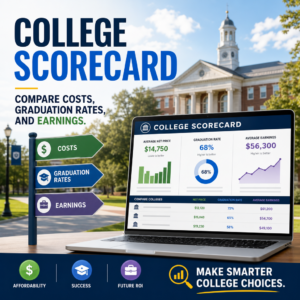
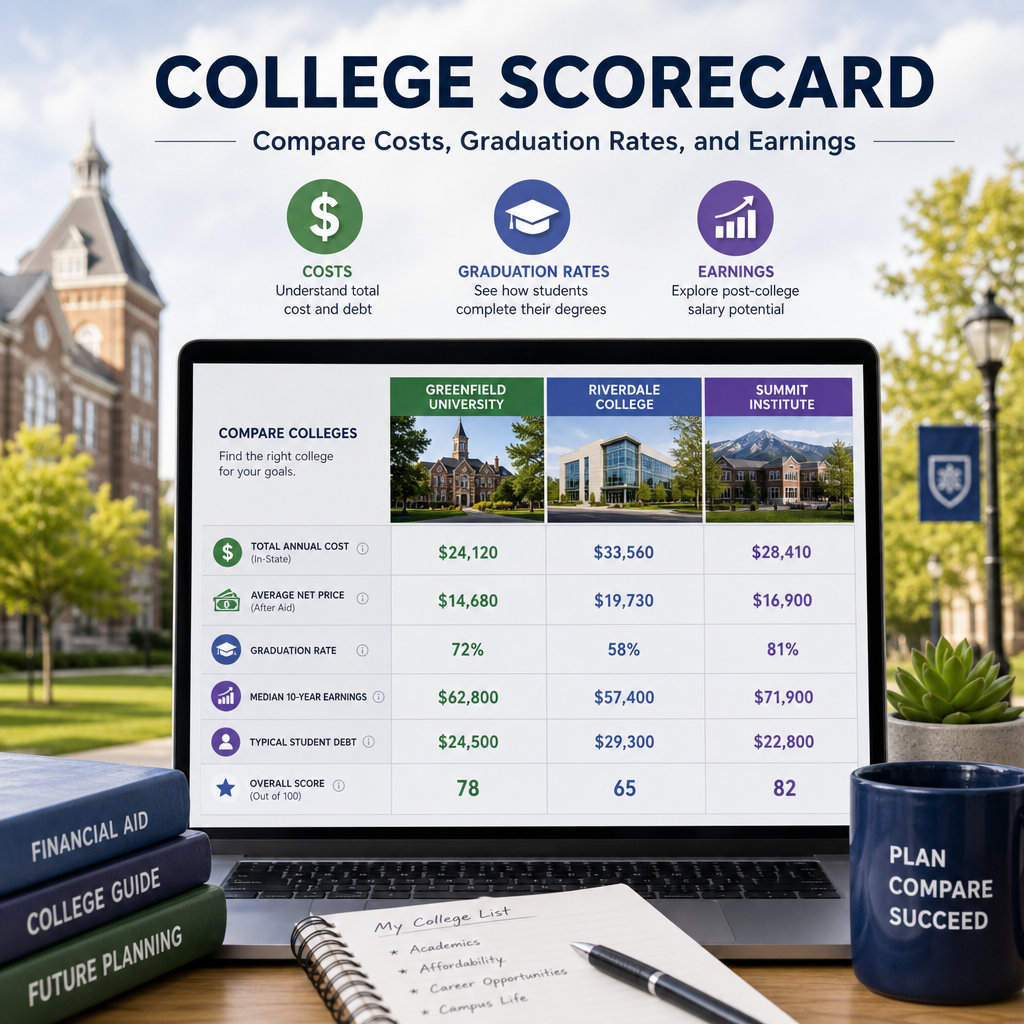
College Scorecard is a free federal tool that lets you compare schools using real data from the U.S. Department of Education. Instead of relying only on glossy brochures or marketing claims, you can look at measurable outcomes like costs, graduation rates, loan repayment, and earnings. Used well, it can make the college search process far more practical and less overwhelming.
What Is College Scorecard?
College Scorecard is an official federal website created to help students, parents, and counselors compare colleges based on key outcomes. It focuses on information that matters most when evaluating value:
- Average annual cost
- Graduation and retention rates
- Typical student debt
- Post-graduation earnings
- Loan repayment outcomes
- Admission data and student body details
The goal is simple: help people make informed decisions about higher education. Whether you are comparing community colleges, public universities, or private institutions, College Scorecard gives you a common set of data points so you can look beyond reputation alone.
Why College Scorecard Matters
A college may look affordable at first glance, but the real cost of attendance can be different once you factor in housing, fees, financial aid, and how long it takes to graduate. Likewise, a school with a strong academic brand may not be the best fit if graduates struggle to find jobs that support loan repayment.
College Scorecard matters because it helps answer three practical questions:
- How much will I likely pay?
- Will I finish my degree?
- What might I earn after graduation?
Those questions matter for nearly every student. A school that costs less but has low graduation rates may end up being more expensive in the long run. On the other hand, a school with higher tuition may be a smart investment if it leads to strong graduation outcomes and solid earnings.
How to Use College Scorecard to Compare Schools
College Scorecard works best when you compare multiple schools side by side. Start with the colleges you are seriously considering, then examine the data in context.
1. Check the true cost of attendance
One of the most useful sections in College Scorecard is the cost information. Look at:
- Average annual net price
- Tuition and fees
- Books and supplies
- Housing and meals
- Percentage of students receiving federal grants
The net price is especially important because it reflects what students typically pay after grant aid, not just the sticker price. This gives you a more realistic view of affordability.
Practical example
A private college may list tuition of $45,000 per year, but if most students receive grants, the net price could be much lower. Meanwhile, a public school with lower tuition might still be expensive if you need to pay for housing, transportation, and other costs. College Scorecard helps you see that bigger picture.
2. Review graduation and retention rates
A college can only deliver value if students actually complete their degrees. College Scorecard includes:
- First-year retention rate: the percentage of students who return after year one
- Graduation rate: the percentage of students who finish within a certain time frame, usually six years for bachelor’s programs
These numbers can reveal a lot about academic support, campus culture, and student success.
Why these numbers matter
- A high retention rate can suggest students feel supported and stay enrolled.
- A stronger graduation rate can indicate better academic advising, course availability, and overall student outcomes.
- A low rate may mean students face barriers like high costs, poor advising, or limited scheduling flexibility.
Remember that no single number tells the whole story. Some students transfer, attend part time, or take longer to graduate because of work or family responsibilities. Still, these rates are an important part of the decision.
3. Look at earnings after graduation
College Scorecard includes earnings data for graduates, which can help you estimate how a degree may translate into career opportunities. This is not a guarantee of future income, but it provides a useful benchmark.
Earnings can vary by:
- Major
- Degree level
- Region
- Industry demand
- Student experience and internships
For example, two schools may offer similar degrees, but one might have stronger alumni networks or career placement support that leads to better outcomes. If you are comparing programs in business, engineering, nursing, or computer science, earnings data can be especially helpful.
4. Consider student debt and repayment
Affordability is not just about what you borrow. It is also about whether you can repay that debt comfortably after graduation. College Scorecard includes information such as:
- Median federal student loan debt
- Loan repayment rates
- Percent of students who borrow
This data helps you think about long-term financial health, not just short-term enrollment costs.
If one college has a much higher borrowing rate than another, ask why. Does it offer less grant aid? Is the local cost of living high? Do students tend to stay longer than expected? These are the kinds of questions College Scorecard can help you ask.
Best Ways to Interpret College Scorecard Data
College Scorecard is a powerful tool, but the numbers should be interpreted carefully. Good decision-making means looking at the full context.
Compare schools with similar missions
A community college, a liberal arts college, and a research university may have very different student populations and outcomes. Comparing them directly without context can be misleading.
Instead, compare schools that serve similar students or offer similar programs. That makes the data more meaningful.
Focus on what matters most to your goals
The best college for one student may not be the best for another. Your priorities may include:
- Low net price
- Strong graduation rates
- High earnings potential
- Proximity to home
- Flexible scheduling
- Strong support for first-generation students
If you plan to work while attending school, affordability and retention might matter more than prestige. If you want a technical career, earnings and internship connections may matter most.
Use the numbers as a starting point, not the whole answer
College Scorecard gives you valuable hard data, but it cannot measure everything. It does not fully capture:
- Campus culture
- Sense of belonging
- Quality of specific professors
- Student life
- Research opportunities
- Career services effectiveness in your chosen major
That is why it works best alongside campus visits, conversations with current students, academic advising, and program-specific research.
Smart Questions to Ask While Comparing Colleges
When using College Scorecard, try asking questions like these:
- What is the average net price after financial aid?
- How long does it typically take students to graduate?
- How many students return after the first year?
- What is the typical debt level for borrowers?
- How much do graduates usually earn several years after graduation?
- Does the school offer strong outcomes in my intended major?
- Is the school’s value strong compared with similar institutions?
These questions can help you move from “Which college sounds best?” to “Which college is most likely to help me reach my goals without unnecessary financial strain?”
How Families Can Use College Scorecard Together
College decisions often involve more than one person. Parents, guardians, and students may all have different concerns. College Scorecard can make those conversations easier by putting the same information in front of everyone.
For students
Use the data to think about fit, affordability, and career value. Ask whether the school supports your academic and financial goals.
For parents and guardians
Use it to compare long-term value, expected debt, and the likelihood that a student will complete the degree in a reasonable time.
For counselors and advisors
Use it as a planning tool to discuss realistic options and help students build a balanced college list.
A shared set of facts can reduce confusion and keep the conversation focused on outcomes rather than assumptions.
Common Mistakes to Avoid
College Scorecard is straightforward, but it is still easy to misuse if you are rushing through the process.
Mistake 1: Looking only at sticker price
The listed tuition is not the amount most students actually pay. Always check net price and grant aid.
Mistake 2: Ignoring graduation rates
A low-cost school is not a bargain if many students leave without graduating.
Mistake 3: Overreacting to one data point
A school may have lower earnings in one area but strong outcomes in another. Look at the overall pattern.
Mistake 4: Comparing very different schools without context
A large state university and a small private college may not be comparable in a meaningful way.
Mistake 5: Forgetting your own goals
The “best” college depends on what you need: affordability, flexibility, academic support, or career preparation.
Who Should Use College Scorecard?
College Scorecard is helpful for many different people:
- High school students building a college list
- Transfer students comparing next-step options
- Adult learners returning to school
- Parents planning for college expenses
- Counselors helping students weigh tradeoffs
- Veterans and working adults looking for value-focused programs
If you care about making a practical choice, College Scorecard belongs in your research toolkit.
Example of a Simple College Comparison Process
Here is a practical way to use College Scorecard without getting lost in the details:
- Make a list of 5–10 schools you are interested in.
- Check net price for each one.
- Compare graduation and retention rates.
- Review median debt and repayment information.
- Look at earnings data for graduates.
- Narrow your list to the schools that offer the best mix of affordability, completion, and outcomes.
- Visit or research the top contenders more deeply.
This process keeps you focused on value and helps prevent emotional decisions based only on brand name or location.
Frequently Asked Questions
What is College Scorecard used for?
College Scorecard is used to compare colleges based on important outcomes like cost, graduation rates, debt, and post-graduation earnings. It helps students and families evaluate whether a school offers good value and supports student success.
Is College Scorecard reliable?
Yes. College Scorecard uses federal data from the U.S. Department of Education and other official sources. It is a trusted starting point for college research. Still, it should be used along with other information such as campus visits, program details, and student feedback.
Does College Scorecard show the exact amount I will pay?
No. It shows averages and estimates, not your exact personal cost. Your final price can depend on financial aid, scholarships, residency status, housing choices, and other factors. Use it as a planning tool rather than a final bill.
Can I compare schools by major on College Scorecard?
College Scorecard provides useful school-level information, and some earnings data can help you think about outcomes by field. However, it is not a full program-ranking system. For major-specific decisions, also review department pages, internship outcomes, and professional licensure information.
How should I use earnings data when choosing a college?
Use earnings data as one part of the picture. Strong earnings can suggest good career outcomes, but they should be weighed alongside cost, debt, graduation rates, and your personal goals. A school with moderate earnings may still be a better choice if it is affordable and helps you graduate with less debt.
Official Resources
- College Scorecard – U.S. Department of Education
- Federal Student Aid – U.S. Department of Education
- IPEDS Data Center – National Center for Education Statistics
- College Navigator – National Center for Education Statistics
- Consumer Financial Protection Bureau – Paying for College
Conclusion
College Scorecard gives students and families a clearer way to compare colleges using data that actually matters. Instead of focusing only on campus marketing or reputation, you can look at net price, graduation rates, student debt, and earnings to judge whether a school offers real value. That information can make a major difference when you are balancing education goals with long-term financial well-being.
The best college choice is not always the cheapest school or the most famous one. It is often the school that gives you the strongest combination of affordability, completion support, and career outcomes. By using College Scorecard early in your search, you can build a smarter college list, ask better questions, and reduce the risk of costly surprises later.
Take the time to compare schools carefully, look at the full picture, and use the data to guide your next step. A thoughtful college decision today can lead to a more confident and financially sound future.