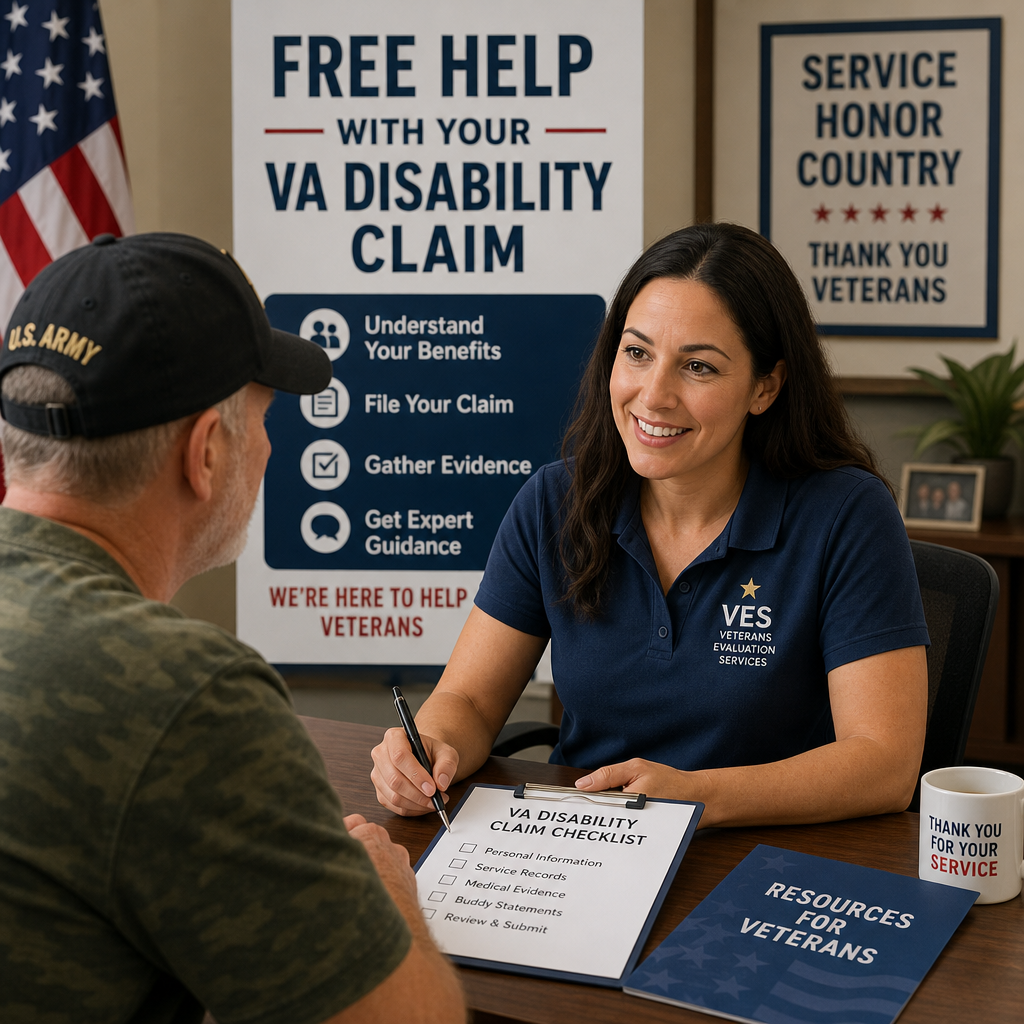
If you’re looking for free help with a VA disability claim, you have several trusted options that can make the process easier, from VSOs and VA-accredited representatives to state and local veteran service officers. These resources can help you file, gather evidence, and even appeal a decision without paying a fee.
By: Emilly on July 23, 2026
Última atualização em: agosto 3, 2026
Navigating a VA disability claim can feel overwhelming, especially when you’re already managing health issues, paperwork, and deadlines. The good news is that you do not have to handle the process alone. If you’re wondering how to get free help with a VA disability claim, there are several reliable options that can guide you through filing, gathering evidence, and appealing a decision without charging you a fee.
This guide explains where to find trustworthy no-cost support, how each resource works, and what to expect at every stage of the claim process. Whether you’re filing your first claim or trying to increase an existing rating, free help is available.
How to Get Free Help With a VA Disability Claim
The VA system offers multiple paths for free support, and the best one depends on your needs. Some services help you prepare the claim from start to finish, while others focus on reviewing your records, building evidence, or representing you in an appeal.
Here are the most common free options:
Veterans Service Organizations (VSOs)
VA-accredited representatives
County or state veteran service officers
VA outreach and benefits offices
Legal aid clinics and pro bono programs
Community-based veteran support organizations
The key is to choose help from a source that understands VA rules and can act in your best interest.
What Free Help Can Include
Free assistance can cover many parts of the disability claims process, such as:
Explaining eligibility for VA disability benefits
Reviewing your military service records
Helping identify conditions linked to service
Gathering medical evidence and personal statements
Completing claim forms correctly
Filing supplemental claims or appeals
Preparing for hearings and deadlines
Some groups provide hands-on claim support, while others offer guidance and education. Either way, getting help early can reduce mistakes and delays.
Start With a VA-Accredited Representative
One of the safest ways to get free help with a VA disability claim is to work with a VA-accredited representative. Accreditation means the person or organization is authorized to help veterans with VA claims and appeals.
Why Accreditation Matters
Not everyone who says they “help veterans” has the training or authorization to do so. VA-accredited representatives must follow VA rules and ethical standards. They can help you:
Understand what benefits you may qualify for
Prepare and submit claims
Respond to VA requests for evidence
File appeals when needed
Communicate with the VA on your behalf
Types of VA-Accredited Help
You may find accredited support through:
Veterans Service Officers (VSOs) at organizations like DAV, VFW, AMVETS, and American Legion
Accredited attorneys who may provide free help in certain cases, especially at the appeal stage
Claims agents who are accredited and may work free through nonprofit partnerships
If you are just starting your claim, a VSO is often the easiest place to begin.
Work With a Veterans Service Organization
A Veterans Service Organization is one of the most accessible places to get free help with a VA disability claim. These organizations often have local offices, trained service officers, and years of experience helping veterans file claims.
Common VSOs That Offer Free Support
Some well-known VSOs include:
Disabled American Veterans (DAV)
Veterans of Foreign Wars (VFW)
American Legion
AMVETS
Paralyzed Veterans of America
Military Order of the Purple Heart
Each organization has its own process, but many offer free claim assistance to eligible veterans.
What a VSO Can Do for You
A VSO may help you:
Gather service treatment records and personnel records
Identify medical conditions that may qualify
Prepare your initial claim
Explain how to write a personal statement
Track the status of your claim
Assist with appeals and supplemental claims
Practical Example
If you developed hearing loss after years around aircraft or artillery, a VSO can help you connect your current diagnosis with your military service and make sure the VA gets the right supporting records.
Contact Your County or State Veterans Office
Many counties and states have veteran service offices that offer free claim assistance. These offices are often staffed by trained professionals who help local veterans navigate benefits.
Why Local Offices Are Helpful
Local veteran service officers may know:
Which VA regional office handles your area
Where to obtain state-specific benefits
How to access local medical documentation
What community resources are available near you
Because they work closely with veterans in your region, they may also have practical insight into common issues and local support programs.
How to Find Your Local Office
You can usually find contact information by searching for:
Your county veteran services office
Your state department of veterans affairs
Your local veterans benefits office
Many offices allow walk-ins, but calling ahead is a smart move.
Use VA Resources to File and Track Your Claim
The VA itself offers several tools that can help you file a claim and follow its progress. While these tools do not replace personalized advice, they can make the process easier to manage.
Understand the difference between a claim, supplemental claim, and appeal
A VSO or accredited representative can still help you use these tools correctly.
Explore Free Legal Aid and Pro Bono Services
If your claim has been denied or you’re dealing with a complicated appeal, free legal aid may be available. Some attorneys and legal clinics work pro bono or through nonprofit programs that assist veterans.
When Legal Help Makes Sense
You may want legal support if:
You have been denied multiple times
Your condition is difficult to connect to service
You need help gathering strong medical evidence
You’re preparing for a Board of Veterans’ Appeals hearing
You suspect an error in how the VA evaluated your claim
Where to Look for Help
Possible sources include:
Veterans legal clinics at law schools
Nonprofit legal aid organizations
Pro bono attorney networks
Local bar association veteran programs
Some legal aid programs focus on low-income clients, while others specialize in veterans’ issues. It’s worth checking both.
Ask Your VA Medical Providers for Documentation
Your healthcare records matter in a disability claim. While VA clinicians do not file claims for you, they can help create the medical record that supports your case.
What to Request
You may need:
Diagnosis notes
Treatment summaries
Imaging reports
Mental health records
Statements about how your condition affects daily functioning
What a Good Medical Record Shows
Strong records usually show:
A current diagnosis
Ongoing symptoms
Treatment history
Functional limitations
A connection to military service, when available
If you have private doctors or specialists, ask for copies of those records too. You can submit them with your claim or share them with your representative.
Build Your Claim With Strong Evidence
Free help is most useful when you bring the right evidence to the table. A successful VA disability claim often depends on clear documentation.
Common Evidence That Helps
Consider gathering:
DD-214 or other service separation documents
Service treatment records
Military personnel records
Current medical records
Private doctor opinions
Nexus letters, if available
Buddy statements from fellow service members, family, or friends
Photos, logs, or incident reports related to your condition
Organize Your Documents
A simple folder system can help:
Put service records in one section
Keep medical records in another
Separate personal statements and witness statements
Save copies of everything you submit
Track dates, appointments, and deadlines
The more organized you are, the easier it becomes for your free helper to build a stronger claim.
Be Careful With Paid Claim Companies
When learning how to get free help with a VA disability claim, it’s important to avoid unnecessary fees. Some companies advertise fast or guaranteed results, but not all of them are accredited or acting in your best interest.
Red Flags to Watch For
Be cautious if someone:
Promises a specific rating
Charges high upfront fees for simple filing help
Says they have special access to the VA
Pressures you to sign immediately
Avoids explaining credentials or accreditation
Safer Alternatives
Before paying anyone, check whether free help is available through:
A VSO
Your county veteran service office
A VA-accredited representative
A legal aid program
The VA also provides tools to help you verify whether someone is accredited.
How to Prepare for a Free Claim Appointment
To make the most of your appointment, come prepared. A little organization can save time and improve the quality of help you receive.
Bring These Items If You Can
Your DD-214 or discharge paperwork
Medical records
A list of current symptoms
Names of doctors and clinics
Copies of prior VA decisions, if any
Letters from employers or family members about how the condition affects you
A notebook with questions
Questions to Ask
You might ask:
What benefits could I qualify for?
What evidence am I missing?
Should I file a new claim, supplemental claim, or appeal?
How long might the process take?
What deadline do I need to watch?
The better your questions, the more useful the appointment will be.
What to Do If Your Claim Was Denied
A denial does not necessarily mean the end of the road. Many veterans get help after a denial and later win benefits by submitting stronger evidence or choosing the right appeal path.
Free Help for Denied Claims
If your claim was denied, reach out to:
A VSO
A VA-accredited representative
A veteran legal aid clinic
A county or state veteran office
Common Reasons Claims Are Denied
Claims are often denied because of:
Missing medical evidence
No clear connection between the condition and service
Incomplete forms
Missed deadlines
Lack of current diagnosis
A free representative can help identify what went wrong and what to do next.
Tips for Choosing the Right Free Help
Not all free help is the same. The best support is accurate, responsive, and experienced with VA disability claims.
Look for These Qualities
VA accreditation
Experience with disability claims and appeals
Clear communication
A willingness to explain the process
No pressure to pay for unnecessary services
A Simple Decision Checklist
Before committing, ask yourself:
Is this person or organization accredited?
Do they specialize in VA disability claims?
Have they explained the next steps clearly?
Do they seem focused on my best interests?
Is the service truly free?
If the answer to any of these is unclear, keep looking.
Frequently Asked Questions
1. Is it really possible to get free help with a VA disability claim?
Yes. Many veterans get free help through VSOs, county veteran offices, VA-accredited representatives, and some legal aid programs. These services can assist with filing, evidence gathering, and appeals without charging a fee.
2. What is the best free option for a first-time VA claim?
For many veterans, a VSO or local veteran service officer is the best starting point. They usually provide one-on-one help, understand VA paperwork, and can guide you through the initial filing process.
3. Can someone help me appeal a denied VA disability claim for free?
Yes. Free appeal help is often available through accredited VSOs, veteran legal clinics, and some nonprofit organizations. If your case is complex, a legal aid program may be especially useful.
4. How do I know if a VA claim helper is legitimate?
Check whether the person or organization is VA-accredited. You can also look for an established nonprofit, government office, or well-known veterans organization. Be wary of anyone promising guaranteed results or asking for large upfront fees.
5. What documents should I bring when I meet with a free claim helper?
Bring your discharge paperwork, service and medical records, a list of symptoms, any previous VA decisions, and personal or buddy statements if you have them. Copies are best so you can keep your originals.
Getting help with a VA disability claim does not have to be expensive or confusing. In fact, many veterans can access reliable free help with a VA disability claim through accredited representatives, veterans service organizations, local county or state offices, and legal aid programs. The right support can make a real difference, especially if you need help organizing evidence, understanding deadlines, or appealing a denial.
Start by choosing a trusted, VA-accredited source. Bring your documents, ask direct questions, and stay organized throughout the process. If your claim is still in progress, free help can reduce stress and improve the quality of your submission. If your claim has already been denied, don’t assume that is the final answer. A strong review of the evidence and the right appeal path may open the door to a better outcome.
The VA benefits process can be complicated, but you do not have to face it alone. With the right guidance, you can take the next step with more confidence and a clearer plan.
Emily A, holds a Master's degree in Public Administration (MPA) and has over 7 years of experience researching federal and state assistance programs. She writes educational content focused on government benefits, public policy, and community resources, using information from official agencies to help readers understand available programs and eligibility requirements.