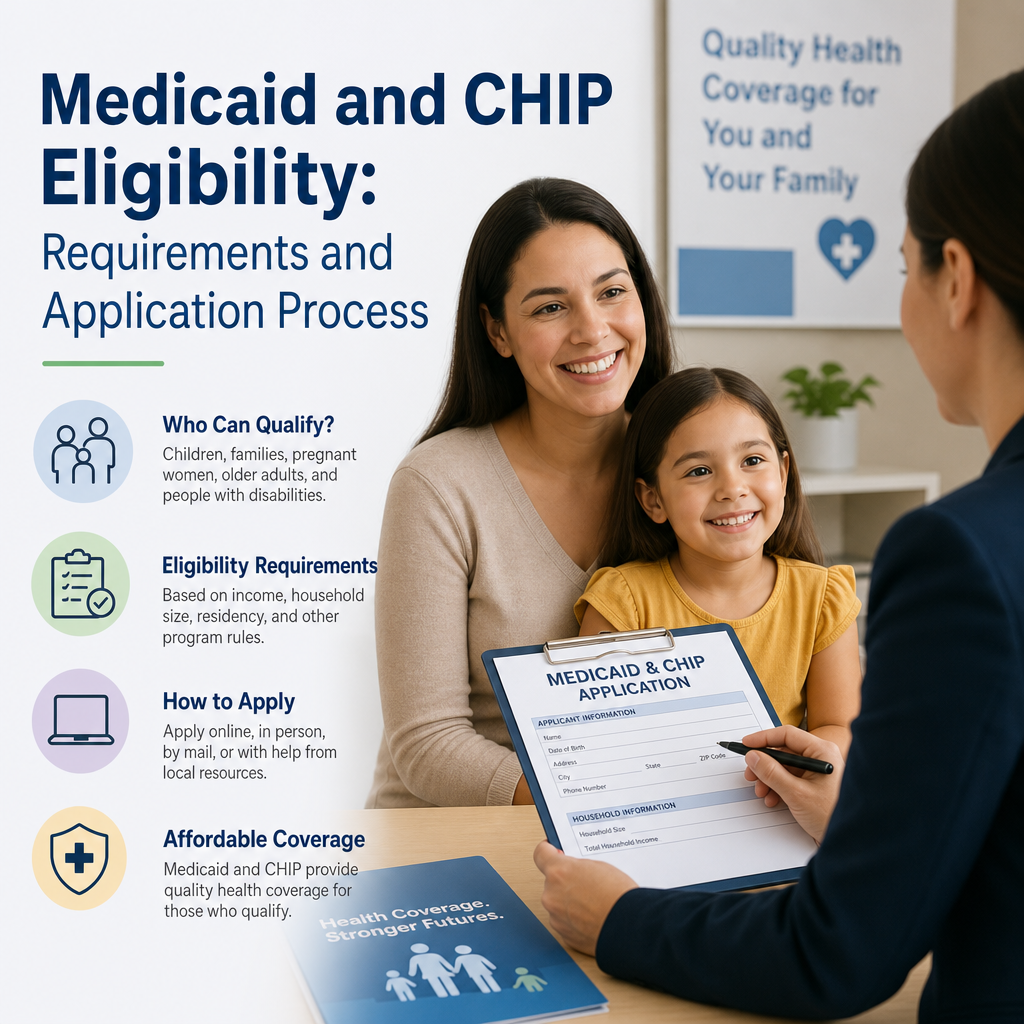
Medicaid and CHIP Eligibility: Requirements and Application Process
Understanding Medicaid eligibility is the first step toward finding affordable health coverage for your family. In this article, we’ll break down the key requirements and walk you through the application process so you know what to expect.
By: Emilly on July 23, 2026
Última atualização em: agosto 3, 2026
Medicaid and CHIP eligibility can feel confusing at first, especially if you’re trying to understand whether your family qualifies for free or low-cost health coverage. The good news is that these programs are designed to help eligible children, pregnant people, adults, seniors, and people with disabilities get access to care without overwhelming costs.
If you’re comparing health coverage options or preparing to apply, it helps to understand how Medicaid and CHIP work, what the eligibility requirements usually look like, and how the application process unfolds. While the rules vary by state, the basics are straightforward once you break them down.
What Are Medicaid and CHIP?
Medicaid and CHIP are public health coverage programs that help people with limited income access medical services.
Medicaid
Medicaid is a joint federal and state program that provides coverage for eligible individuals and families. It typically helps pay for:
Doctor visits
Hospital care
Preventive services
Prescription drugs
Pregnancy-related care
Long-term services and supports, in some cases
Each state runs its own Medicaid program within federal guidelines, which means benefits and eligibility rules can differ.
CHIP
The Children’s Health Insurance Program, or CHIP, is designed for children in families that earn too much to qualify for Medicaid but still need affordable coverage. In some states, CHIP also covers pregnant individuals.
CHIP often includes:
Routine checkups
Immunizations
Dental and vision care
Prescriptions
Emergency services
In many states, CHIP offers low-cost premiums or no-cost coverage.
Medicaid and CHIP Eligibility Basics
Medicaid and CHIP eligibility depends on several factors, including income, household size, age, disability status, pregnancy, and state residency. There is no one-size-fits-all answer because state programs operate differently.
Still, most applications are evaluated using similar core criteria:
Income
Household size
Age or life stage
State of residence
Citizenship or immigration status
Special circumstances, such as disability or pregnancy
Some applicants qualify automatically through other programs or based on their life situation, while others must meet strict financial thresholds.
Who May Qualify for Medicaid?
Medicaid eligibility is broader in many states than people expect. Depending on where you live, you may qualify if you fall into one of the following groups.
Children and Teenagers
Children often qualify at higher income levels than adults. Many states extend Medicaid or CHIP coverage to children in working families who still need affordable insurance.
Pregnant Individuals
Pregnant people may qualify for Medicaid even if their income is above the limit for other adults. Coverage often includes prenatal visits, labor and delivery, and postpartum care.
Parents and Caregivers
Some states provide Medicaid coverage to parents or caretaker relatives, especially if their income is low enough.
Adults Without Dependent Children
In states that expanded Medicaid under the Affordable Care Act, many low-income adults under age 65 qualify even if they do not have children.
Seniors and People with Disabilities
Older adults and people with disabilities may qualify through regular Medicaid rules or through long-term care-related eligibility pathways. In these cases, both income and assets may matter.
Who May Qualify for CHIP?
CHIP is generally for children under age 19 whose families earn too much for Medicaid but not enough for private insurance.
Common CHIP Eligibility Factors
Children may qualify if:
They are under 19
They live in the state where they apply
Their family income falls within the CHIP range
They do not have other qualifying health coverage
Some states also use CHIP for pregnant individuals, though that is not universal.
Medicaid vs. CHIP for Children
In many cases, children are first evaluated for Medicaid. If they do not qualify, the state may automatically consider them for CHIP. This helps ensure families are connected to the right program without having to submit separate applications.
Income Rules and Household Size
Income is one of the most important parts of Medicaid and CHIP eligibility. States usually compare your household income against a percentage of the Federal Poverty Level (FPL), though the exact threshold depends on the category of eligibility and your state.
Why Household Size Matters
Household size affects whether your income is considered low enough to qualify. A family of three and a single adult are not judged by the same income cutoff.
When counting household members, states usually consider:
Tax dependents
Spouses
Children living in the home
In some cases, other relatives or dependents
What Counts as Income?
Income calculations may include:
Wages and salaries
Self-employment income
Unemployment benefits
Social Security benefits
Some retirement income
Child support, depending on the program and state rules
Not every income source is treated the same way, so it’s important to read your state’s instructions carefully.
Other Medicaid and CHIP Eligibility Requirements
Income alone does not determine eligibility. Several non-financial requirements also matter.
State Residency
You must generally live in the state where you apply. Medicaid and CHIP are state-run programs, so eligibility does not transfer automatically across state lines.
Citizenship or Immigration Status
In general, applicants must be U.S. citizens or meet qualifying immigration requirements. Some noncitizens may qualify, depending on status and state rules. Children and pregnant individuals may sometimes have broader access than other adults.
Age
Age is a major factor, especially for CHIP. Children must usually be under 19. Medicaid age rules vary by eligibility group.
Disability or Medical Need
Some Medicaid categories involve disability, blindness, or a need for long-term services. These cases often require additional documentation and may involve asset limits.
Other Health Coverage
If you already have certain health coverage, that may affect your CHIP eligibility. Medicaid can sometimes work as secondary coverage, but rules depend on the situation.
How to Apply for Medicaid and CHIP
The application process for Medicaid and CHIP is usually straightforward, but it helps to prepare before you start. In many states, you can apply online, by phone, by mail, or in person.
Medicaid and CHIP Application Process Step by Step
1. Gather Your Information
Before applying, collect key details for everyone in the household who needs coverage:
Full names
Dates of birth
Social Security numbers, if available
Home address
Income information
Immigration status documents, if applicable
Current health insurance information
Having these ready can speed up the process and reduce mistakes.
2. Choose Where to Apply
You can typically apply through one of these options:
Many states let you submit one application to determine eligibility for Medicaid, CHIP, and Marketplace plans.
3. Complete the Application
The application will ask about:
Who lives in your household
Your income
Whether anyone is pregnant, disabled, or has dependents
Citizenship or immigration details
Whether you currently have coverage
Answer honestly and review the form carefully before submitting it. Small errors can delay a decision.
4. Submit Supporting Documents
Some applicants are approved based on the information they enter. Others may need to provide documentation, such as:
Pay stubs
Tax returns
Proof of identity
Proof of residency
Immigration documents
Proof of pregnancy, in some cases
If the agency requests documents, send them by the deadline.
5. Wait for a Decision
Processing times vary by state and application type. You may receive a request for more information, a notice of approval, or a denial explaining why you were not found eligible.
6. Choose a Health Plan, If Required
In many states, Medicaid and CHIP beneficiaries enroll in managed care plans. If so, you may need to select a plan and primary care provider after approval.
Tips for a Smooth Application
A little preparation can make the Medicaid and CHIP application process much less stressful.
Be Accurate
Report household size and income carefully. Mismatched information is one of the most common reasons applications get delayed.
Keep Copies
Save screenshots, confirmation numbers, mailed forms, and copies of any documents you submit.
Respond Quickly
If the state asks for more information, reply as soon as possible. Missing a deadline can lead to denial or a case closure.
Report Changes
If your income, address, family size, or immigration status changes, notify the agency. Medicaid and CHIP eligibility can change over time.
Ask for Help
Certified enrollment assisters, local community organizations, and state call centers can help you navigate the application.
What Happens After You’re Approved?
Approval is only the first step. Once you’re enrolled, it’s important to understand how to use your benefits and keep your coverage active.
Managing Your Coverage
You may need to:
Choose a health plan
Pick a primary care doctor
Renew coverage periodically
Update your information when it changes
Renewals and Redeterminations
Medicaid and CHIP coverage is not always permanent. States periodically review eligibility to make sure members still qualify. This process is often called redetermination or renewal.
To avoid losing coverage unnecessarily:
Watch for renewal notices
Update your address with the state
Submit requested documents on time
Common Reasons Applications Get Delayed or Denied
Sometimes a person who should qualify still runs into problems during the process. Common issues include:
Missing documents
Incorrect household information
Unreported income
Outdated address
Not meeting residency or immigration requirements
Applying through the wrong program or state
If your application is denied, review the notice carefully. It should explain the reason and tell you whether you can appeal or reapply.
Medicaid and CHIP Eligibility for Special Situations
Some applicants have circumstances that require a closer look.
Pregnant Applicants
Pregnancy often changes eligibility rules. In many states, pregnant individuals can qualify at higher income levels and may receive coverage for pregnancy-related care.
Children with Special Health Needs
Children with ongoing medical needs may qualify through Medicaid even if family income is modestly higher than other limits. Some states also offer pathways for children with disabilities.
Adults Needing Long-Term Care
Medicaid may help cover nursing facility care, home health services, or other long-term supports for people who meet both financial and medical criteria.
How to Check Your State’s Rules
Because Medicaid and CHIP are state-administered, your state’s official website is the best place to verify current rules.
Look for:
Income charts
Family size guidelines
Application instructions
Required documents
Renewal timelines
Contact information for local help
If you’re close to the income limit or have a complex situation, it’s smart to confirm details before applying.
Frequently Asked Questions
1. Can I apply for Medicaid and CHIP at the same time?
Yes. In many states, one application is used to determine eligibility for both programs. If your child does not qualify for Medicaid, the state may evaluate them for CHIP automatically.
2. What if my income changes after I apply?
You should report the change to your state Medicaid or CHIP agency as soon as possible. Income changes can affect eligibility, plan cost-sharing, or coverage category.
3. Do I need to be a U.S. citizen to qualify?
Not always. Some noncitizens may qualify depending on immigration status and state rules. Eligibility can vary widely, especially for children and pregnant individuals.
4. How long does approval take?
Processing times depend on the state and the complexity of your case. Some applications are handled quickly, while others take longer if the agency needs documents or additional verification.
5. Can I get help filling out the application?
Yes. You can get assistance from state Medicaid offices, HealthCare.gov, community organizations, and certified enrollment assisters. These resources can help you understand the form and gather the right documents.
Understanding Medicaid and CHIP eligibility does not have to be overwhelming. Once you know the basic factors—income, household size, state residency, age, citizenship or immigration status, and special circumstances—you can get a much clearer picture of whether you or your family may qualify. The application process is also more manageable than many people expect, especially when you gather documents first, answer questions carefully, and respond promptly to follow-up requests.
These programs exist to make health care more accessible for families, children, pregnant people, seniors, and others who need affordable coverage. If you think you may qualify, the best next step is to check your state’s official Medicaid or CHIP site and start the application. Even if you’re unsure, applying can help you find out quickly whether you’re eligible for coverage or another affordable option. Taking action now can help you avoid gaps in care and give your family greater peace of mind.
Emily A, holds a Master's degree in Public Administration (MPA) and has over 7 years of experience researching federal and state assistance programs. She writes educational content focused on government benefits, public policy, and community resources, using information from official agencies to help readers understand available programs and eligibility requirements.