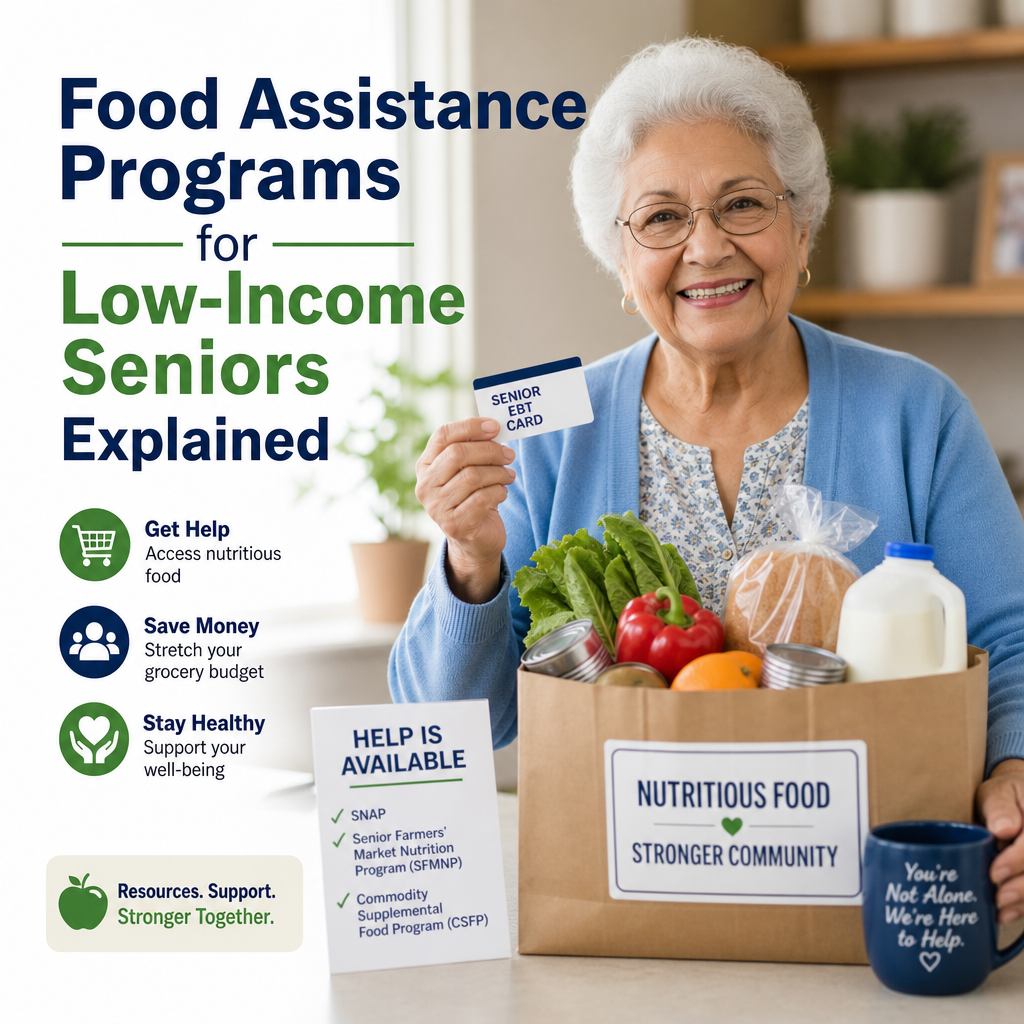
Food Assistance Programs for Low-Income Seniors Explained
Food assistance programs can help low-income seniors get the nutritious meals they need without stretching already tight budgets. From grocery benefits to home-delivered meals, these supports make it easier for older adults to stay healthy, independent, and well fed.
By: Emilly on July 23, 2026
Última atualização em: agosto 3, 2026
As costs rise for groceries, medications, and utilities, many older adults find it harder to keep nutritious food on the table. That is where food assistance programs for low-income seniors can make a real difference. These programs help eligible older adults stretch limited budgets, improve food security, and maintain better health without sacrificing dignity or independence.
If you are caring for an aging parent, helping a neighbor, or looking for support for yourself, understanding the available options is a smart first step. From federal nutrition programs to local food pantries and home-delivered meals, seniors today have more resources than many people realize. The challenge is knowing where to look, how to qualify, and which programs fit a person’s needs best.
Why Food Assistance Matters for Older Adults
Food insecurity can affect anyone, but it often hits older adults especially hard. Fixed incomes, rising living expenses, mobility issues, and chronic health conditions can all make it difficult to shop, cook, and eat well consistently.
Good nutrition is more than a comfort issue. For seniors, it supports:
Energy and daily functioning
Immune health
Muscle strength and balance
Better management of chronic conditions like diabetes or heart disease
Lower risk of hospitalization related to poor nutrition
When food becomes too expensive or too hard to access, older adults may skip meals, buy cheaper but less nutritious foods, or rely on convenience items that do not support long-term health. Food assistance programs for low-income seniors help close that gap.
Main Food Assistance Programs for Low-Income Seniors
Several public and nonprofit programs are designed to help older adults get affordable, nutritious food. Some provide direct groceries or benefits for food purchases, while others deliver meals or offer community dining.
Supplemental Nutrition Assistance Program (SNAP)
SNAP is one of the most important food assistance programs for low-income seniors. It helps eligible households buy groceries with an electronic benefit transfer (EBT) card that works like a debit card at approved stores and many farmers markets.
For seniors, SNAP can be especially helpful because it:
Reduces out-of-pocket grocery costs
Allows more choice and flexibility
Can be used with fresh produce, dairy, meat, and other staples
May help free up money for other essentials
Seniors may qualify even if they own a home or receive Social Security. Income rules vary by state, and some medical or housing expenses may affect eligibility. Many older adults assume they will not qualify, but it is often worth applying or checking with a local benefits counselor.
Older Americans Act Nutrition Services
The Older Americans Act funds nutrition services for adults age 60 and older through local agencies. These services typically include:
Congregate meals served in senior centers or community locations
Home-delivered meals for people who are homebound or have difficulty preparing food
Nutrition education and counseling in some areas
These programs do more than provide food. They also reduce isolation, which is a serious concern for many older adults. A shared meal can create social connection, especially for seniors living alone.
Commodity Supplemental Food Program (CSFP)
The Commodity Supplemental Food Program provides monthly food packages to low-income seniors in participating areas. These boxes often include shelf-stable items such as:
Cereal
Rice or pasta
Canned fruits and vegetables
Milk
Canned meat or protein items
The program varies by location and is administered through state or local agencies. It is designed to supplement a senior’s diet, not replace all groceries. For older adults on tight budgets, CSFP can help cover the basics and reduce pressure on monthly food spending.
Senior Farmers Market Nutrition Program
The Senior Farmers Market Nutrition Program offers benefits that eligible seniors can use at participating farmers markets, roadside stands, and community-supported agriculture programs. The goal is to increase access to fresh, local produce while supporting farmers.
This program is especially useful for seniors who want more fruits and vegetables but may not be able to afford them regularly. It can also be a practical option in areas where healthy food choices are limited.
Meals on Wheels and Similar Home-Delivered Meal Programs
Meals on Wheels is one of the best-known meal delivery services for older adults. Local branches and similar nonprofit programs deliver ready-to-eat meals to seniors who have difficulty shopping or cooking.
These programs often serve people who are:
Homebound
Recovering from illness or surgery
Living with disability or limited mobility
At risk of malnutrition
In addition to meals, delivery volunteers may provide a friendly check-in, which can help identify safety concerns or urgent needs. That combination of nutrition and human contact makes home-delivered meal programs especially valuable.
How to Know Which Program Fits Best
Not every program works the same way, and some seniors may qualify for several at once. The best fit depends on income, health, mobility, and where the person lives.
If the Senior Can Shop Independently
SNAP or the Senior Farmers Market Nutrition Program may be the most practical choices. These options give the senior more control over food selection and allow them to buy items that match personal preferences or dietary needs.
If the Senior Has Trouble Cooking or Leaving Home
Home-delivered meals, congregate meal programs with transportation support, or CSFP food boxes may be more appropriate. These options reduce the burden of shopping and meal preparation.
If the Senior Needs Ongoing Budget Relief
SNAP is often the strongest long-term support because it helps pay for groceries every month. A senior may also combine SNAP with local pantry visits or senior center meals to lower overall food costs.
How to Apply for Food Assistance Programs for Low-Income Seniors
The application process depends on the program, but a few basic steps show up again and again.
1. Gather Important Documents
Before applying, it helps to collect:
Proof of identity
Proof of age
Proof of income, such as Social Security award letters or pension statements
Rent or mortgage information
Utility bills, if required
Medical expense records, when applicable
Proof of residency
Having these items ready can speed up the process and reduce delays.
2. Contact the Right Agency
Different programs are handled by different organizations:
SNAP is usually managed by a state or county human services office
Older Americans Act meals are often coordinated through local Area Agencies on Aging
CSFP is managed through state or local partners
Senior Farmers Market Nutrition benefits are often distributed through state aging or agriculture agencies
Meals on Wheels is typically run by local nonprofit providers
3. Ask About Help Completing the Application
Many seniors need assistance filling out forms, understanding income rules, or gathering supporting documents. Benefits counselors, social workers, senior center staff, and Area Agencies on Aging can often help with applications.
4. Follow Up
Applications sometimes stall because a document is missing or a verification step is incomplete. Following up by phone or email can prevent unnecessary delays. If an application is denied, ask whether an appeal or reconsideration is possible.
Practical Tips to Make the Most of Food Benefits
Receiving benefits is only part of the equation. A few simple strategies can help seniors stretch food support even further.
Build Simple, Nutritious Meals
Seniors do not need complicated recipes to eat well. Affordable staples can go a long way:
Oatmeal with fruit
Beans and rice
Eggs with vegetables
Tuna or chicken salad sandwiches
Soup with whole-grain crackers
Yogurt with fruit and cereal
Keeping meals simple makes it easier to cook regularly and reduce waste.
Shop With a Short List
A short grocery list can help seniors stay focused on essentials and avoid impulse purchases. Planning meals around sales, pantry items, and seasonal produce can also lower costs.
Use Food Resources Together
Many seniors benefit from combining programs. For example:
SNAP for monthly grocery shopping
A senior center lunch once or twice a week
A food pantry for emergency support
Farmers market benefits for fresh produce
Home-delivered meals during recovery from illness
Using multiple resources is not a sign of failure. It is a practical way to stay nourished on a limited budget.
Watch for Dietary Needs
Older adults with diabetes, high blood pressure, kidney disease, or swallowing issues may need special meal planning. If possible, discuss nutrition concerns with a doctor, dietitian, or program coordinator so meals better match health needs.
Where to Find Local Help
Finding food assistance programs for low-income seniors is often easier when you start with local agencies that already serve older adults.
Helpful places to contact include:
Area Agency on Aging
Local senior center
County or state benefits office
Community action agency
Nonprofit food pantry or food bank
Hospital discharge planner or social worker
These organizations can often point seniors to both public and private resources, including emergency food support and long-term nutrition services.
Common Barriers and How to Overcome Them
Many seniors delay applying for help because they worry about stigma, paperwork, or losing independence. Those concerns are understandable, but they should not stand in the way of getting food.
Stigma
Some older adults feel embarrassed about asking for assistance. It may help to frame food support as a practical tool, similar to using a senior discount or Medicare benefit.
Transportation
If getting to an office or meal site is difficult, ask about phone applications, mail-in forms, online options, or transportation support. Some programs have outreach workers who can assist at home.
Language or Technology Challenges
Language access and digital barriers can slow down the process. Many agencies offer interpretation services or paper applications. Trusted family members, caregivers, and community advocates can also help.
Confusing Eligibility Rules
Eligibility can seem complicated, especially when seniors have mixed income sources. If the rules are unclear, speak with a local benefits specialist rather than assuming the answer is no.
Frequently Asked Questions
Who qualifies for food assistance programs for low-income seniors?
Eligibility depends on the program, but many are open to adults age 60 or older with limited income and, in some cases, limited assets. Some programs also consider household size, housing costs, medical expenses, and mobility needs. Even if a senior has Social Security income or owns a home, they may still qualify for support.
Can seniors receive more than one food assistance program at the same time?
Yes. Many older adults use multiple programs together. For example, a senior might receive SNAP benefits, attend a congregate meal site once a week, and get emergency food from a pantry. Combining programs can create a more stable and flexible food plan.
Are food assistance benefits considered taxable income?
In general, nutrition assistance benefits like SNAP are not counted as taxable income. However, tax situations can vary based on the type of support received and the individual’s overall finances. Seniors with questions about taxes should consult a qualified tax professional or official IRS guidance.
What if a senior is homebound and cannot shop for groceries?
Homebound seniors should ask about Meals on Wheels, home-delivered nutrition services through their local Area Agency on Aging, or other meal delivery options. Some communities also offer volunteer grocery delivery, paratransit, or caregiver shopping support.
How long does it take to get approved?
Processing times depend on the program and the completeness of the application. Some emergency food programs can help right away, while SNAP and other benefits may take longer. If food is urgently needed, it is wise to contact a local food pantry, senior center, or benefits office immediately while the application is pending.
Food insecurity can put older adults at risk for poor health, stress, and unnecessary hardship, but help is available. Food assistance programs for low-income seniors are designed to make nutritious meals more affordable and accessible, whether a person needs grocery benefits, delivered meals, pantry support, or fresh produce assistance.
The most effective approach is usually personal and practical. Start by looking at the senior’s daily routine, health needs, mobility, and budget. Then match those needs with the right mix of programs. SNAP can help with ongoing grocery costs, while senior meal sites, home-delivered meals, and commodity food boxes can fill important gaps. Local agencies, senior centers, and nonprofit organizations can guide the process and often make applying much easier.
If you or someone you care about is struggling to afford food, do not wait. Reaching out for assistance is a smart step toward better nutrition, greater stability, and a stronger quality of life.
Emily A, holds a Master's degree in Public Administration (MPA) and has over 7 years of experience researching federal and state assistance programs. She writes educational content focused on government benefits, public policy, and community resources, using information from official agencies to help readers understand available programs and eligibility requirements.