How to Create a Monthly Budget That Actually Works
A monthly budget only works when it fits your real life, not an ideal version of it. Learn how to build a simple, flexible plan that helps you cover essentials, handle surprises, and spend with confidence.
By: Mary on July 23, 2026
How to Create a Monthly Budget That Actually Works
Learning how to create a monthly budget that actually works is one of the most practical money skills you can build. A good budget is not about restriction or guilt. It gives your income a clear purpose, helps you prepare for surprises, and makes it easier to spend with confidence instead of stress.
The problem is that many budgets fail because they look great on paper but don’t match real life. They’re too strict, too vague, or too complicated to maintain. The good news is that a workable budget does not have to be perfect. It just has to be realistic, flexible, and easy to review.
In this guide, you’ll learn how to build a monthly budget you can actually stick to, even if your income changes or your expenses feel out of control.
Why Most Budgets Fail
Before you create a budget, it helps to understand why so many people abandon theirs after a few weeks.
Common budgeting mistakes
Guessing instead of tracking your real spending
Forgetting irregular expenses like car repairs or holiday gifts
Making the budget too strict, which leads to burnout
Setting unrealistic goals that don’t fit your actual income
Not reviewing the budget regularly
A budget works best when it reflects your habits, bills, and priorities. If it ignores the way you really live, it’s more likely to become a source of frustration than a useful tool.
How to Create a Monthly Budget That Actually Works
The best monthly budget starts with honest numbers, not wishful thinking. You want a system that supports your life today while also helping you move toward your financial goals.
Step 1: Calculate your true monthly income
Start with your net income, which is the amount you actually take home after taxes and deductions. If your income is steady, this step is simple.
If your income varies, use a conservative average based on the last 3 to 6 months. You can also budget using your lowest typical month and treat extra income as a bonus.
Include:
Paychecks
Side hustle income
Freelance payments
Child support or alimony if it is reliable
Any recurring income you can count on
Do not count money that is uncertain unless you plan to budget it separately.
Step 2: List your fixed monthly expenses
Fixed expenses are bills that stay mostly the same each month. These are the easiest to predict and should be your first priority.
Examples include:
Rent or mortgage
Utilities
Insurance
Minimum debt payments
Phone and internet
Subscriptions
Childcare
Transportation costs, such as transit passes
Write these down carefully. Even small recurring charges add up, and many people underestimate how much their fixed expenses consume.
Step 3: Estimate your variable spending
Variable expenses change from month to month, but they are still part of normal life. These categories often break budgets because people leave them out or underestimate them.
Common variable expenses include:
Groceries
Gas
Dining out
Household items
Personal care
Entertainment
Clothes
Gifts
Look at your bank statements and card transactions from the past few months. Use your real spending patterns, not your best-case hopes.
Step 4: Plan for irregular expenses
A monthly budget that actually works must include expenses that do not happen every month but still arrive like clockwork.
These may include:
Car maintenance
Medical copays
Annual memberships
License renewals
School supplies
Holiday and birthday spending
Home repairs
Travel
The smartest approach is to divide these costs by 12 and set aside a monthly amount. For example, if you usually spend $600 a year on car maintenance, budget $50 per month for it.
This step keeps you from being blindsided later.
Step 5: Choose a budgeting method that fits your style
There is no single right way to budget. The best method is the one you’ll keep using.
Zero-based budgeting
With zero-based budgeting, every dollar gets assigned a job. Income minus expenses equals zero at the end of the month. That doesn’t mean you spend every dollar; it means you direct money intentionally toward bills, savings, and spending categories.
This method works well if you want a detailed plan and strong control over your money.
The 50/30/20 budget
This approach divides income into:
50% for needs
30% for wants
20% for savings and debt repayment
It’s simple and flexible, which makes it appealing for beginners. However, the exact percentages may need adjusting depending on your housing costs, debt, or income level.
Envelope budgeting
Envelope budgeting uses cash or digital “envelopes” for categories like groceries, dining out, and entertainment. Once the money is gone, you stop spending in that category.
This can be helpful if you struggle with overspending or want a more hands-on system.
Pay-yourself-first budgeting
This method prioritizes savings first. You automatically move money into savings, retirement, or debt payoff as soon as you get paid, then budget what remains.
It’s effective if you want to build financial habits without overcomplicating your budget.
Build a Budget Around Your Real Priorities
A budget should reflect what matters most to you, not just what looks financially responsible on paper.
Separate needs from wants
This is one of the most important parts of creating a monthly budget that actually works. Needs are the essentials you must cover. Wants are the things that improve your lifestyle but are not required for survival.
Needs might include:
Housing
Food
Transportation
Insurance
Basic clothing
Minimum debt payments
Wants might include:
Streaming services
Dining out
Weekend trips
Hobby spending
Upgrades or convenience purchases
You do not need to cut all wants. In fact, some room for enjoyment makes a budget more sustainable.
Make savings a non-negotiable category
A lot of people treat savings as whatever is left over at the end of the month. That usually means saving nothing.
Instead, include savings as a regular line item:
Emergency fund
Retirement contributions
Short-term goals
Sinking funds for future expenses
Even small amounts matter. A budget that prioritizes savings helps you handle emergencies without relying on credit cards or draining your checking account.
Use Sinking Funds to Smooth Out Your Budget
Sinking funds are one of the most useful tools for a stable budget. They let you set aside money gradually for planned expenses.
Examples of sinking funds
Holiday gifts
Vacation
Car repairs
Vet visits
Back-to-school supplies
Annual subscriptions
Wedding or event expenses
Instead of being surprised when these expenses come up, you already have money waiting for them. This reduces stress and makes your budget much easier to maintain.
For example, if you want to spend $1,200 on a vacation next year, you can set aside $100 per month. That feels far more manageable than trying to cover the full cost all at once.
Keep Your Budget Flexible
A budget should guide you, not trap you. If your budget is too rigid, one unexpected expense can throw the whole plan off.
Leave room for real life
Good budgets include a small buffer for the unexpected. That might mean:
A miscellaneous category
Extra padding in grocery spending
A flexible spending line
A small “overflow” amount
This cushion helps you absorb small surprises without guilt or panic.
Adjust when life changes
Review your budget when:
Your income changes
You move
Your bills go up
You take on new debt
You start or stop a subscription
You have a major life event, such as a baby or job change
Your budget should evolve as your life evolves. A budget that worked six months ago may not be the right fit today.
Track Spending Throughout the Month
Creating the budget is only half the job. The other half is following it.
Pick a simple tracking system
You can track spending using:
A budgeting app
A spreadsheet
A notebook
A bank account dashboard
A printable budget worksheet
The best tool is the one you’ll use consistently. You do not need something fancy. You just need a way to know where your money is going.
Check in weekly
A quick weekly review helps you stay on track before small problems become big ones.
Ask yourself:
Did I overspend in any category?
Do I need to adjust my plan for the rest of the month?
Are any bills coming up that I forgot to include?
Is there money I can move to savings or debt payoff?
Weekly check-ins make budgeting feel more manageable and less reactive.
Make Your Budget Easier to Follow
A budget is more likely to work when it fits your habits and personality.
Automate where you can
Automation reduces decision fatigue and helps you stay consistent.
You can automate:
Bill payments
Savings transfers
Debt payments
Retirement contributions
When the most important money moves happen automatically, you have less to remember and fewer chances to miss something.
Use separate accounts if helpful
Some people find it easier to manage money by separating funds into different accounts. For example:
One checking account for bills
One account for spending
One savings account for goals and emergencies
This setup can make it easier to avoid accidental overspending.
Keep category names clear
Use budget categories that make sense to you. Instead of broad labels like “miscellaneous,” try specific categories such as:
Groceries
Fuel
Dining out
Gifts
Household supplies
Clear categories make it easier to spot where money is leaking out of your budget.
What to Do If You Keep Missing the Mark
If your budget keeps falling apart, that does not mean you failed. It usually means the plan needs adjustment.
Ask these questions
Did I underestimate certain expenses?
Did I forget irregular bills?
Is my income too unpredictable for a fixed budget?
Am I trying to cut too much too fast?
Are my categories too broad or too narrow?
Sometimes one category is the problem. Other times the whole budget needs to be simplified.
Start smaller if needed
If budgeting feels overwhelming, begin with just a few categories:
Housing
Food
Transportation
Debt
Savings
Flexible spending
Once you get comfortable, you can expand your budget in more detail. A simple budget you use is better than a detailed one you abandon.
Real-Life Example of a Simple Monthly Budget
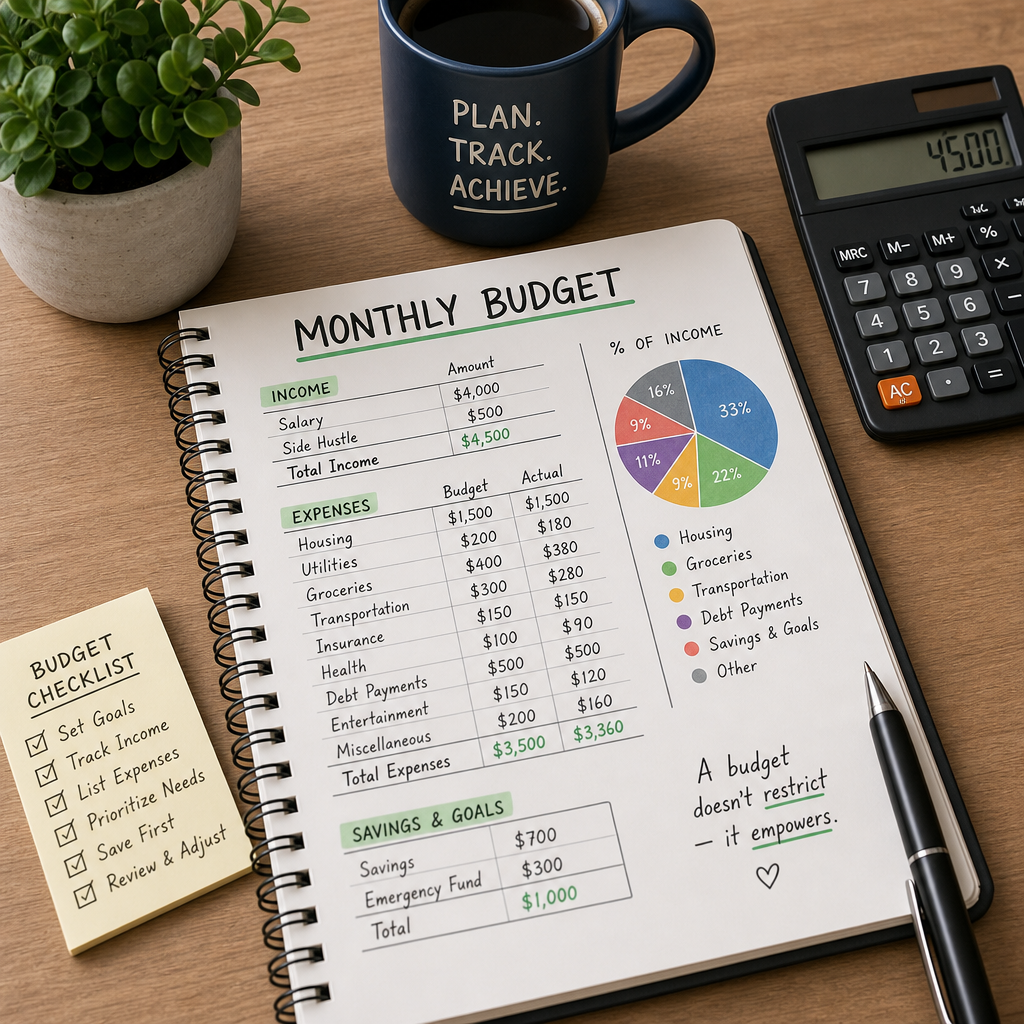
Here’s a basic example of how a monthly budget might look for someone with a steady income:
Rent: $1,400
Utilities: $180
Phone and internet: $120
Groceries: $450
Gas and transportation: $200
Insurance: $220
Debt payments: $300
Savings: $400
Dining out and entertainment: $200
Sinking funds: $150
Miscellaneous: $100
This budget is not perfect, and it does not need to be. What matters is that it reflects actual priorities and gives every dollar a purpose.
Frequently Asked Questions
What is the best way to start a monthly budget?
The best place to start is by calculating your actual take-home income and listing your fixed expenses. From there, add variable spending, savings, and irregular costs. A simple first budget is better than trying to build a complicated system right away.
How much should I save each month?
That depends on your income, expenses, and goals. A good starting point is to save something consistently, even if it’s small. Prioritize building an emergency fund first if you do not already have one, then increase your savings as your budget allows.
What if my income changes every month?
If your income fluctuates, base your budget on your lowest reliable monthly income or a conservative average. Then treat extra income as a bonus that can go toward savings, debt, or irregular expenses.
How do I stop overspending in certain categories?
Track your spending weekly, use clear category limits, and build in a small buffer for unexpected costs. If one category always runs over, review whether your estimate is too low or whether you need to reduce spending elsewhere.
Should I use a budgeting app or a spreadsheet?
Either one can work. Budgeting apps are convenient and often automate tracking. Spreadsheets give you more control and flexibility. Choose the tool that feels easiest to maintain over time.
Creating a monthly budget that actually works is less about strict rules and more about building a system you can live with. Start with your real income, track your fixed and variable expenses, and make room for irregular costs so they do not throw you off course. Choose a budgeting method that fits your personality, whether that means zero-based budgeting, envelope budgeting, or a simple 50/30/20 split.
Most importantly, keep your budget flexible. Life changes, and your budget should change with it. When you review your spending regularly and adjust as needed, budgeting stops feeling like punishment and starts functioning as a practical tool for financial control.
A workable budget can help you reduce stress, save more consistently, and make better decisions with your money. The first version does not need to be perfect. It just needs to be clear enough to follow and realistic enough to keep using. Start small, stay consistent, and improve as you go.
Mary S, CFP®, is a Certified Financial Planner with over 12 years of experience in personal finance, retirement planning, and wealth management. She writes educational content that helps readers understand financial concepts and make informed decisions based on reliable information.